Endangered
Coregonus vandesius
Coregonus vandesius
The vendace is a small, silvery whitefish that lives in a few deep, cold lakes in Britain, the Lake District's Derwent Water above all. It is often called Britain's rarest freshwater fish. The IUCN Red List rated it Endangered in 2024. Some scientists treat it as a form of a wider European species.
How to recognise it
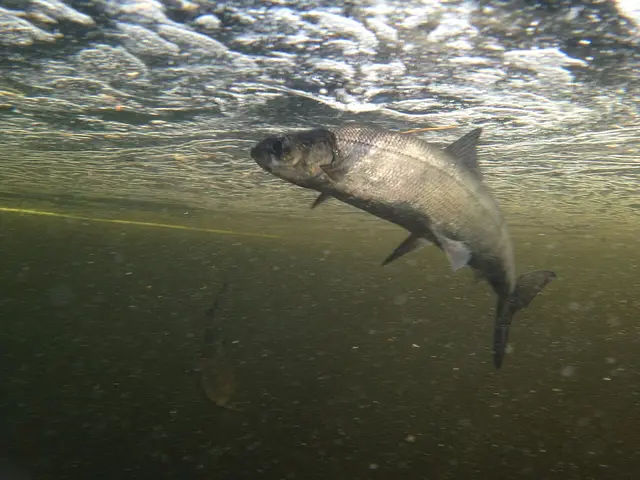
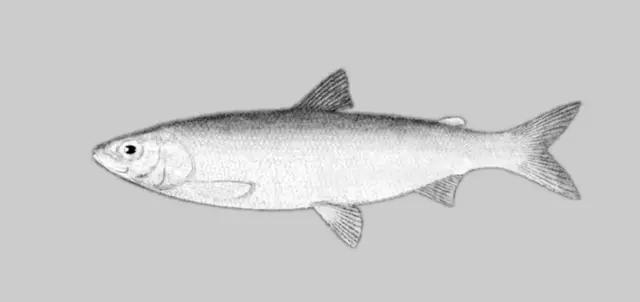
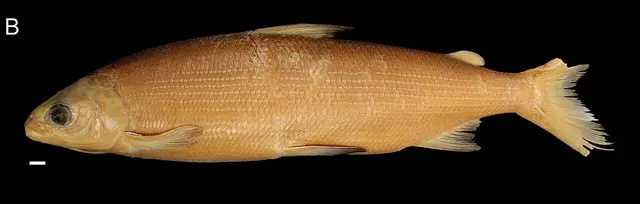
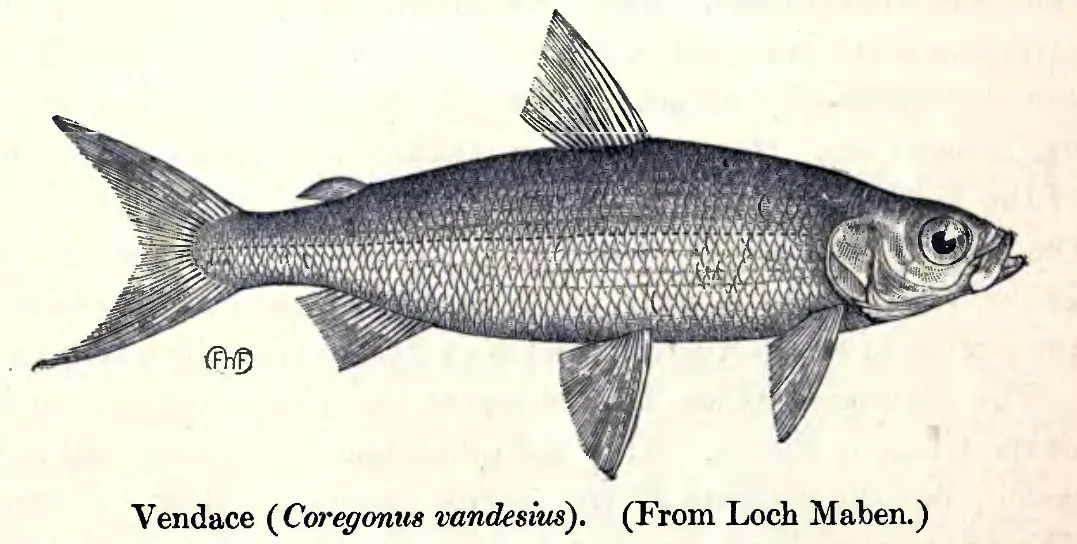
A vendace is a slim, streamlined fish about 20 to 25 cm long, with a bluish-green back, silvery flanks, a white belly and grey fins. The eyes are large and the mouth is small, suited to picking tiny animals out of the water. It lives in shoals in deep water and is rarely seen unless someone is netting or surveying a lake.
Where it lives
Vendace need deep, cool, well-oxygenated lakes where they can escape warm surface water in summer. Four native populations are known from historical times: Bassenthwaite Lake and Derwent Water in Cumbria, and Castle Loch and Mill Loch at Lochmaben in southern Scotland. Castle Loch's fish died out in the early twentieth century, and Mill Loch's between about 1966 and 1975, most likely from nutrient pollution.
Derwent Water is now the stronghold. The IUCN counts five locations in all, with an estimated area of occupancy of just 28 square kilometres in its 2024 assessment, and it lists the population trend as unknown.
Pins are Wikidata “endemic to” fields. Orange dots, when present, are GBIF occurrence tiles — survey bias included.
How it lives
By day the shoals stay in deep water, then rise toward the surface at dusk to feed, mostly on zooplankton. Vendace live five to six years. They spawn in November and December, moving after dark onto gravelly shallows less than 4 m deep. The eggs are not buried in the gravel and take more than 100 days to hatch. Newly hatched fry are only 7 to 9 mm long.
Why it is in trouble
Vendace are sensitive to enrichment of their lakes. Sewage, nutrient run-off and silt clog the gravel they spawn on, and enrichment can cut oxygen in deep water. Surveys in 1997 and 1998 found Bassenthwaite's spawning grounds heavily silted, while Derwent Water had six in good condition. A 2008 report by the Centre for Ecology and Hydrology found that survey netting had caught no vendace at Bassenthwaite since 2000, apart from four taken in 2001 for a translocation, and the population was thought lost.
Introduced fish add to the pressure. The IUCN names ruffe and roach as ongoing threats (ruffe are known to eat vendace eggs), and also lists an invasive plant, New Zealand pygmyweed, along with habitat alteration. Fishing for vendace is a past use that is unlikely to return.
What is being done
Conservation began in 1986 with the aim of setting up refuge populations in other waters. Between 1997 and 1999 some 17,550 fry and 47,500 eyed eggs were moved to Loch Skeen in south-west Scotland, where the fish are now established and breeding. Surveys in 2016 and 2017 found small breeding populations at Loch Earn and Daer Reservoir, and none was detected at Loch Valley. The outcome of a 2011 introduction to Sprinkling Tarn in Cumbria is unknown.
Bassenthwaite has since shown signs of recovery. A single young fish turned up in 2013 and two adults in 2014, probably recolonists from Derwent Water, which flows into the lake. The IUCN reports monitoring, a recovery plan, ex-situ conservation and awareness work as in place.
Sources
Written for this catalog in our own words from the sources below, checked against them on 12 November 2026. Population figures are estimates and carry the year they were made. Status and assessment year: IUCN. 2026. The IUCN Red List of Threatened Species. Version 2026-1. iucnredlist.org.
- IUCN Red List assessment (2024)
- Coregonus vandesius (Wikipedia)
- Lyle et al. 2019, The Glasgow Naturalist 27(1), vendace refuge sites
- CEH Lancaster, assessment of vendace in Bassenthwaite Lake and Derwent Water (final report, 31 May 2008)
- Vendace (West Cumbria Rivers Trust)
- Britain's rarest freshwater fish found in Cumbrian lake (The Fish Site, 2014)