Endangered
Gwyniad
Coregonus pennantii
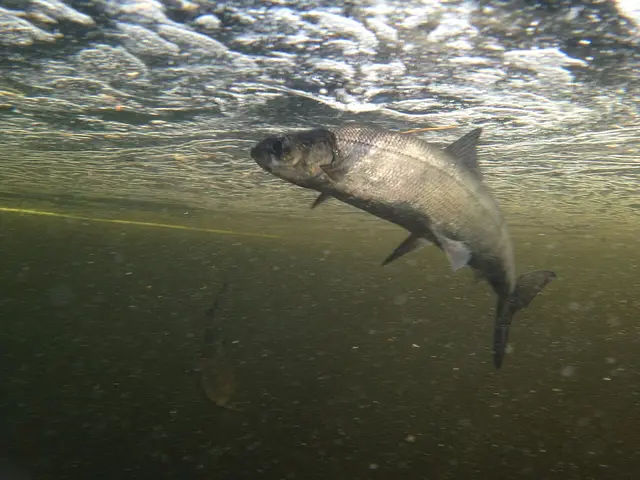
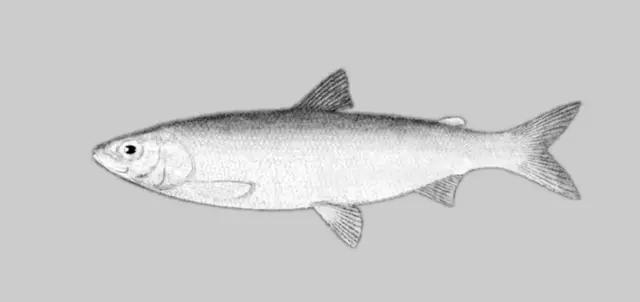
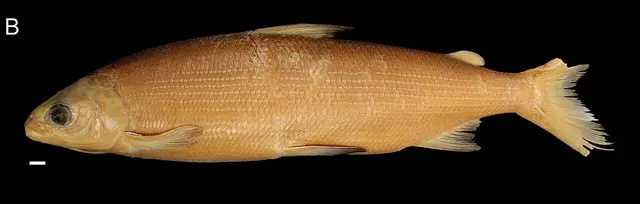
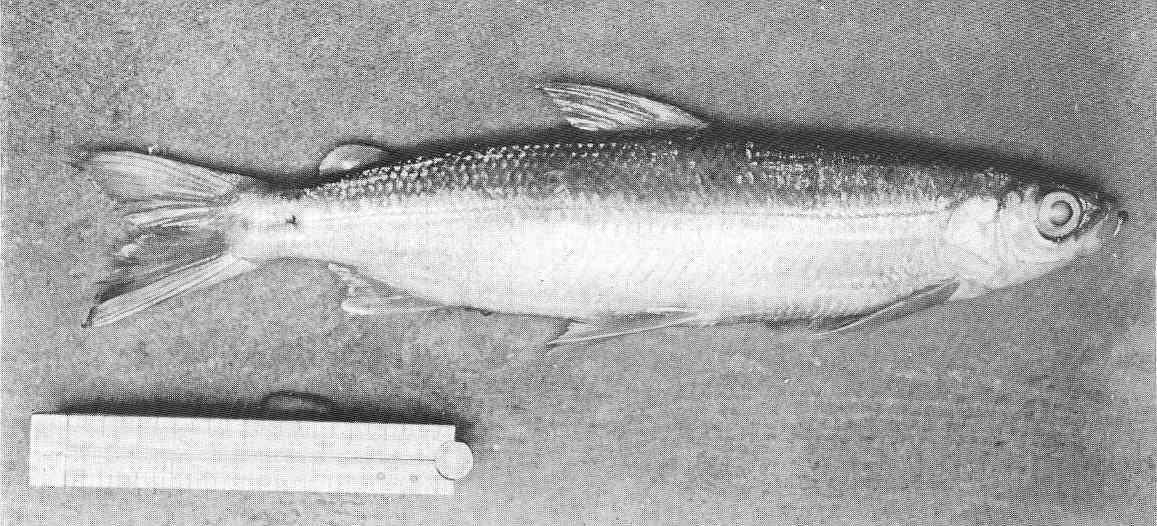
The gwyniad (Coregonus pennantii), or Welsh whitefish, is a silvery freshwater fish in the salmon family and the only native whitefish in Wales. It lives naturally in a single lake, Llyn Tegid near Bala. The IUCN Red List rated it Endangered in 2024, having listed it as Critically Endangered in 2008.
What it is
The gwyniad is a lake whitefish that can reach about 35 cm. It feeds on crustaceans and insects. Achille Valenciennes described it in 1848, and the name honours the Welsh naturalist Thomas Pennant, who wrote about the fish in 1769.
Whether it counts as a species is disputed. A 2012 study in the Journal of Fish Biology tested a published key for three British whitefish forms, including this one, using 544 fish from nine populations. It found no solid evidence for recognising them as separate species and argued for the name Coregonus lavaretus (the common whitefish) for all of them. The IUCN, FishBase and the Catalog of Fishes still list the gwyniad as Coregonus pennantii, and the IUCN assessment is the basis for the status given here.
Where it lives
Its home is Llyn Tegid (Bala Lake), a natural lake in north Wales in the upper River Dee system. It lives mainly in the deeper water and reportedly rises toward the surface each day in warm months to feed.
Spawning takes place in January and February in shallow bays over stones and gravel. A second population has been started in Llyn Arenig Fawr, a nearby reservoir.
Pins are Wikidata “endemic to” fields. Orange dots, when present, are GBIF occurrence tiles — survey bias included.
Why it is in trouble
One lake is a fragile place for a species to rely on. A 2013 study of Llyn Tegid by Rhian Thomas and colleagues reported that oxygen in the deep water sometimes drops close to the 2 mg per litre the fish can tolerate, a problem linked to nutrient enrichment. It also named changing water levels and ruffe, a fish introduced in 1980 that eats gwyniad eggs.
The IUCN's 2024 assessment lists nutrient loads, siltation, small dams, water abstraction and introduced species among the threats, counts two locations, and records the population trend as unknown.
Numbers in the lake do not look dire. Netting surveys in the 1960s, 1991, 2003 and 2008 found no clear change in the fish's length, weight or condition, and a hydroacoustic survey in July 2009 put the gwyniad at about 2,300 fish per hectare.
What is being done
Between 2005 and 2007 conservation staff collected about 81,300 eggs from 366 males and 50 females in Llyn Tegid and moved them to Llyn Arenig Fawr as insurance against a disaster in the home lake. Hatching rates were generally high. A 2009 survey there found adult gwyniad in a sparse fish community, which shows they can reach maturity, though it did not yet prove the move had worked.
Agencies and local authorities have also worked on a plan to cut the nutrient inputs reaching the lake, and a hatchery at Maerdy has reportedly reared fish from Llyn Tegid stock.
Sources
Written for this catalog in our own words from the sources below, checked against them on 12 November 2026. Population figures are estimates and carry the year they were made. Status and assessment year: IUCN. 2026. The IUCN Red List of Threatened Species. Version 2026-1. iucnredlist.org.
- IUCN Red List assessment, Coregonus pennantii (2024), via IUCN API
- Thomas, Fletcher, James and Winfield (2013), Assessment and conservation of gwyniad in Llyn Tegid, Advances in Limnology 64
- Etheridge et al. (2012), Are phenotypic traits useful for differentiating among a priori Coregonus taxa? Journal of Fish Biology 80
- Gwyniad, Wikipedia
- Coregonus pennantii, FishBase
- Coregonus lavaretus, Gwyniad, First Nature
- New efforts to protect rare UK fish, Practical Fishkeeping