Endangered
Chinese box turtle
Cuora flavomarginata
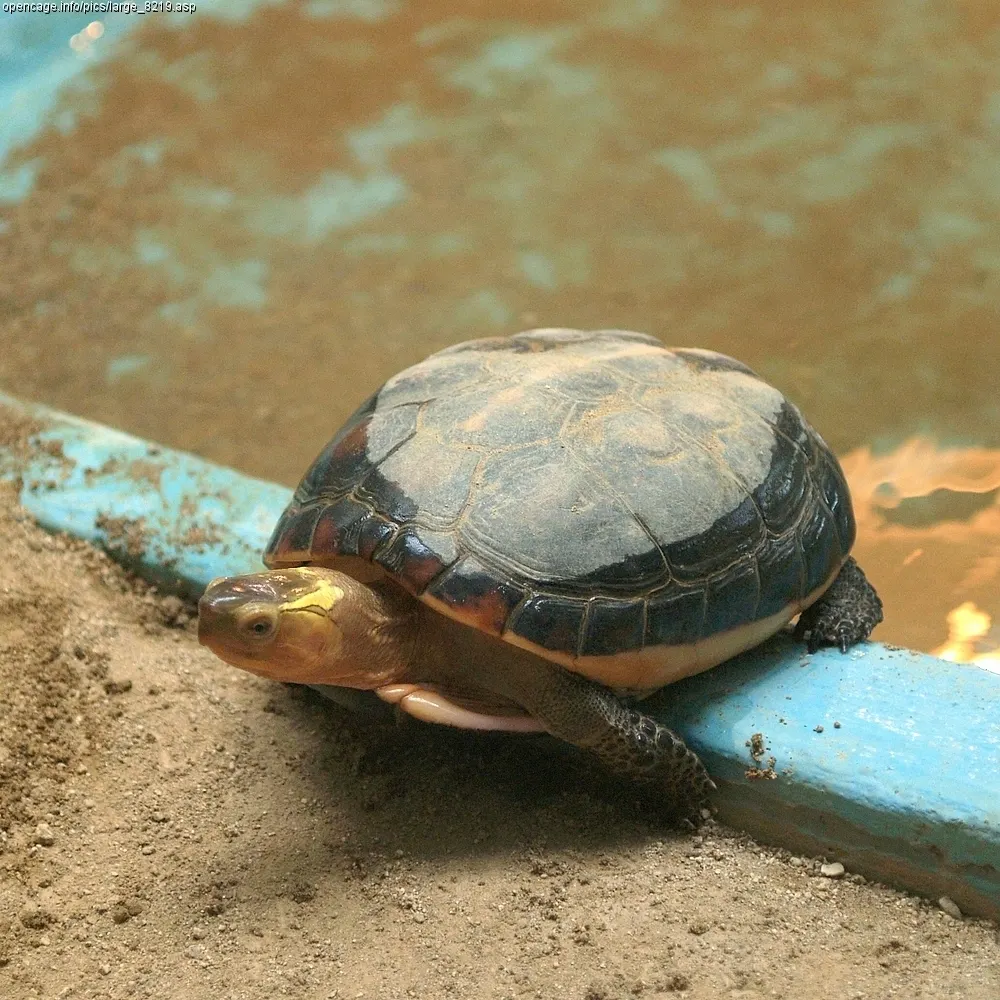
The Chinese box turtle (Cuora flavomarginata), also called the yellow-margined box turtle, is a hinged-shelled turtle of forested hills in central China, Taiwan and Japan's southern Ryukyu Islands. The IUCN Red List rated it Endangered in 2000. Collection for pets and food and loss of habitat have cut its numbers.
How to recognise it
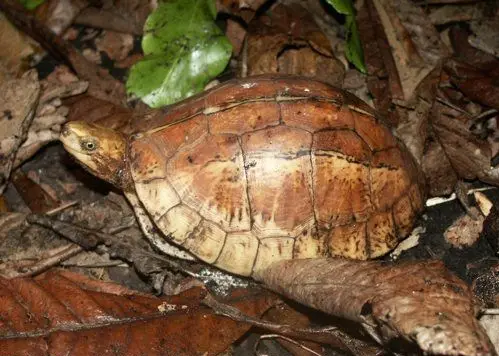
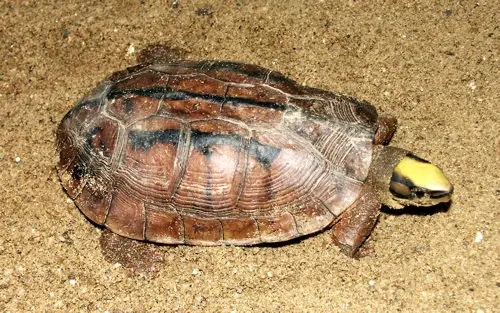
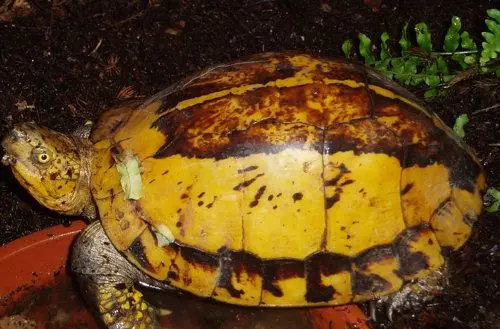
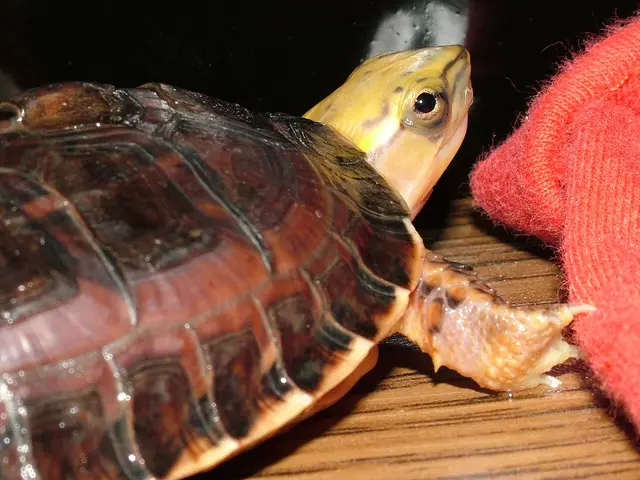
The shell is high and domed, dark brown, with a cream-yellow stripe running along the middle ridge. The head is pale green with a yellow line behind each eye. Adults average about 16 cm long (range 12 to 19 cm) and can weigh up to roughly a kilogram. Males have a broader, more triangular tail.
Two subspecies are recognised: the nominate form, and the Ryukyu yellow-margined box turtle (C. f. evelynae) of Ishigaki and Iriomote islands. Its Chinese name means snake-eating turtle.
Where it lives
The IUCN lists China, Taiwan and the Nansei-shoto (southern Japan) as its range. In China it is found mainly along the Yangtze drainage. On Taiwan, a survey run from 2001 to 2008 found turtles at 23 of 68 sites and grouped them into four clusters: north, centre, the Hengchun Peninsula in the south, and the east. It lives in low forested hills, mostly evergreen forest and forest edges, and is rarely found above about 500 m.
The Taiwan survey team suspected that lowland populations may have been wiped out by land development.
Pins are Wikidata “endemic to” fields. Orange dots, when present, are GBIF occurrence tiles — survey bias included.
How it lives
It eats snails, slugs, earthworms, berries and leaves. It is mostly active at night, with activity peaking from early April to late October. In winter it hibernates under logs, leaf litter or in old burrows.
Females lay several small clutches of 1 to 4 eggs between May and September, 4 to 9 eggs in a season, Eggs take about 68 to 101 days to hatch.
Why it is in trouble
The main pressures are collection for the pet, food and traditional medicine trades, plus loss and fragmentation of forest. In Taiwan, over 2,300 turtles were confiscated from cross-border trade between 2006 and 2009. Only three sites (Feitsui, Keelung and Hushan) yielded more than 50 turtles each, and capture success at Keelung was relatively low.
The IUCN assessment dates from 2000. The Turtle Survival Alliance lists the species as Critically Endangered, and says mainland Chinese populations are falling faster than those on Taiwan and in the Ryukyus.
What is being done
The species is on CITES Appendix II, and the Turtle Survival Alliance reports it is protected in the wild in China, Japan and Taiwan. Captive breeding and assurance colonies exist. The 2010 Oryx study of Taiwan called for securing some undisturbed low-elevation habitat, monitoring illegal capture and trade, and surveying the developed lowlands more closely. The species is also kept as a pet (general rules are at /exotic-pet-laws-by-state/).
Sources
Written for this catalog in our own words from the sources below, checked against them on 12 November 2026. Population figures are estimates and carry the year they were made. Status and assessment year: IUCN. 2026. The IUCN Red List of Threatened Species. Version 2026-1. iucnredlist.org.
- IUCN Red List assessment, Cuora flavomarginata (2000)
- Chinese box turtle (encyclopedia entry)
- Lin et al. 2010, Population status and distribution of the endangered yellow-margined box turtle in Taiwan, Oryx
- Animal Diversity Web, Cuora flavomarginata
- Turtle Survival Alliance species spotlight (TSA lists it as Critically Endangered)
- Reptile Database, Cuora flavomarginata