Endangered
Chelonoidis vicina
Chelonoidis vicina
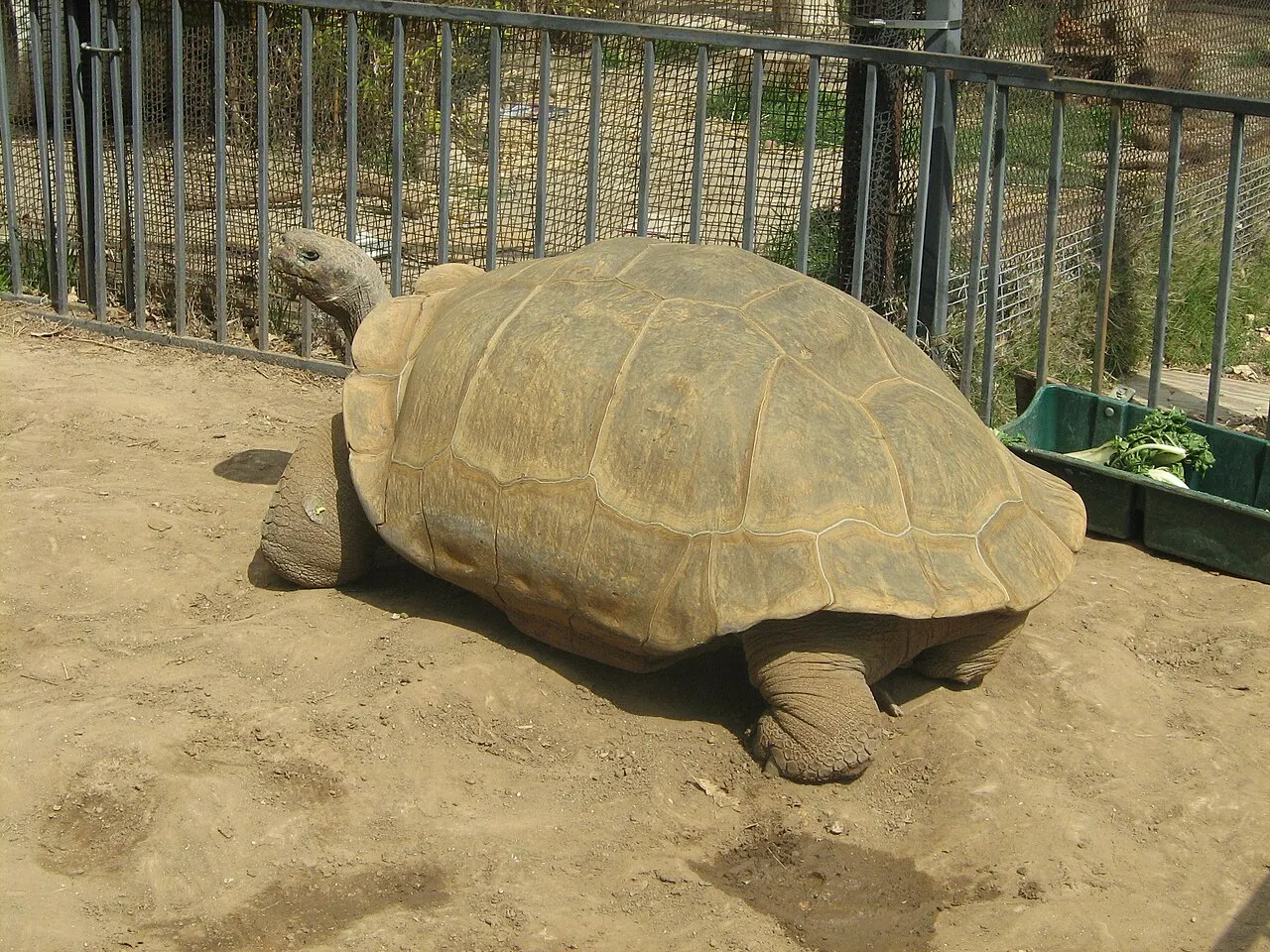
The Cerro Azul giant tortoise (Chelonoidis vicina) lives only on Cerro Azul volcano, Isabela Island, in the Galápagos. The IUCN assesses it as a full species and rated it Endangered in 2018. Centuries of hunting, then introduced animals, cut it from an estimated 18,000 animals to a few thousand at most.
How to recognise it
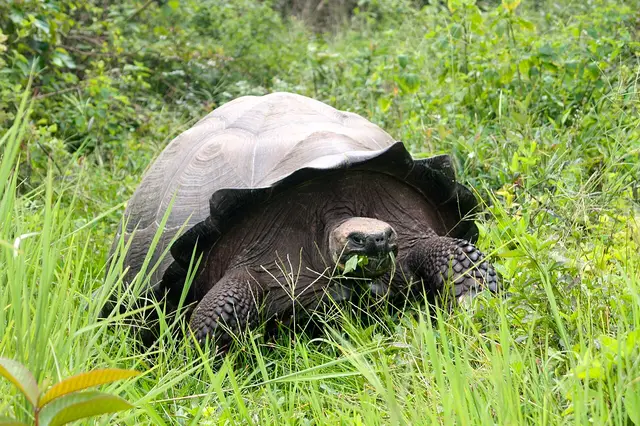
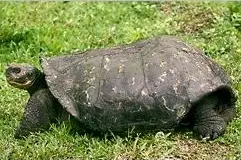
Males reach a straight carapace length of about 117 cm, while females reach about 93 cm. The shell is thick and heavy, somewhere between saddle-backed and domed, with males tending to be more saddle-backed and females more domed.
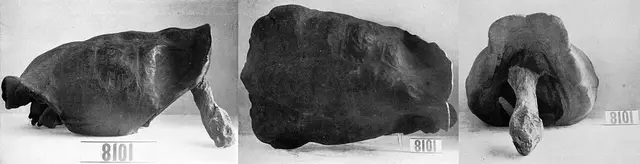
Where its range meets that of the neighbouring Chelonoidis guntheri, most adults look alike, and without genetic testing the two can be indistinguishable. Some C. guntheri adults have a flattened shell.
Where it lives
The species is found on Cerro Azul volcano in the south-west of Isabela. The IUCN gives its extent of occurrence as 184 square kilometres, while another account puts the range at about 254. The IUCN lists tropical dry forest and dry shrubland as its habitat, and that account adds evergreen forest and dry grassland.
Taxonomy is not settled. The IUCN and the Reptiles of Ecuador account treat it as its own species, Chelonoidis vicina. Other authorities, including encyclopedia entries, list it as a subspecies of the Galápagos tortoise, Chelonoidis niger vicina.
Pins are Wikidata “endemic to” fields. Orange dots, when present, are GBIF occurrence tiles — survey bias included.
How it lives
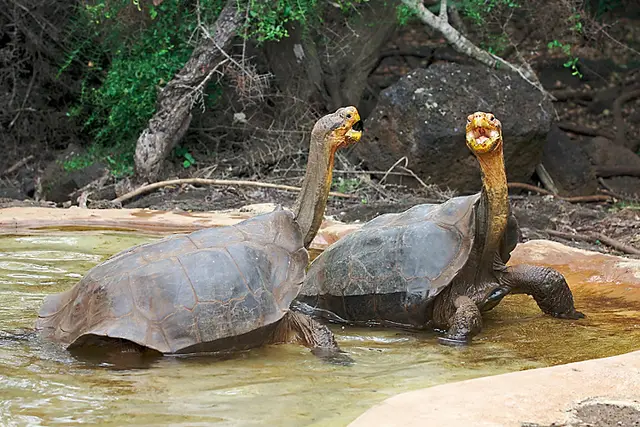
Cerro Azul tortoises are active by day. They spend most of it feeding or walking, then rest in shade or wallow in damp soil in the afternoon heat. The diet includes grasses, leaves, cacti, lichens and berries, even those of the irritating manzanillo tree. Males fight by biting, gaping, stretching their necks and bumping shells.
The IUCN classes the species as an altitudinal migrant. After rains, adults move from the interior to the coast along regular trails to eat fresh growth, while juveniles stay in the warm lowlands for their first 10 to 15 years.
Why it is in trouble
Whalers and settlers collected tortoises for food, and in the late 1950s and 1960s employees of cattle companies based at Iguana Cove killed many. Estimates put the loss at 97 to 98 percent of the population over about 180 years, with only 400 to 600 left by the 1970s. The Red List lists hunting for food among current threats.
Goats, pigs, dogs, rodents, fire ants and feral cattle followed, eating eggs and hatchlings, trampling nests or competing for food. Introduced plants degrade habitat and block migration routes, and volcanic eruptions can kill animals and fragment their range. Illegal killing and poaching still occur.
Counts disagree. One species account estimates 1,800 to 2,700 animals in four remaining wild populations, and the Red List gives 2,600 with an unknown trend. A Galápagos Conservancy study reported in 2023 estimated about 5,275. The number of purebred animals may be lower.
What is being done
The Galápagos National Park has eradicated goats from the volcano and runs a head-starting programme at the Arnaldo Tupiza breeding centre, where captive-raised young are released into the wild.
The Red List records a recovery plan, an area management plan, invasive species control, captive animals and international trade controls. It puts 91 to 100 percent of the population inside protected areas. The tortoise is reportedly on CITES Appendix I.
Sources
Written for this catalog in our own words from the sources below, checked against them on 12 November 2026. Population figures are estimates and carry the year they were made. Status and assessment year: IUCN. 2026. The IUCN Red List of Threatened Species. Version 2026-1. iucnredlist.org.