Critically Endangered
Chelonoidis donfaustoi
Chelonoidis donfaustoi
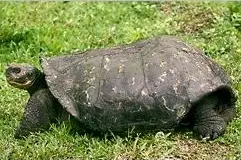
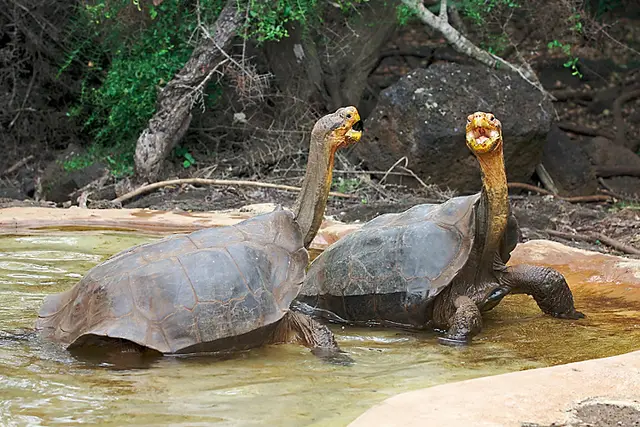
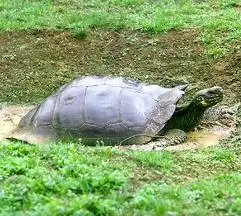
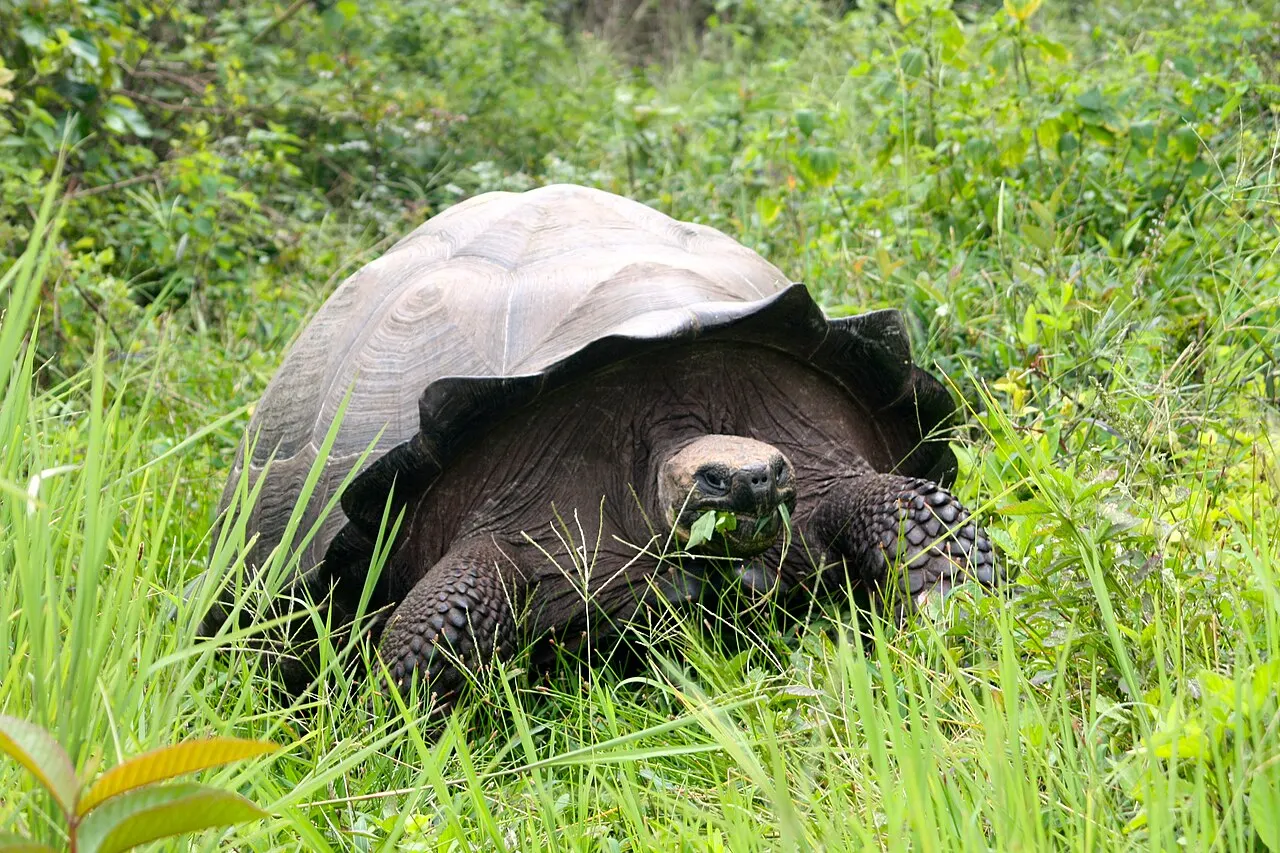
The eastern Santa Cruz tortoise (Chelonoidis donfaustoi) is a giant tortoise confined to the eastern side of Santa Cruz Island in the Galapagos. Described as a distinct species only in 2015, it was rated Critically Endangered by the IUCN in 2017, with about 400 animals, roughly 250 of them adults.
A newly recognised tortoise
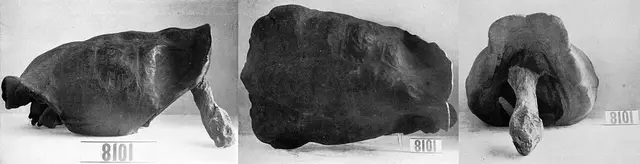
For many years the tortoises of eastern Santa Cruz, long known as the Cerro Fatal population, were lumped in with the western Santa Cruz tortoise (Chelonoidis porteri). In 2015 a Yale-led team including Gisella Caccone and Nikos Poulakakis published genetic and morphological evidence in PLOS One that they were distinct. The two differ at 12 microsatellite loci, and the eastern lineage reportedly split from the western one about 430,000 years ago. Some references still call it a subspecies of the Galapagos tortoise, while the IUCN lists it as a species.
The name honours Fausto Llerena Sanchez, known as Don Fausto, a Galapagos National Park ranger who spent 43 years (1971 to 2014) caring for giant tortoises, including Lonesome George.
Where it lives
It is found only on the eastern side of Santa Cruz Island, centred on Cerro Fatal and ranging from the moist highlands to the dry lowlands. The IUCN estimates the area at about 40 square kilometres and records one location, with dry forest, dry shrubland and pastureland as habitat. It estimates that 81 to 90 percent of the population lies inside protected areas.
Tortoises move between higher and lower ground with the seasons, and some spend months in the farming zone. Its range meets that of the western species at a single agricultural zone, so conservationists stress that people must not move tortoises between the two sides of the island.
Pins are Wikidata “endemic to” fields. Orange dots, when present, are GBIF occurrence tiles — survey bias included.
Why it is in trouble
The IUCN puts the population at about 400 animals, roughly 250 of them adults, a decline of around 97 percent from an estimated 13,500 before heavy exploitation. Announcements in 2015 gave about 250 (Galapagos Conservation Trust) or simply hundreds (Yale), against several thousand for the western species. Generations are long, about 60 years, so recovery is slow.
Sailors and settlers once ate these tortoises. Today the assessment names small-holder farming, introduced animals including rats, cats, dogs, goats and pigs, and conversion of habitat to farmland and pasture. Fences and roads can block migration routes. Reduced genetic diversity adds to the risk. The criteria (A2abce; B1ab(ii)) reflect past decline and a small, restricted range.
What is being done
The Red List records a systematic monitoring scheme, invasive species control, an area management plan and CITES Appendix I listing. Rangers fence nests against pigs, and about 97 juveniles were being reared at the Galapagos National Park Directorate's tortoise centre at the time of the assessment. The Giant Tortoise Restoration Initiative, involving Galapagos Conservancy, the park directorate and Yale, gives this species particular attention. The IUCN lists the population trend as increasing.
Sources
Written for this catalog in our own words from the sources below, checked against them on 12 November 2026. Population figures are estimates and carry the year they were made. Status and assessment year: IUCN. 2026. The IUCN Red List of Threatened Species. Version 2026-1. iucnredlist.org.