Endangered
Cantrainea jamsteci
Cantrainea jamsteci
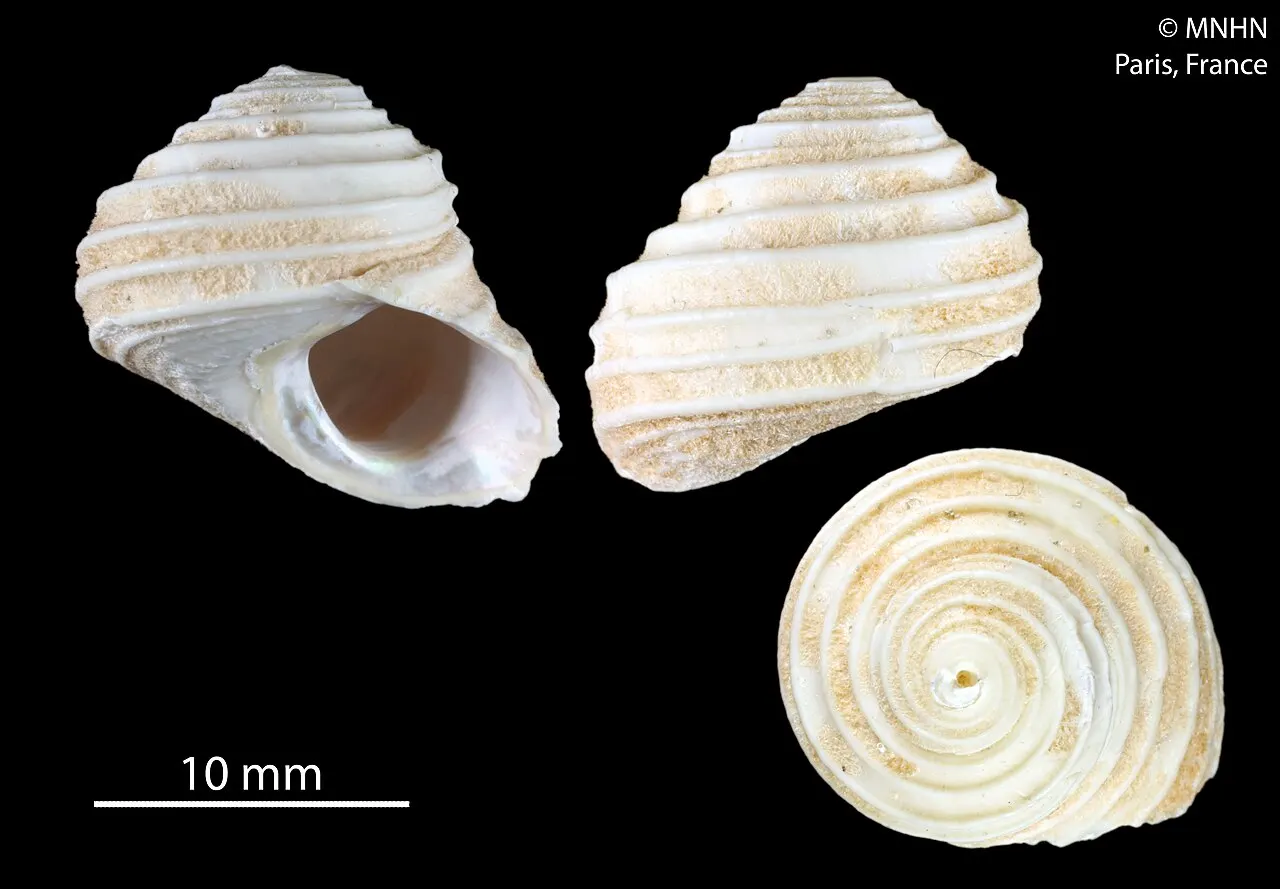
Cantrainea jamsteci, first named Thermocollonia jamsteci, is a small deep-sea snail found at hydrothermal vents and warm seeps off southern Japan. The IUCN Red List assessed it as Endangered in 2021, citing a tiny range and the prospect of seabed mining.
What it is
This is a marine snail in the family Colloniidae, the small sea snails with a calcified lid (operculum) that closes the shell opening. Okutani and Fujikura described it in 1990 as Thermocollonia jamsteci, a new genus and species, and placed it in the family Turbinidae. They noted it might be the first turbinid snail found at a hydrothermal vent site. It is now filed under Cantrainea, in the Colloniidae, and the old name is a synonym.
Where it lives
The type specimens came from a warm seep on the Minami-Ensei Knoll, west of Amami-Oshima Island in southern Japan, at about 700 m depth. They were collected using the submersible Shinkai 2000. The IUCN assessment gives a depth range of 700 to 1,600 m and lists the habitat as deep-sea vents and seeps. It records two locations, an occupied area of 12 square kilometres and a wider extent of occurrence of about 2,750 square kilometres. The GBIF database holds eight records in all: four in Japan, three in Taiwan and one in China.
Pins are Wikidata “endemic to” fields. Orange dots, when present, are GBIF occurrence tiles — survey bias included.
Why it is in trouble
Little is published on the snail's biology, and the IUCN lists its population trend as unknown. The one threat recorded is mining and quarrying, which for a vent animal presumably means the extraction of seafloor mineral deposits. Because the species is known from only two locations, disturbance at them could affect much of its range.
What is being done
The IUCN assessment records no protected area covering the species, no recovery plan and no monitoring scheme. None of its population is recorded as protected, and it is not subject to international trade controls.
Sources
Written for this catalog in our own words from the sources below, checked against them on 12 November 2026. Population figures are estimates and carry the year they were made. Status and assessment year: IUCN. 2026. The IUCN Red List of Threatened Species. Version 2026-1. iucnredlist.org.




