Endangered
Ampedus quadrisignatus
Ampedus quadrisignatus
Ampedus quadrisignatus is a click beetle of European broadleaf forests, recorded from the eastern Pyrenees of Spain and France across central Europe to Ukraine. The IUCN Red List classed it as Endangered in 2025 because its range is small, broken into pieces and still shrinking.
What it is
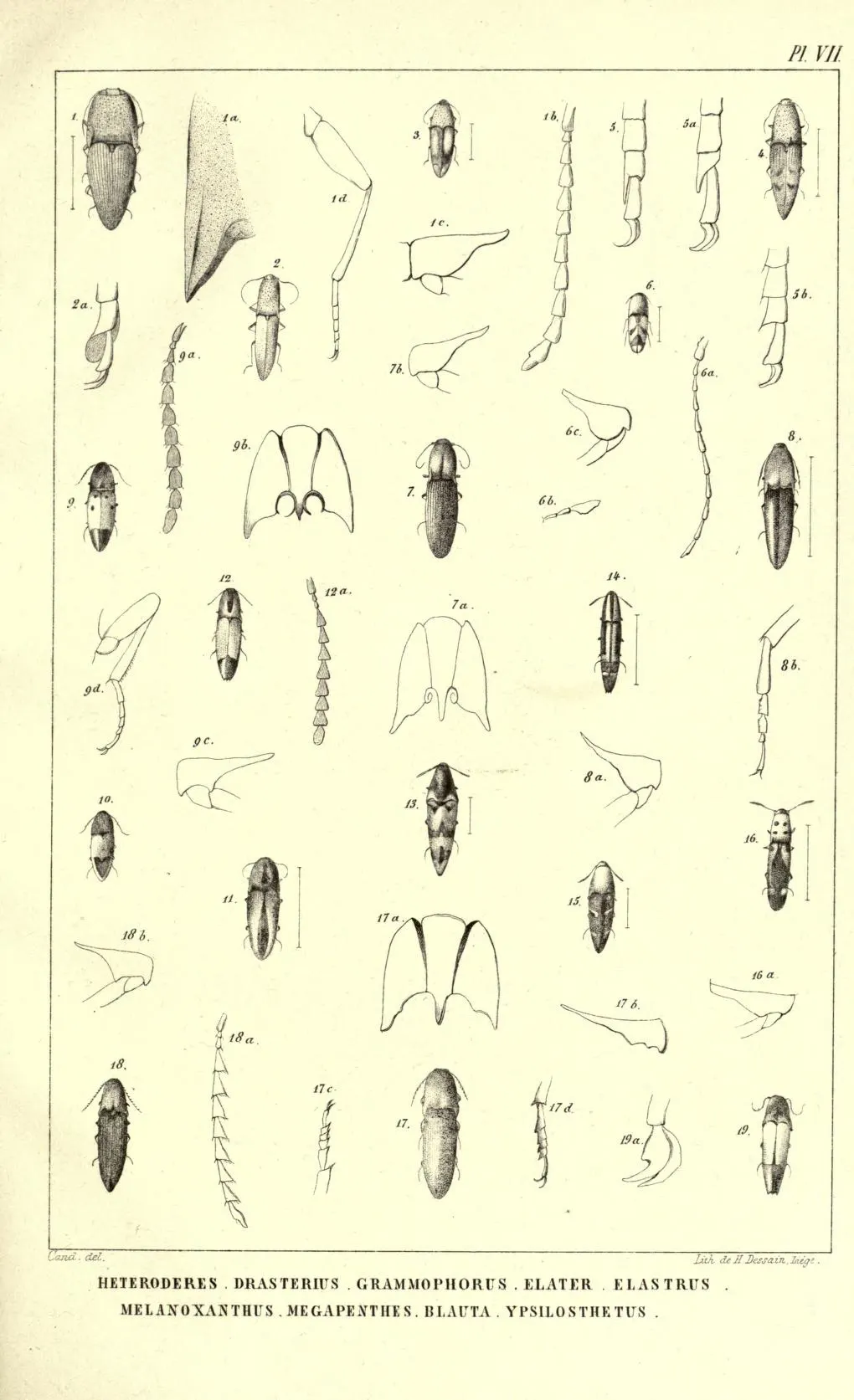
It belongs to the click beetles, the family Elateridae, in the large genus Ampedus, which holds more than 460 described species. The species name dates to Gyllenhal, 1817.
Where it lives
The Red List treats it as a resident of temperate forest. Living populations are recorded in France, Spain, Austria, Czechia, Slovakia, Hungary, Croatia, Bosnia and Herzegovina, Serbia, Kosovo, Montenegro, Romania and Ukraine. It is listed as extinct in Germany and possibly extinct in Poland, and its presence in Switzerland and Italy is uncertain.
The assessment puts its extent of occurrence at about 314,000 square kilometres, but the area it actually occupies at only about 84 square kilometres. It is reported from very few localities in each country: Spain has a single one in the eastern Pyrenees, and in Hungary it is sporadic, though it was rediscovered in the late 1990s and early 2000s in three regions of the south. The open biodiversity database GBIF holds 46 occurrence records, 21 of them from France and 8 from Austria.
Pins are Wikidata “endemic to” fields. Orange dots, when present, are GBIF occurrence tiles — survey bias included.
How it lives
Little has been published on this species' own life history, so what follows describes the genus. Beetles of Ampedus tunnel through rotting wood as larvae, favouring wood well advanced in decay, and some larvae eat other wood-feeding larvae. Females lay eggs in fallen wood, and adults feed on pollen. Small species can finish development within a year, while larger ones may need four to five years.
If A. quadrisignatus follows the genus pattern, it depends on deadwood staying in place for many years.
Why it is in trouble
The 2025 assessment lists the population as decreasing and severely fragmented, with continuing declines in its range and in the area it occupies. The stress named is degradation of the forest ecosystem. The one threat recorded is small-scale logging and wood harvesting, with its scope and severity unknown.
What is being done
It occurs in at least one protected area, and the assessment calls for site protection and for protecting forest resources and habitat. It is not covered by any international legislation.
Sources
Written for this catalog in our own words from the sources below, checked against them on 12 November 2026. Population figures are estimates and carry the year they were made. Status and assessment year: IUCN. 2026. The IUCN Red List of Threatened Species. Version 2026-1. iucnredlist.org.




