Endangered
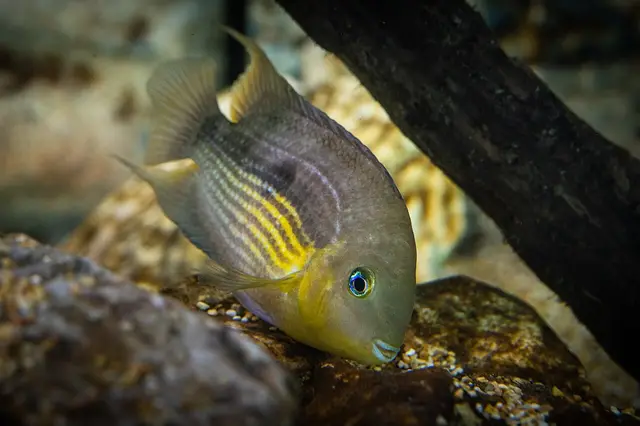
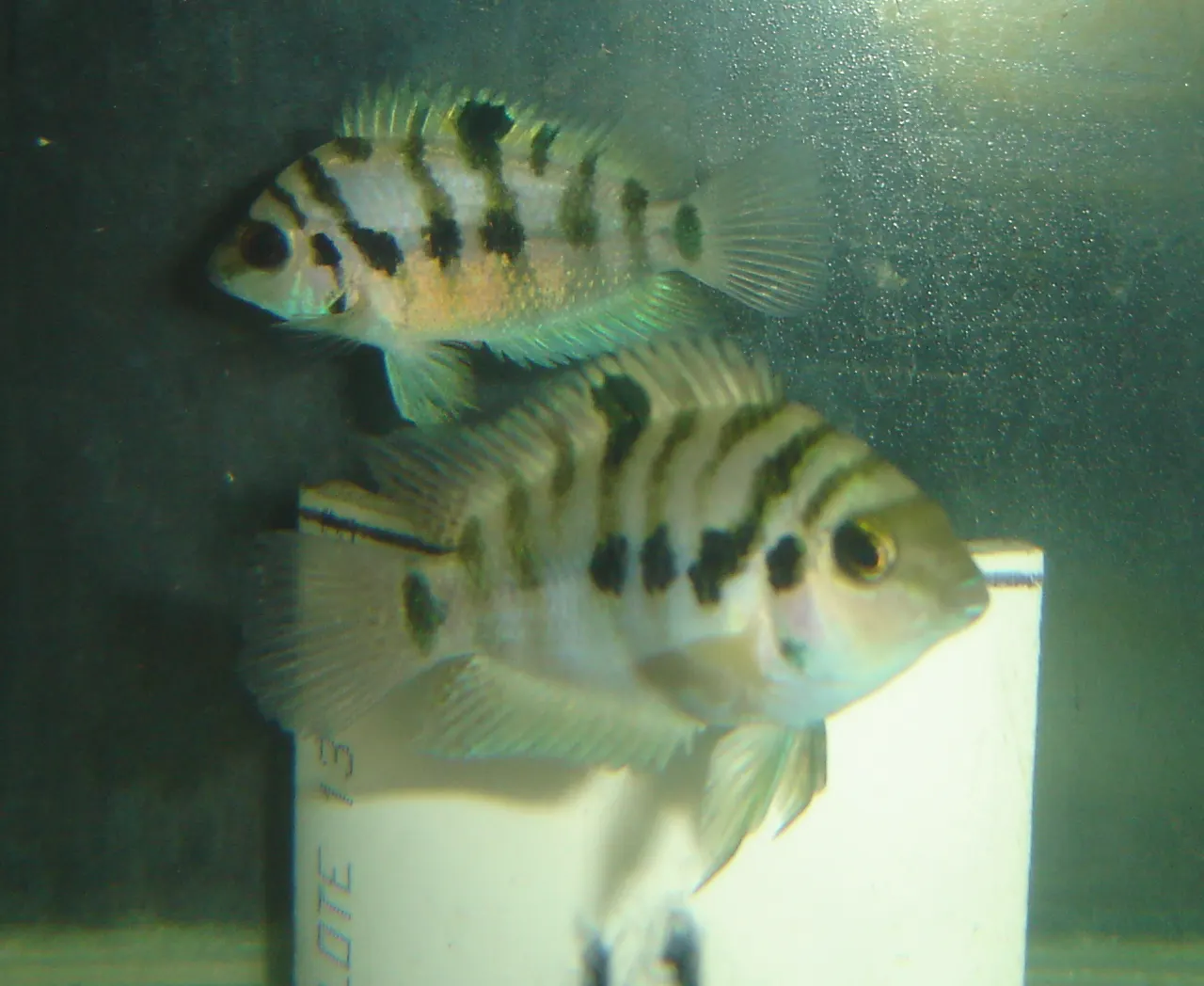
Panama Convict Cichlid
Amatitlania kanna
The Panama convict cichlid (Amatitlania kanna) is a small freshwater fish of the Caribbean slope of Panama and eastern Costa Rica. It is listed as Endangered on the Red List (assessed 2020) because its streams and swamps are polluted and converted by farming, and its numbers are falling.
How to recognise it
This is a close relative of the convict cichlid (Amatitlania nigrofasciata). It stays small, and the largest recorded males reach about 8.3 cm in standard length (the length from snout to the base of the tail fin).
The body is short or deep, and the dark blotch at the base of the tail lies completely on the tail fin. Typical fin counts are 17 to 19 dorsal spines and 7 to 8 soft anal rays.
The species was described in 2007 in a revision of the genus. A 2017 study in the Biological Journal of the Linnean Society analysed mitochondrial DNA from 318 fish and found two well supported species in the genus, the convict cichlid lineage and this one. The Panama convict cichlid was the only species the study could separate clearly by both DNA and body form.
Where it lives
The type material came from Atlantic Panama. Museum specimens collected in 1921 and 1923 include fish from the San San swamp, a creek and swamp at Isla Grande draining to the Sixaola River, tributaries of the Cricamola River and a creek and pond feeding Almirante Bay, all in Bocas del Toro. The 2017 study sampled it in eastern Costa Rica as well as Panama, and research-grade iNaturalist observations include fish from Limon province in Costa Rica.
The Red List gives its habitat as permanent rivers and streams and freshwater springs. It estimates the extent of occurrence at about 2,160 square kilometres, split across roughly four locations (the assessment allows three to five).
Pins are Wikidata “endemic to” fields. Orange dots, when present, are GBIF occurrence tiles — survey bias included.
How it lives
Little has been written about it in the wild, and most of what is known about its behaviour comes from hobbyists. A breeder who spawned a tank-raised pair of the Rio Robalo strain in March 2022 reported about 150 eggs, fewer than a standard convict cichlid lays, and fish that were much less aggressive than that species.
Why it is in trouble
The Red List records a decreasing population and a continuing decline in habitat area. The threats it lists are sewage, agro-industry farming, herbicides and pesticides, seepage from mining, and unintended losses linked to large-scale harvesting. The stresses are ecosystem conversion and degradation, plus direct mortality.
No population count exists, and the assessment does not say how many adults remain.
What is being done
Very little is recorded. The 2020 assessment records no species recovery plan, no systematic monitoring scheme and no captive breeding programme, and it lists no conservation actions as in place. Whether any part of its range lies inside a protected area is marked as unknown.
Sources
Written for this catalog in our own words from the sources below, checked against them on 12 November 2026. Population figures are estimates and carry the year they were made. Status and assessment year: IUCN. 2026. The IUCN Red List of Threatened Species. Version 2026-1. iucnredlist.org.