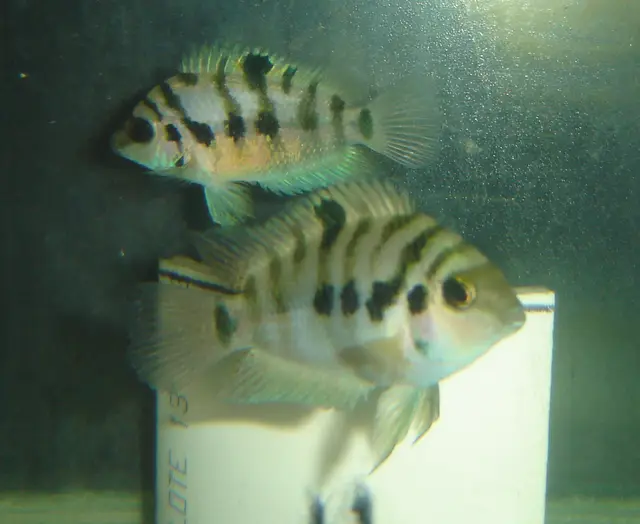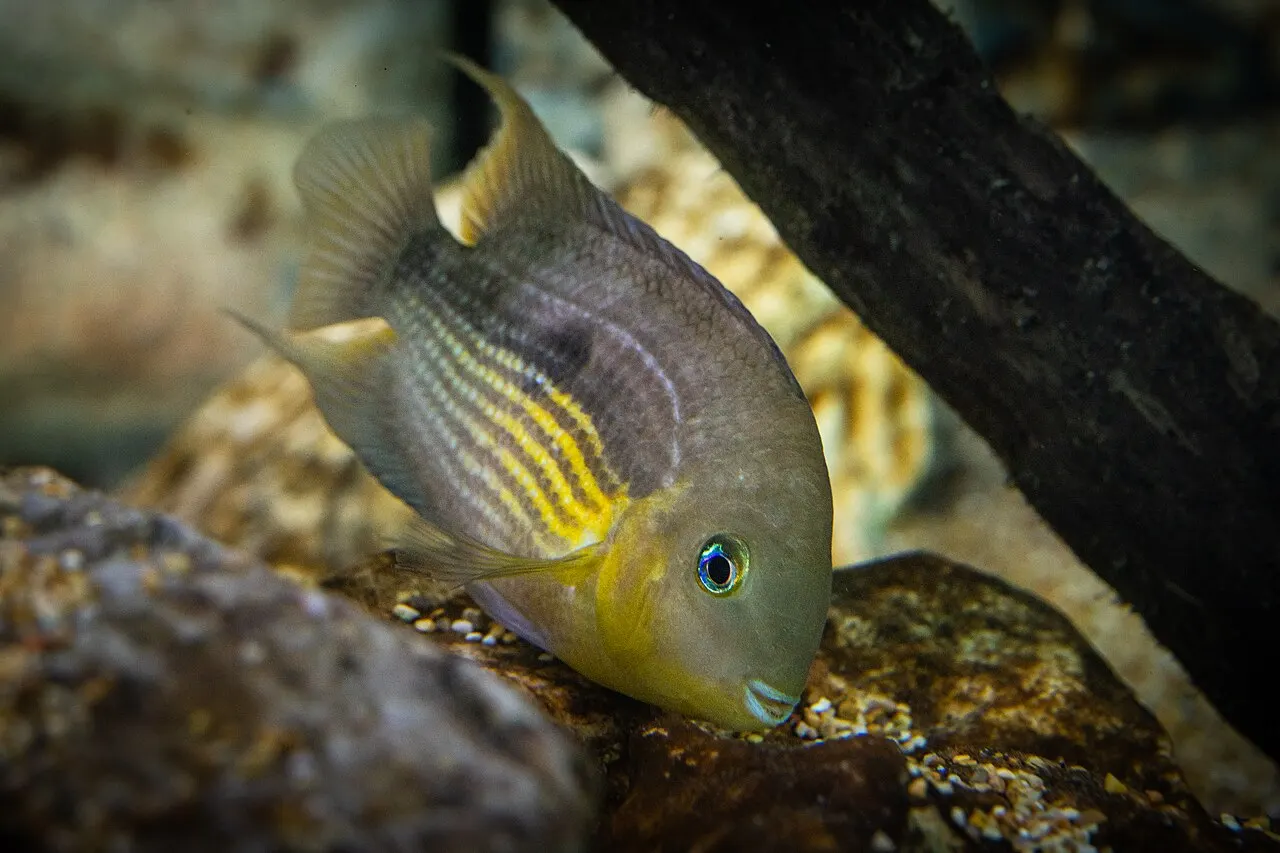
Endangered
Myrna's Cichlid
Amatitlania myrnae
Amatitlania myrnae, the topaz cichlid or Myrna's cichlid, is a small freshwater fish known from rivers and creeks on the Atlantic side of Costa Rica, near the Panamanian border. The IUCN Red List rated it Endangered in 2020, with sewage, farming runoff and mining among the threats.
What it is
This is a small Central American cichlid, up to about 8 cm long. Loiselle described it in 1997 as Archocentrus myrnae. GBIF material citations give the type locality as the Río Cocolis, a tributary of the Sixaola, and museum specimens from there date to 1977 and 1979.
It is a species in its own right. It was once treated as a variety of the seven-stripe cichlid, a better-known fish, and facts about that species don't carry over to this one.
Where it lives
FishBase gives its range as the Atlantic slope of Costa Rica and Panama, from the Estrella River to the Cuarumo River. The IUCN records it from Costa Rica only and counts a single location. Elevation is 40 to 150 m in the IUCN assessment and on FishBase. The IUCN estimates its extent of occurrence at 1,170 to 2,700 square kilometres.
GBIF holds 38 records of the species. Those with a recorded province are almost all from Limón, with specimens from the Sixaola basin and the headwaters of the Estrella, and iNaturalist observations from 2019 to 2026.
Pins are Wikidata “endemic to” fields. Orange dots, when present, are GBIF occurrence tiles — survey bias included.
How it lives
FishBase says it is most abundant in rivers and creeks with still water or little current, in water of 23 to 26 degrees C, and that it feeds on plant detritus and ooze. The IUCN lists its habitats as freshwater springs and permanent streams.
Little else about its breeding or behaviour is documented in the sources available.
Why it is in trouble
The 2020 assessment records a decline in both the population and the area of habitat. It lists sewage, agro-industry farming, herbicides and pesticides, mining and quarrying, and seepage from mining as ongoing pressures. It also lists unintended effects of large-scale harvesting.
With a single location, one event along that river system could affect the whole species.
What is being done
The IUCN records no recovery plan, no systematic monitoring scheme, no captive population and no international trade controls. Whether it occurs in a protected area is listed as unknown. The assessment calls for further work on threats, population size and distribution, and habitat and population trends.
Sources
Written for this catalog in our own words from the sources below, checked against them on 12 November 2026. Population figures are estimates and carry the year they were made. Status and assessment year: IUCN. 2026. The IUCN Red List of Threatened Species. Version 2026-1. iucnredlist.org.