Endangered
Alburnus vistonicus
Alburnus vistonicus
The Vistonis shemaya, Alburnus vistonicus, is a freshwater fish found only in the Lake Vistonida drainage of northeastern Greece. Males reach about 22 cm, and the fish moves up tributary rivers to spawn. The IUCN Red List assessed it as Endangered in 2024, citing farming, drought and dams.
How to recognise it
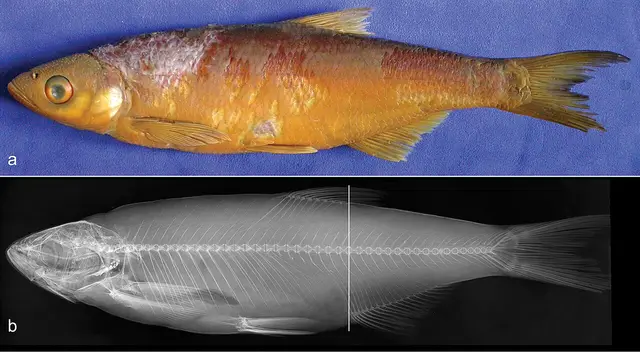
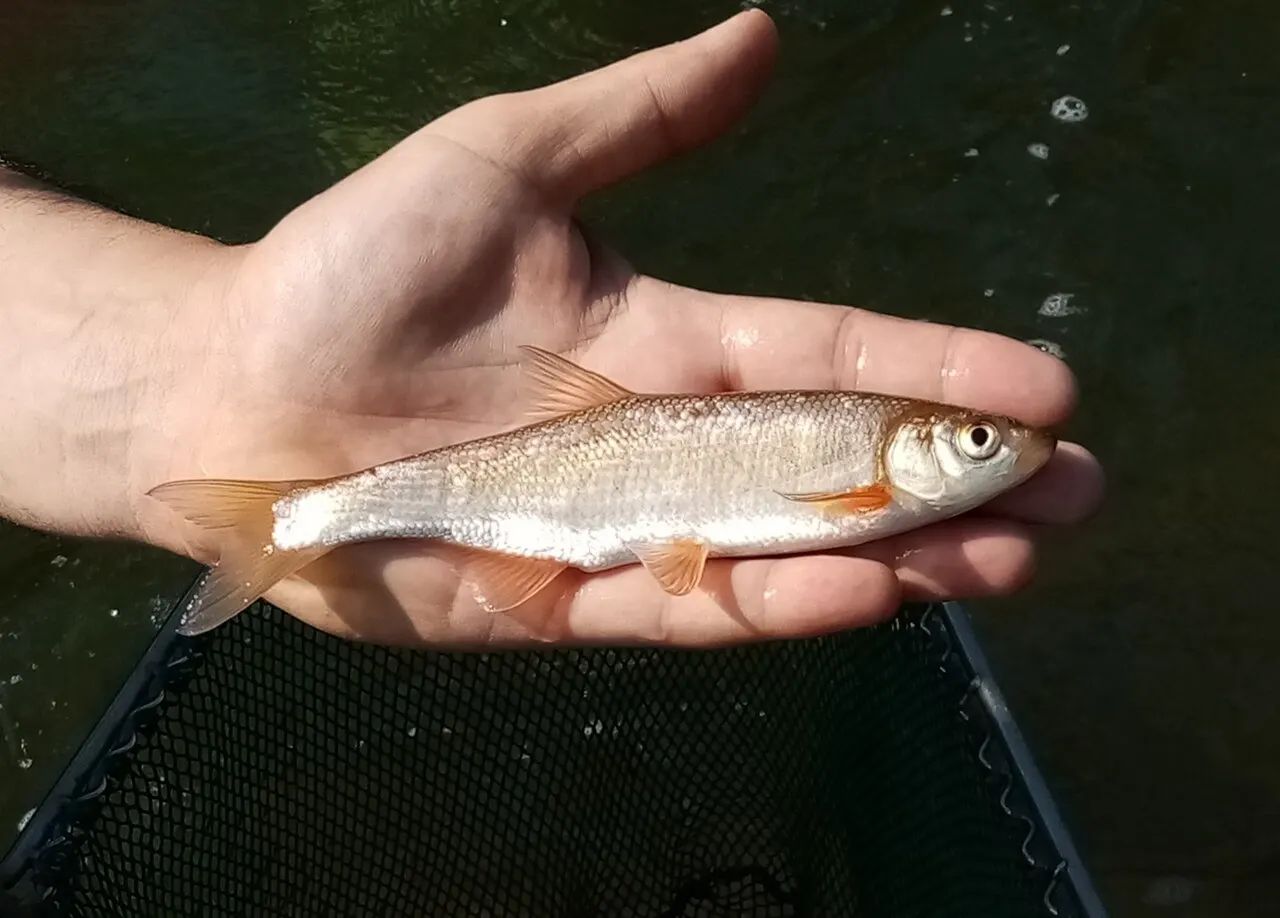
It is a small member of the minnow family Leuciscidae, in the same genus as the bleaks and shemayas. The largest recorded standard length is 21.7 cm. In the breeding season males develop a few large tubercles, the small hard bumps many relatives grow when spawning.
It is told from its relatives by counting. The original description gave 13 to 15 branched rays in the anal fin, 21 to 25 gill rakers and 57 to 67 scales along the lateral line, with an exposed keel on the belly for 5 to 12 scales in front of the anus. Jorg Freyhof and Maurice Kottelat described it in 2007, in a paper that also gave a new name to the shemaya of nearby Lake Volvi.
Where it lives
The species is endemic to the Lake Vistonida drainage in Eastern Macedonia and Thrace, Greece. One fish database says it may also occur in the Filiouris drainage. Lake Vistonida lies near Porto Lagos and is fed by the Kompsatos river. The IUCN records its habitat as coastal freshwater lakes and permanent rivers and streams.
The assessment counts three locations and an extent of occurrence of about 2,360 square kilometres. Part of the range falls inside a protected area, and conservation sites have been identified over part of it.
Pins are Wikidata “endemic to” fields. Orange dots, when present, are GBIF occurrence tiles — survey bias included.
How it lives
It is a lake fish that moves into the upper reaches of the tributary rivers to spawn. The IUCN classes it as a full migrant that is congregatory all year. People use it for food.
Because spawning depends on free passage up the rivers, anything that blocks or dries those channels matters a great deal.
Why it is in trouble
The IUCN lists ongoing pressures across more than 90 percent of its range. They include nutrient run-off, soil erosion and silt, herbicides and pesticides, drought, and water pumped from rivers and groundwater for farming. Small dams are another threat. A Balkan fish database reports that most of the spawning habitat has been lost to irrigation dams, and that six medium hydropower plants were planned on the upper Kosynthos and several small ones on the Kompsatos. Such schemes can destroy spawning grounds by disrupting sediment transport or flushing out fine silt.
The 2024 assessment records a continuing decline in the area it occupies, but its population trend is listed as unknown. No total population figure has been published.
What is being done
The Balkan database lists the species under Appendix III of the Bern Convention. The IUCN notes recent education and awareness programmes, but no recovery plan, no systematic monitoring scheme and no captive breeding. It lists research on population, ecology, threats and actions as needed.
Sources
Written for this catalog in our own words from the sources below, checked against them on 12 November 2026. Population figures are estimates and carry the year they were made. Status and assessment year: IUCN. 2026. The IUCN Red List of Threatened Species. Version 2026-1. iucnredlist.org.