Endangered
Alburnus sarmaticus
Alburnus sarmaticus
The Black Sea shemaya (Alburnus sarmaticus) is a river fish of the Black Sea and lower Danube drainages, living in rivers, estuaries and brackish coastal waters from the Dnieper to the Danube. The IUCN Red List rated it Endangered in 2024, after dams cut it off from its spawning gravels. Fish once placed here are now a separate species.
How to recognise it
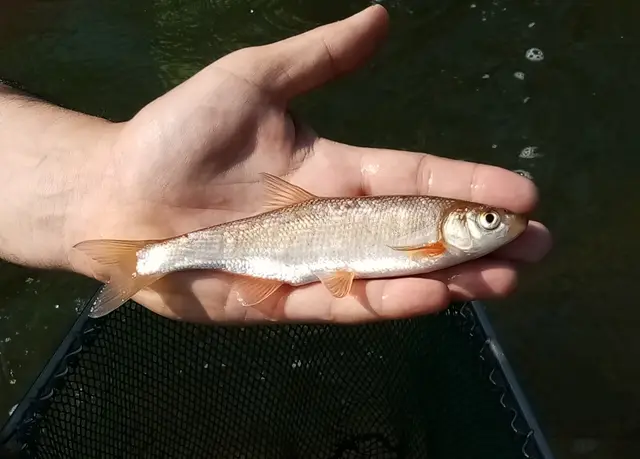
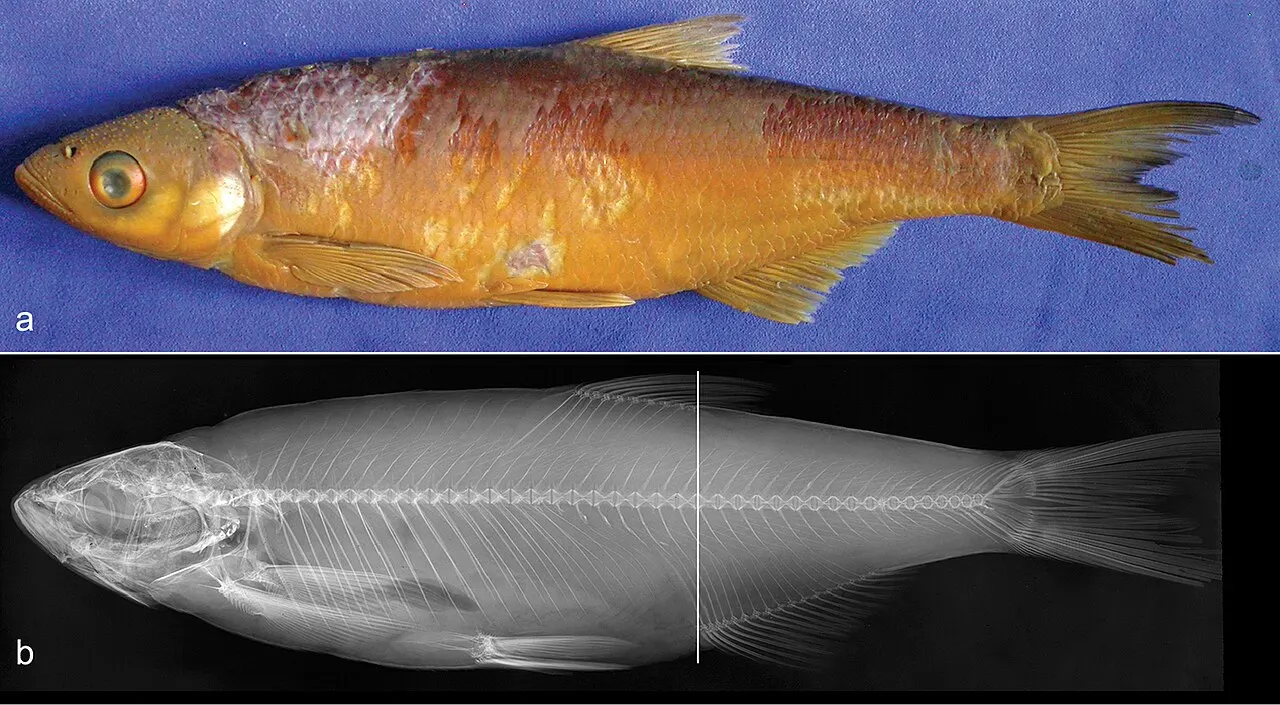
It is a medium-sized member of the carp family (Leuciscidae), reaching up to about 25 cm in standard length. It was described in 2007 by Jörg Freyhof and Maurice Kottelat in a review of the Alburnus mento group, which also named two other new species. The name refers to the Sarmatians, an ancient people of the region.
Where it lives
The current IUCN assessment lists Ukraine, Romania and Bulgaria, in the Dnieper, Southern Bug and Danube systems. Its habitats include the lower and middle stretches of big rivers, estuaries, coastal lakes and lagoons, and nearby sea water of reduced salinity. It tolerates salt levels up to about 12 parts per thousand.
The name has also been used more widely. The fish in the River Kolpa (Kupa), a tributary of the Sava on the Croatian and Slovenian border, were long counted here, but a 2017 description named the upper Sava population as a separate species, Alburnus sava. A 2017 study in Croatia treats the Kolpa fish as that species.
Pins are Wikidata “endemic to” fields. Orange dots, when present, are GBIF occurrence tiles — survey bias included.
How it lives
Some populations are migratory and others live in the river all year. Fish that spend part of their lives in brackish water enter rivers in autumn and travel upstream in winter or spring, then return to the sea soon after spawning. The IUCN records the species as gathering in groups year-round.
Spawning takes place in fast riffles over gravel, where the sticky eggs cling to stones. Adults eat mostly planktonic crustaceans, insects that fall on the water and small fish. Young fish feed on zooplankton, algae and insect larvae, and they drift downstream in the autumn of their first year or the following spring.
Why it is in trouble
Populations fell sharply in the early and middle 20th century when dams blocked access to spawning grounds. Spawning is now limited to the stretches below those dams. The IUCN lists large dams, along with subsistence and commercial fishing, as ongoing threats, and records a past decline of about 50 percent. It also hybridises with the chub (Squalius cephalus).
In 2007 the species, then understood to include the Kolpa fish, was described as almost extirpated in the Danube and surviving in few localities in the Kolpa (Kupa). Since the 2017 split, that account applies largely to the Balkan shemaya.
What is being done
The assessment notes a monitoring scheme and that part of its range falls in protected areas, but no recovery plan, harvest management plan or invasive species control. No captive breeding or reintroduction has been recorded.
Sources
Written for this catalog in our own words from the sources below, checked against them on 12 November 2026. Population figures are estimates and carry the year they were made. Status and assessment year: IUCN. 2026. The IUCN Red List of Threatened Species. Version 2026-1. iucnredlist.org.