Endangered
Agrotis epicremna
Agrotis epicremna
Agrotis epicremna is a brown owlet moth found only in the Hawaiian Islands, living high on the mountains. It was assessed as Endangered in 2021. It has not been recorded on Kauaʻi since 1981 or on Molokaʻi since 1979, and a population is known from Haleakalā on Maui.
How to recognise it
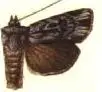
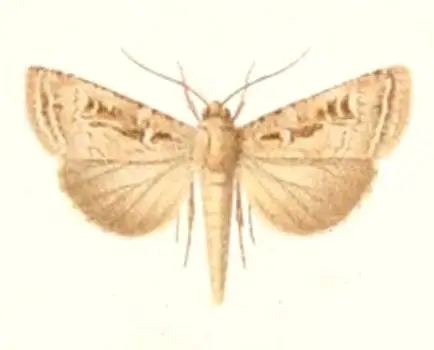
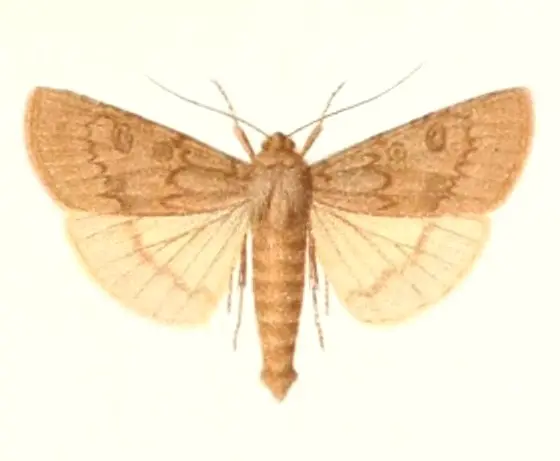
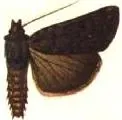
A museum voucher specimen of this moth measured 48 mm across its spread wings. Its forewings carry dark spots with clearer edges than those of its close relative from Mauna Kea, Agrotis kuamauna. The antennae of the male are comb-like, with a pointed triangular process on every segment, a trait shared with that Mauna Kea species. Edward Meyrick described the species in 1899, and it has also been listed under the name Euxoa epicremna.
Where it lives
The moth is endemic to Hawaii. Records exist from Kauaʻi, Molokaʻi and Maui, and on Maui it is known from Haleakalā. The Red List counts two locations and puts its habitat at 1,500 to 3,000 m, in high-altitude subtropical or tropical shrubland and on rocky ground such as cliffs and mountain peaks. It is not a migrant, and it occurs in at least one protected area.
Pins are Wikidata “endemic to” fields. Orange dots, when present, are GBIF occurrence tiles — survey bias included.
How it lives
The caterpillar's food is presumed rather than observed. A 2019 paper by Medeiros and Kirkpatrick describing Agrotis kuamauna says the Haleakalā moth is presumed to feed on the silversword Argyroxiphium sandwicense, citing earlier work by Zimmerman in 1958. Its Mauna Kea relative, by contrast, has been seen eating insects and various plants, with lichens possible. Little else is recorded about the life cycle.
Why it is in trouble
The Red List cites habitat shifting and alteration, along with unspecified problem species, as threats, and names degraded habitat and direct deaths of moths as the resulting stresses. The population trend is listed as unknown, but the area where the moth lives is recorded as still shrinking. With only two locations, even a small local change could remove a large part of the population.
The silence from Kauaʻi and Molokaʻi is the clearest sign of trouble, since the moth has not turned up on either island for four decades.
What is being done
The moth occurs inside at least one protected area. The Red List names protection of its resources and habitat, and control of invasive or problem species, as the actions needed.
Sources
Written for this catalog in our own words from the sources below, checked against them on 12 November 2026. Population figures are estimates and carry the year they were made. Status and assessment year: IUCN. 2026. The IUCN Red List of Threatened Species. Version 2026-1. iucnredlist.org.