United States Minor Outlying Islands
7 catalog pins
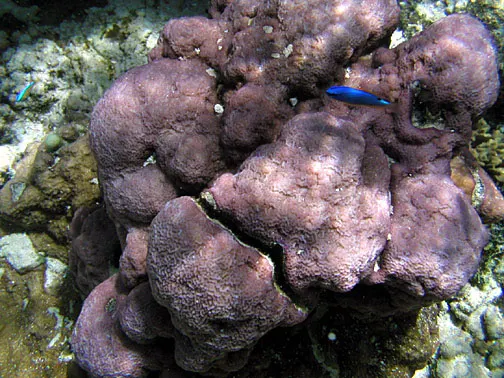
7 animals in this catalog carry a structured country pin for United States Minor Outlying Islands. That is a filing fact, not a claim that the crisis is only here.
The photograph is one of those animals: Montipora caliculata. Open a dossier for the text, the status, and the map. Use the world map to jump to another country. Confirm official distributions on the Red List.
The United States Minor Outlying Islands are a scattering of small islands, atolls and reefs in the Pacific and Caribbean that belong to the United States but aren't states. Palmyra Atoll is an incorporated territory; the rest are unincorporated and unorganized. None of the islands has any known permanent residents.
Most of the islands are tiny. Wake Island and Midway Atoll are each about 6 square kilometers of land, and Kingman Reef is about 0.01. What they have in quantity is water: the lagoons add up to roughly 267 square kilometers.
Reefs in remote waters
Palmyra Atoll shows what the better-protected reefs hold. It's ringed by reef around three lagoons and has more than 150 coral species, about double the number recorded in Hawaii. Seabirds nest on its land and green sea turtles feed in its waters.
Even uninhabited places face pressure. Rats, which once numbered as many as 30,000 on Palmyra, were removed in 2012, but coconut palms spread quickly afterward and from 2019 crews have worked to remove them and restore native rainforest. Trash and debris often wash up on the atoll's beaches.
What protection exists
Nine islands and atolls are national wildlife refuges: Baker, Navassa, Howland, Jarvis, Johnston, Kingman, Midway, Palmyra and Wake. Palmyra's refuge was designated in January 2001, and the atoll became a Ramsar wetland in April 2011. The Nature Conservancy bought most of its land in 2000 and manages it as a reserve.
Seven Pacific sites (Baker, Howland, Jarvis, Johnston, Kingman, Palmyra and Wake) lie inside a marine national monument created in 2009 and expanded in 2014 to about 490,343 square miles. It was renamed in January 2025. In April 2025 an executive order removed protection from parts of it and restored commercial fishing access out to 200 nautical miles, so the rules in force may keep changing.
Reading the catalog for these islands
The catalog lists 7 animals here, and all 7 are corals recorded as Endangered. Five belong to the family Acroporidae, with one each from Pocilloporidae and Poritidae. Corals are animals, though they're easy to overlook as such. The records don't say which island each coral grows on, so a pin here marks the territory as a whole, not a particular reef.
Sources for this section
- United States Minor Outlying Islands (Wikipedia): island areas, lagoon area, administration, population, nine refuges
- Palmyra Atoll (Wikipedia): ownership, refuge and Ramsar dates, coral species, rat eradication, coconut palms, plastic debris
- Pacific Remote Islands Marine National Monument (Wikipedia): 2009 creation, 2014 expansion, 2025 rename, 2025 executive order, islands included
What the catalog records for United States Minor Outlying Islands
The catalog has 7 animals with a country pin for United States Minor Outlying Islands: 7 Endangered. By GBIF class the largest groups are Anthozoa (7). The families with the most records are Acroporidae (5), Pocilloporidae (1), Poritidae (1). A pin means a structured source (Wikidata or a GBIF match) places the animal in United States Minor Outlying Islands; it does not say the animal lives only there.
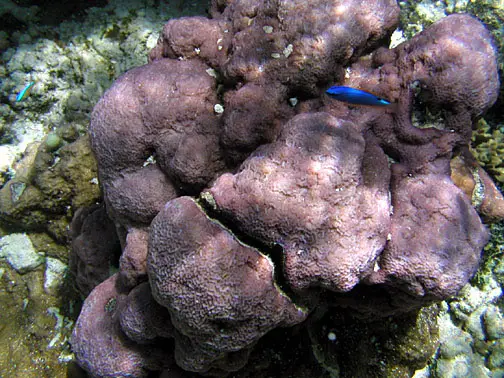 EN
Montipora caliculata
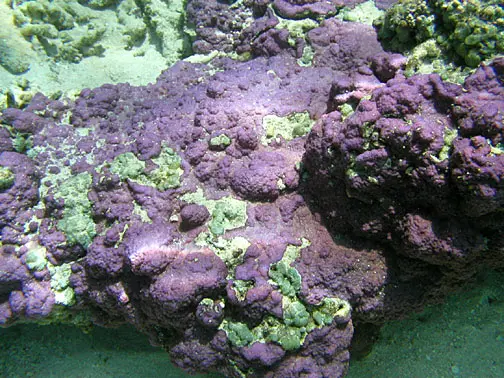 EN
Montipora efflorescens
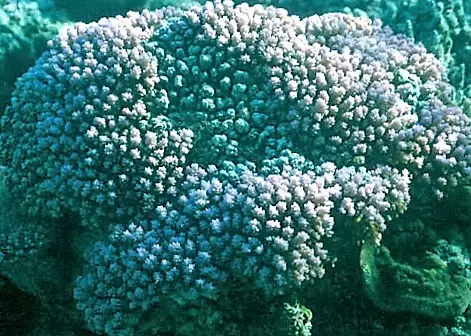 EN
Montipora informis
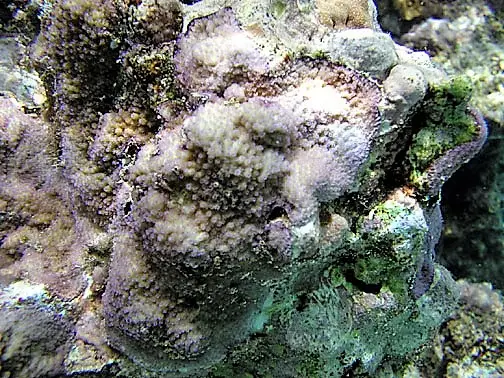 EN
Montipora peltiformis
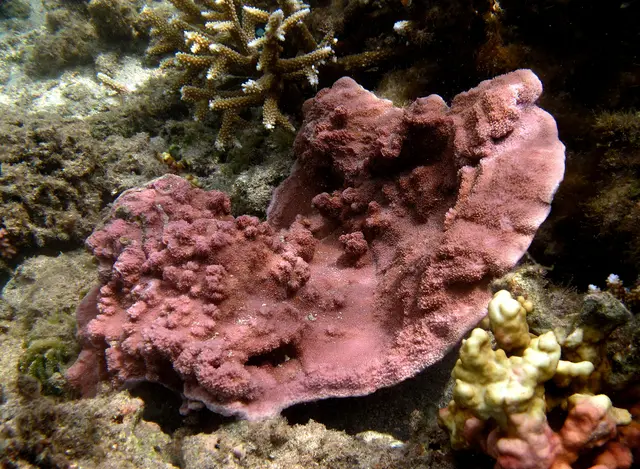 EN
Montipora tuberculosa
 EN
Pocillopora ligulata
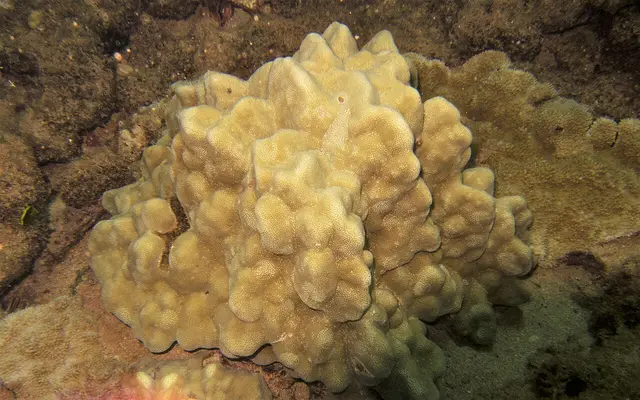 EN
Porites evermanni
Total pins: 7.
Quick answers
- Do all these animals live only in United States Minor Outlying Islands?
- No. A pin means a Wikidata place field resolved here. Official ranges can be wider.
- Is this a government list?
- No. It is a slice of this catalog.