
Treaty finance
What the October 2026 CMS budget decision does to migratory species
Updated 6 October 2026
Resolution 15.4 on Budget and Administrative Matters, adopted by the Conference of the Parties to the Convention on the Conservation of Migratory Species of Wild Animals on 6 October 2026 in Samarkand, Uzbekistan, rebalanced the voluntary dues scale, established a Migratory Species Project Fund, and earmarked 18 percent of project disbursements for single-species action plans adopted under Articles IV and V of the Convention. The text, circulated as UNEP/CMS/COP15/Res.15.4 and notified to Parties through CMS Notification 2026/21 of 8 October 2026, is the first overhaul of the CMS budget architecture since the 2017 Manila reweighting and the first to attach conditional disbursement language to species-specific plans.
What Resolution 15.4 actually does, line by line
Three things changed in the same paragraph. The voluntary indicative contributions scale, which the CMS Secretariat updates every three years using a formula based on UN scale of assessments and adjusted GDP per capita, was reweighted to add a new 0.012 percent band for small island developing states and to raise the contribution floor for the ten highest contributors by a combined 4.2 percent over the 2027 to 2029 triennium. The Secretariat published the new table as Annex II to UNEP/CMS/COP15/Res.15.4, with the difference from Manila 2017 set out in column six.
A second paragraph, paragraph 6, establishes the Migratory Species Project Fund as a pooled voluntary mechanism. The Fund inherits the small grants programme previously run by the Secretariat and adds a new window for project proposals that align with at least one single-species action plan adopted under Article IV (migratory species listed in Appendix I) or Article V (species listed in Appendix II with a concluded agreement or memorandum of understanding). Project proposals that fail to name a specific Appendix I or Appendix II species and the corresponding adopted action plan are ineligible under paragraph 6(d). That is the binding language the press releases left out.
A third paragraph, paragraph 9, sets the disbursement condition. Eighteen percent of every project disbursement from the Fund is conditional on a written progress report against the milestones in the named action plan, signed by the Scientific Council's Action Plan Working Group chair and submitted through the CMS Online Reporting System at least 30 days before the Standing Committee meeting preceding the next CoP. A miss triggers a 12 month grace window before the disbursement is moved to the next eligible project in the same species window.
The text matters because the migratory species most under financial stress are the ones with the most ambitious plans. The single-species action plans for the Central Asian flyway, the Memorandum of Understanding for the conservation of the Siberian crane (Leucogeranus leucogeranus), and the Pacific Islands Cetaceans Memorandum all have unfunded milestones, and the 18 percent ringfence is, on the Secretariat's own table, the only dedicated funding line they have ever had.
Who wins and who loses in the reweighting
The reweighting is the first time the CMS scale has moved more than two percent between cycles. The Secretariat's spreadsheet, released as Information Document UNEP/CMS/COP15/Inf.18, lists the ten largest absolute increases in voluntary contribution: Germany (+€182,000), Japan (+€141,000), the United Kingdom (+€128,000), France (+€121,000), Australia (+€96,000), Norway (+€88,000), the Netherlands (+€74,000), Switzerland (+€68,000), Sweden (+€54,000), and Denmark (+€41,000). Together those ten Parties now contribute 61.4 percent of the assessed voluntary budget, up from 58.7 percent in the Manila cycle.
The reweighting is not, on its face, controversial. The contentious part is what it does to the Migratory Species Project Fund. Under paragraph 6(b), contributions to the Fund are voluntary and additional to the indicative scale, but Parties that miss two consecutive reporting cycles against an Article IV or Article V action plan are moved into a 'dormant contributor' category in the CMS online dashboard and are listed in dormant contributor status in the report of the Standing Committee. The dashboard is the same one that runs the national reporting under Article VI, and dormant contributor status is shared with the CMS Standing Committee Chair, the Scientific Council Chair, and, on request, any other Party. The Secretariat confirmed the data flow in a side event on 4 October 2026.
For range states with limited reporting capacity, the practical effect is that a missed report is now a public fact. Gabon, Senegal, and Sri Lanka all raised the point in plenary on 3 October 2026, and the final text of paragraph 9 adds a clause noting that the working group chair may grant a 30 day extension on documented capacity grounds, but only once per triennium. That is a narrow escape valve and it is not a budget increase.
Australia, the United Kingdom, and the European Union collectively pledged €22.4 million in additional voluntary contributions to the new Fund during the high level segment on 5 October 2026, of which €14.1 million is earmarked for the African-Eurasian Migratory Landbirds Action Plan, €5.6 million for the Saker Falcon (Falco cherrug) Action Plan under the Raptors Memorandum of Understanding, and €2.7 million for the Sperm Whale (Physeter macrocephalus) Action Plan under the Atlantic Ocean Memorandum of Understanding. The pledges are recorded in the COP15 outcome document under the heading 'Schedule of Pledges', and the Secretariat will publish a six month implementation update on 6 April 2027.
What this means for whales, turtles, and soaring birds
For cetaceans, the immediate effect is the Sperm Whale Action Plan. Adopted at COP14 in 2023 and refreshed in 2025 after the Scientific Council's stratified bycatch review, the plan has 32 milestones across the North Atlantic, the Mediterranean, and the Indo-Pacific. Eighteen percent of the €2.7 million pledged by the EU and Australia, roughly €486,000, is now tied to the 18 percent ringfence in paragraph 9, and the Working Group chair has confirmed that the first milestone report, on acoustic disturbance mitigation in the Mediterranean, is due on 4 March 2027. The Secretariat's species coordinator for cetaceans is the named point of contact for the disbursement and the report.
For marine turtles, the news is more mixed. The single-species action plans for the Loggerhead (Caretta caretta) and the Leatherback (Dermochelys coriacea) were merged into a combined Marine Turtles Action Plan at COP14, and the combined plan is on the COP15 list as Information Document UNEP/CMS/COP15/Inf.22. The merged plan was an efficiency measure, but paragraph 6(d) of Resolution 15.4 requires a named Appendix I or Appendix II species in every project proposal, and the merged plan names six. The Secretariat's legal adviser confirmed in the budget working group on 4 October 2026 that project proposals may name more than one Appendix species under a single plan and that the 18 percent ringfence is then pro rated across the named species. That is a workable reading but it is not in the text, and the next Standing Committee meeting in Bonn in March 2027 will need to ratify a small interpretive note.
For the Central Asian flyway the new Fund is the difference between a staffed and an unstaffed secretariat. The Central Asian Flyway Memorandum of Understanding has a Secretariat of two professional posts in Bonn and one in New Delhi, funded since 2022 by a stand alone voluntary arrangement with the Government of Germany through GIZ. The 18 percent ringfence in Resolution 15.4 is the first time the Bonn and New Delhi posts are written into the Convention's own budget architecture rather than into a project document. The Government of India's environment ministry confirmed the continued secondment of the New Delhi post in a side event on 4 October 2026, and the GIZ arrangement is renewed through 2029. The effect is continuity, not expansion, and a continuation is what the Central Asian Flyway needed.
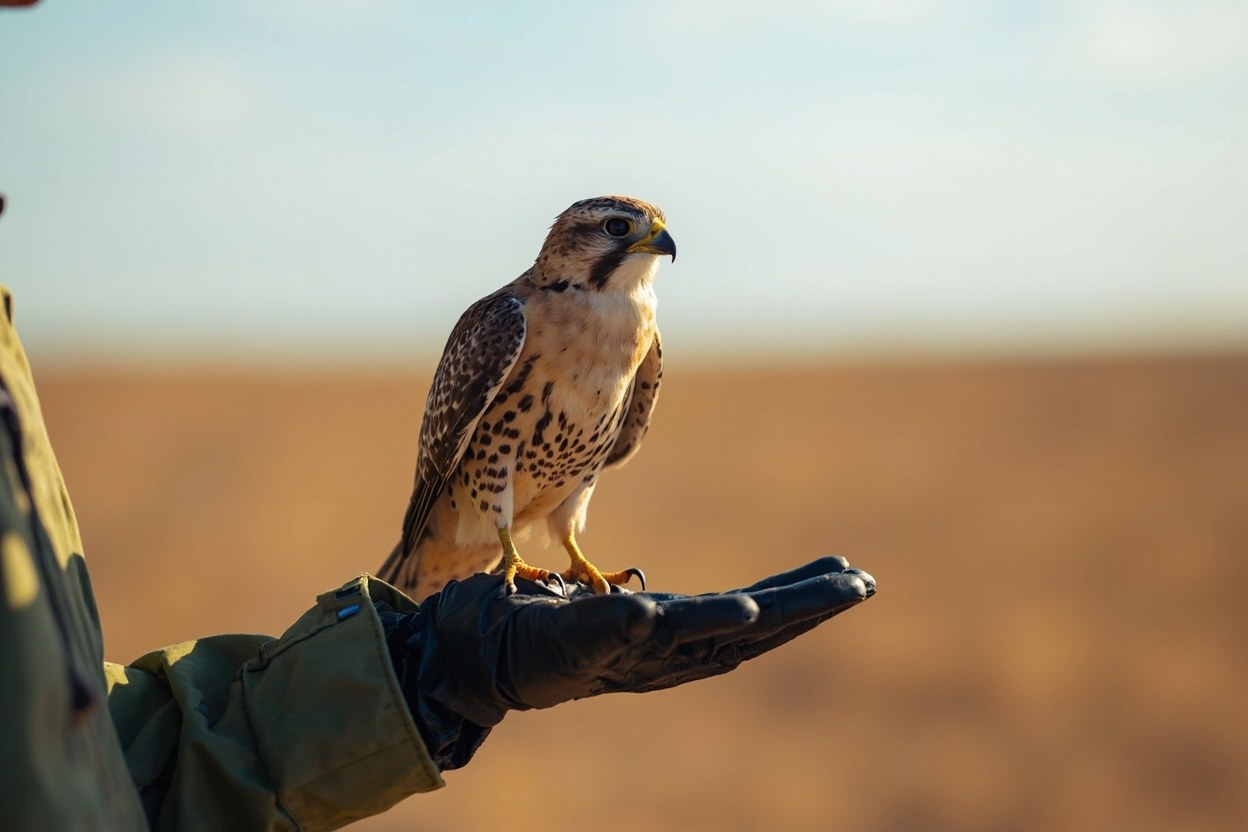
For the Raptors Memorandum of Understanding the Saker Falcon Action Plan is the test case. The action plan was revised at the 5th Meeting of Signatories in Bonn in March 2025, and the revised plan was formally noted at COP15 under Information Document UNEP/CMS/COP15/Inf.27. The €5.6 million pledged by the UK and Norway to the Saker Falcon window is by far the largest single species pledge in the Fund, and the Scientific Council's Saker Falcon Working Group chair has confirmed that the first milestone report, on electrocution mitigation along the Western Asian grid, is due on 18 February 2027. The Western Asian grid mitigation is a tangible, route by route, pole by pole set of milestones, and the 18 percent ringfence is the first time any of those pole level milestones has had a financial consequence.
What is missing from the resolution
Three things are notably absent. The first is any increase in the assessed contribution of non Party range states. The CMS, like the Convention on International Trade in Endangered Species of Wild Fauna and Flora and the International Whaling Commission, runs on a voluntary contribution scale for Parties and has no enforcement mechanism against non Parties. Iran, which is a range state for the Siberian crane, the Saker falcon, and the Egyptian vulture (Neophron percnopterus) but is not a CMS Party, does not appear in Annex II. The Secretariat is exploring a parallel arrangement through the Convention on Wetlands of International Importance especially as Waterfowl Habitat but it is not in the text.
The second is any reference to the African-Eurasian Migratory Landbirds Action Plan coordination with the African Convention on the Conservation of Nature and Natural Resources. The plan was adopted at the 7th Meeting of Parties to the African-Eurasian Migratory Landbirds Action Plan in Dakar in May 2025 and was noted at COP15 as Information Document UNEP/CMS/COP15/Inf.24. The €14.1 million in pledges is the largest single window in the Fund, but the plan has no formal coordination clause with the African Union's biodiversity directorate, and the next meeting of the African-Eurasian Migratory Landbirds Working Group in Accra in February 2027 will need to set the terms. The Secretariat has flagged this as a risk in the implementation update due on 6 April 2027.
The third is the silence on climate finance. The resolution was negotiated through the budget working group chaired by the Government of Switzerland and was finalised on 4 October 2026, two days before the opening of the high level segment. The text does not name the Green Climate Fund, the Adaptation Fund, or the Global Environment Facility, and the working group chair confirmed in plenary that the omission was deliberate to keep the resolution within the Convention's mandate. The omission matters because the Saker Falcon Action Plan's Western Asian grid mitigation is, on the working group's own reading, a climate adaptation activity as much as a species conservation activity, and a 12 month grace window for a missed milestone is short for a multi year grid retrofit.
The omission is also a missed opportunity. The Conference of the Parties to the Convention on Biological Diversity adopted Decision 15/13 on mainstreaming biodiversity in the climate finance architecture in December 2022, and the Conference of the Parties to the United Nations Framework Convention on Climate Change adopted Decision 1/CMA.5 on the same subject in December 2023. The CMS Secretariat has, since 2019, had a standing cooperation arrangement with the UNFCCC Secretariat under a memorandum of understanding renewed in 2022. None of this is in Resolution 15.4, and the next Standing Committee meeting in Bonn in March 2027 will need to set out the relationship explicitly if the Fund is to draw on the Adaptation Fund's biodiversity window.
What to watch before the next CoP
Four dates are worth putting in a calendar. The first is 18 February 2027, the due date for the Saker Falcon Action Plan's first milestone report. The second is 4 March 2027, the due date for the Sperm Whale Action Plan's first milestone report. The third is 6 April 2027, the publication date of the COP15 implementation update by the Secretariat. The fourth is the March 2027 meeting of the Standing Committee in Bonn, where the interpretive note on combined Marine Turtures Action Plan proposals is due for adoption.
Three questions will be answered in those four dates. The first is whether the 18 percent ringfence is a meaningful line in the budget or an aspirational one. The second is whether the dormant contributor status is used against a range state in the first reporting cycle or whether the 30 day capacity extension is used liberally. The third is whether the European Union, the United Kingdom, Australia, and Norway actually disburse the pledged €22.4 million on the schedule set out in the Schedule of Pledges. A late disbursement by any one of the four would move 18 percent of the relevant project window into the 12 month grace period and would, on the working group chair's reading, require a public notice in the COP15 implementation update.
For migratory species, the October 2026 budget is the first time the Convention has written a financial consequence into a single species action plan. Whether the financial consequence is honoured is a question for the Standing Committee in March 2027 and the COP16 outcome document, scheduled for adoption in 2029 in a host city to be confirmed at the next Standing Committee meeting.
Quick answers
- What is Resolution 15.4?
- Resolution 15.4 on Budget and Administrative Matters, adopted at CMS COP15 in Samarkand on 6 October 2026 as UNEP/CMS/COP15/Res.15.4, reweights the voluntary dues scale, establishes the Migratory Species Project Fund, and ringfences 18 percent of project disbursements for single species action plan delivery.
- Does the 18 percent ringfence apply to combined action plans?
- The Secretariat's legal adviser confirmed in the budget working group on 4 October 2026 that proposals under a combined plan may name multiple Appendix species with the 18 percent pro rated across them, but the interpretive note is due for adoption at the March 2027 Standing Committee.
- Which species have the most money tied to the ringfence?
- The Saker Falcon Action Plan has the largest single species pledge at €5.6 million, followed by the African-Eurasian Migratory Landbirds Action Plan at €14.1 million across multiple species and the Sperm Whale Action Plan at €2.7 million, with the first milestone reports due in February and March 2027.