Critically Endangered
Yellow pond turtle
Mauremys mutica
The yellow pond turtle (Mauremys mutica) is a medium-sized freshwater turtle of East Asia with a bold yellow stripe behind each eye. It ranges from central Vietnam and Laos through southern and central China, with island populations in Taiwan and Hainan. The IUCN Red List lists it as Critically Endangered (assessed 2021).
How to recognise it
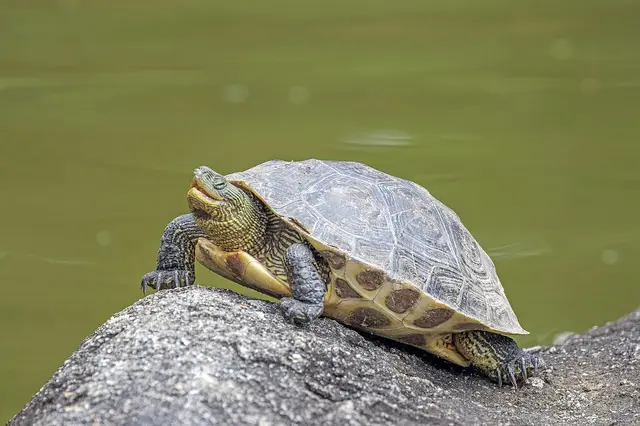
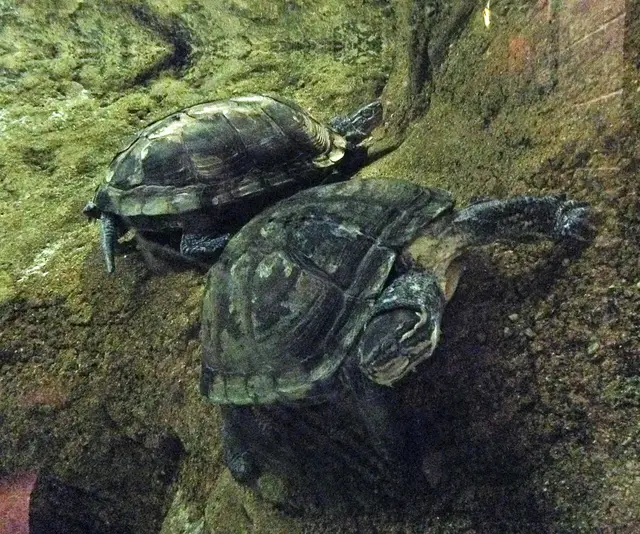
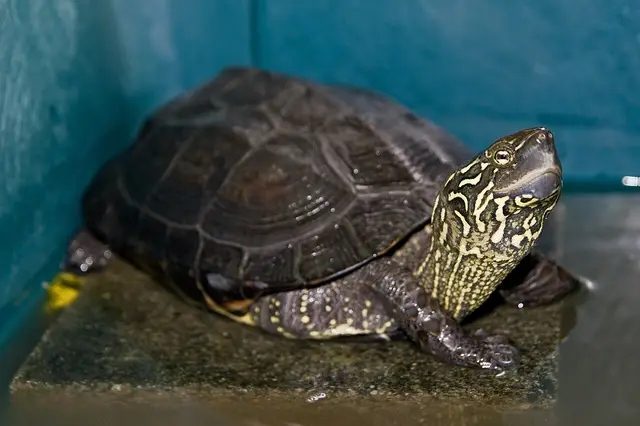
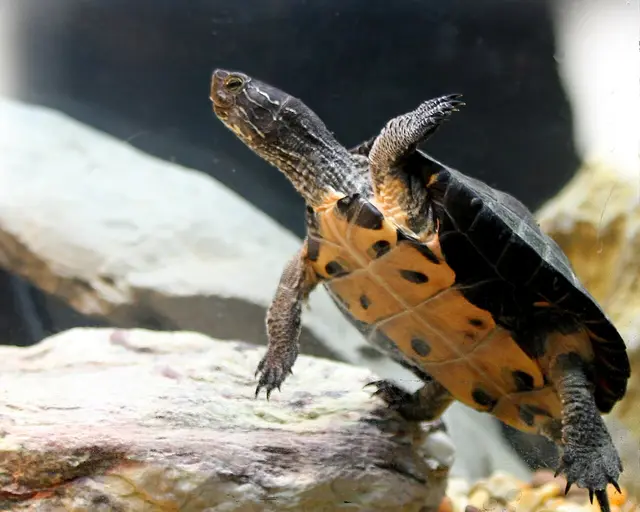
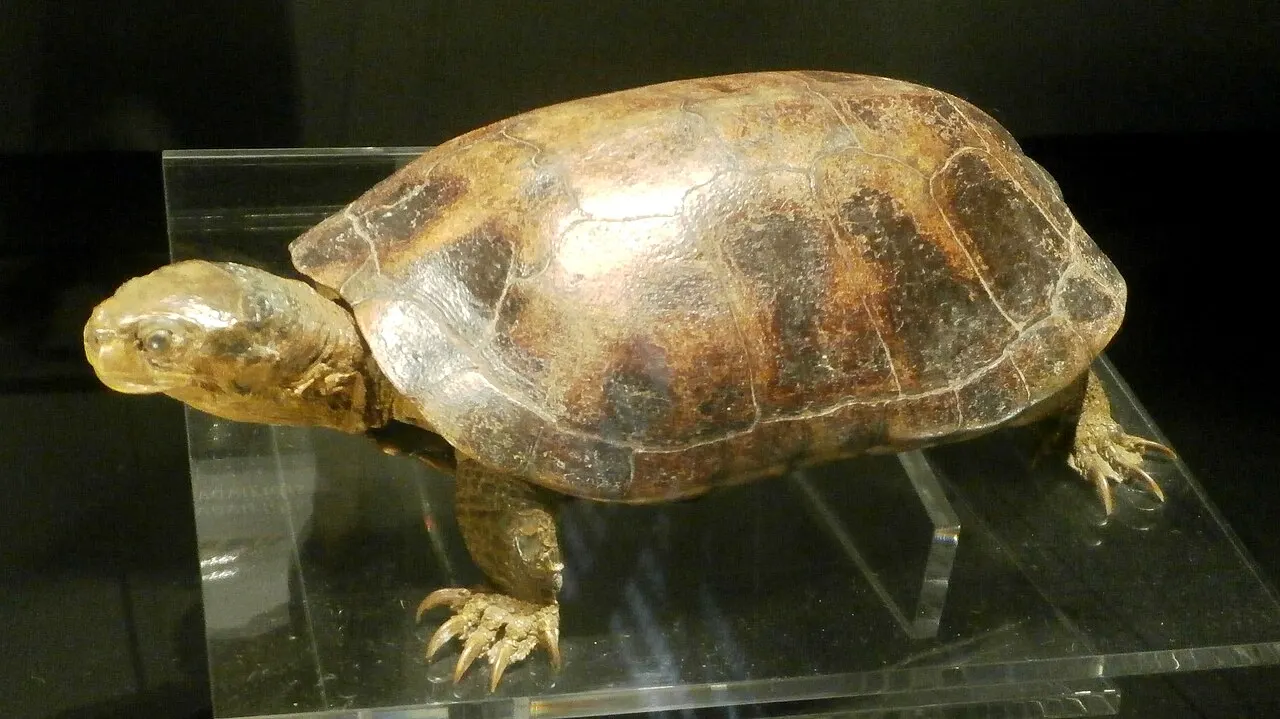
It's a semiaquatic turtle that reportedly reaches about 19.5 cm. A broad yellow stripe runs from behind the eye down the neck. The shell is grey-brown to brown, and the underside is yellow or orange with black blotches along the outer edges.
Where it lives
The natural range covers central Vietnam and Laos and the coastal provinces of south and central China, with island populations on Taiwan, Hainan and the southern Ryukyu Islands. Populations in the northern and central Ryukyus and in central Japan are thought to come from turtles introduced from Taiwan.
It lives in ponds, creeks, swamps, marshes and other shallow, slow water, and the IUCN also lists lowland moist forest, swamp forest, moist shrubland and rivers and streams among its habitats. It reportedly stays in or near water by day and is more active at night and in rainy weather, when it sometimes walks over land. Its diet is said to include insects, fish, tadpoles, leaves and seeds.
Pins are Wikidata “endemic to” fields. Orange dots, when present, are GBIF occurrence tiles — survey bias included.
Why it is in trouble
The turtle is heavily collected for food, and it's also used in traditional Chinese medicine and the pet trade. Its shells were used for divination in China's Shang dynasty, so people have valued the species for a very long time. The IUCN assessment lists harvest for food, persecution, housing and urban development, industrial aquaculture and introduced genetic material as threats. It estimates a population reduction of about 80 percent over three generations (60 years, from a generation length of 20 years).
Farming hasn't removed the pressure. A 2014 Mongabay feature argued that commercial turtle farms in China have increased pressure on wild turtles rather than relieved it, partly because many people believe wild-caught animals have greater medicinal value. It lists the yellow pond turtle among the species most used in traditional Chinese medicine.
Hybridisation adds a quiet problem. Genetic studies show widespread hybridisation, and some named species, such as the Fujian pond turtle (M. iversoni), are reportedly hybrids that came mostly from turtle farms. Breeding with hybrids can blur the genetics of any stock used for restocking.
How many are left
There is no total count. A trapping study of Taiwan's freshwater turtles from 2001 to 2007, published in Oryx in 2010, found the species at 46 of 103 sites with native turtles, where it made up 17.8 percent of 1,828 native turtles caught. A survey across Hunan, Guangxi, Guangdong, Fujian, Jiangsu and Hainan, funded by the Mohamed bin Zayed Species Conservation Fund (grant awarded 2015), concluded that the southern form is extremely rare in the wild, found only in Hainan, Guangxi and Vietnam. In the north, villagers had collected animals recently, but density was so low that gathering enough turtles could take years.
What is being done
The species is on CITES Appendix II, which controls international trade, and it occurs in at least one protected area. The IUCN lists captive breeding, a genome resource bank, reintroduction, trade and harvest management and awareness work among the actions in place or needed. The 2015 project team said its focus had shifted to reintroductions.
Sources
Written for this catalog in our own words from the sources below, checked against them on 12 November 2026. Population figures are estimates and carry the year they were made. Status and assessment year: IUCN. 2026. The IUCN Red List of Threatened Species. Version 2026-1. iucnredlist.org.