Critically Endangered
Chinese stripe-necked turtle
Mauremys sinensis
The Chinese stripe-necked turtle (Mauremys sinensis) is a medium-sized freshwater turtle of lowland ponds, canals and slow rivers in southern China, Taiwan and Viet Nam. The IUCN Red List rated it Critically Endangered in 2021, estimating a drop of more than 80 percent over about 20 years, driven mostly by harvest for food and the pet trade.
How to recognise it
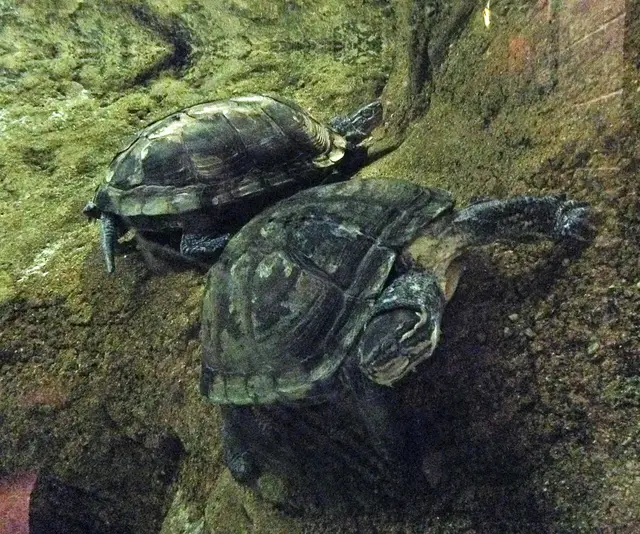
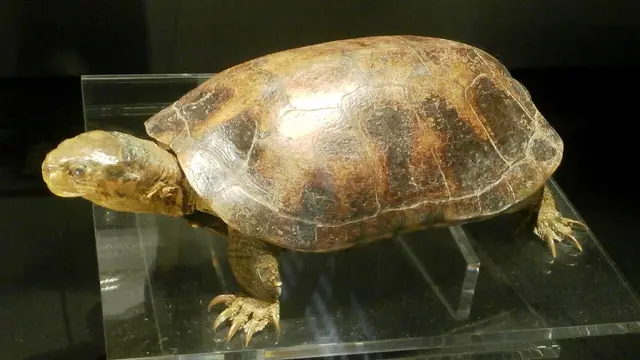
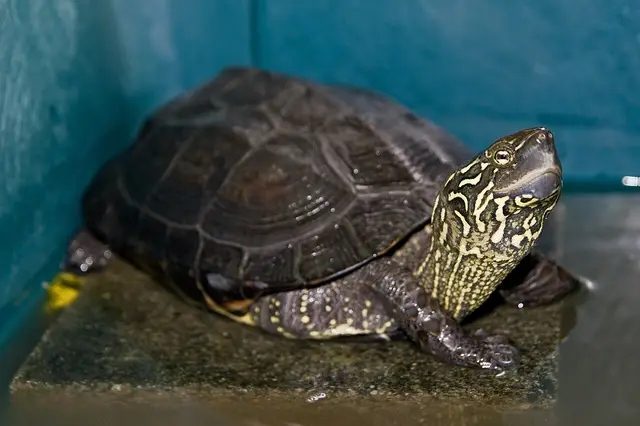
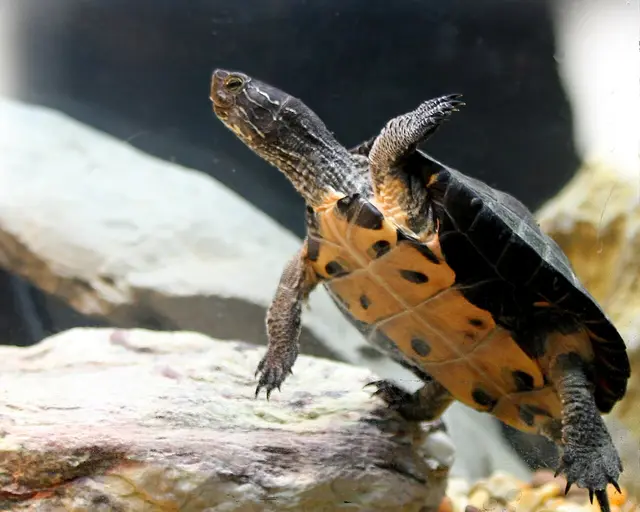
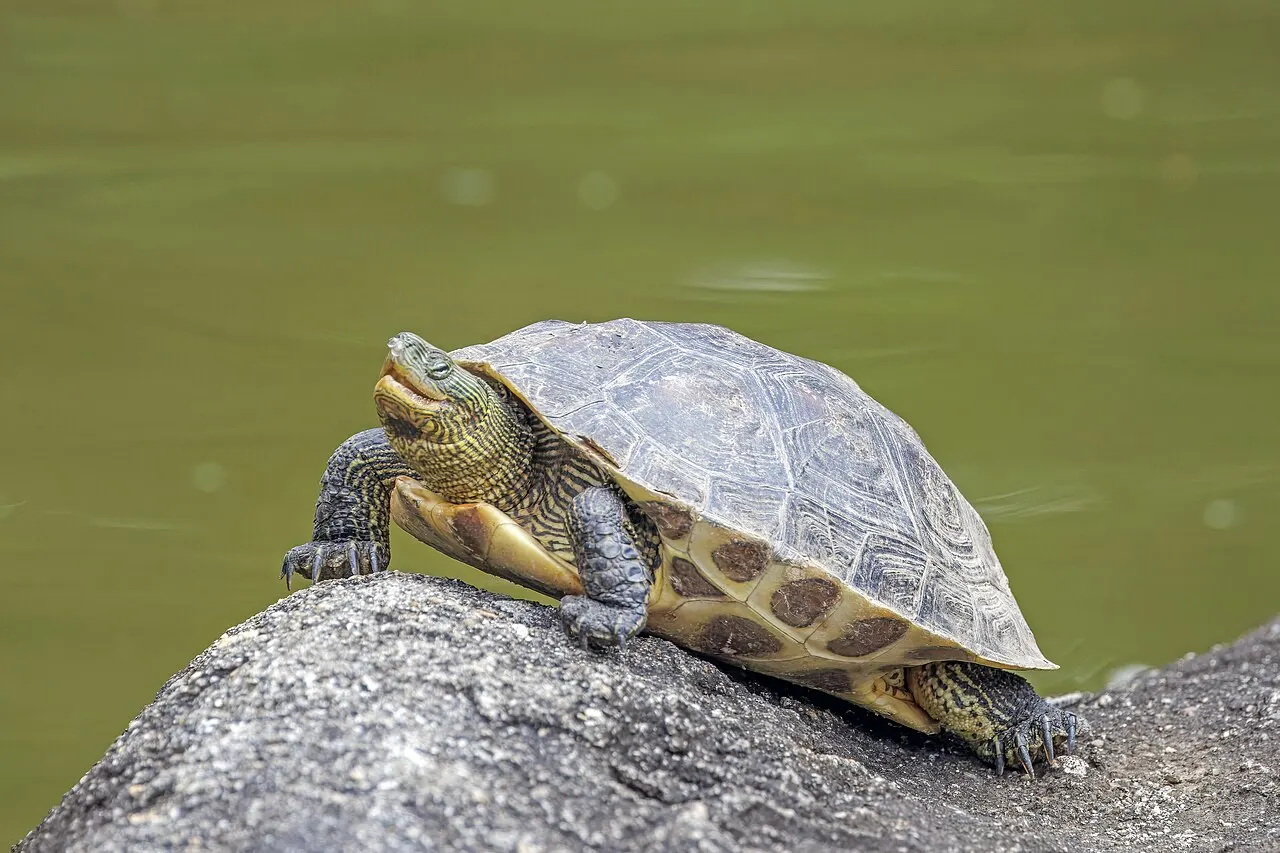
Males reach about 20 cm in length and females about 26 cm. Hatchlings have a grayish-green shell with three ridges. Adults turn brown and the ridges fade, while the underside stays ivory with small black spots. Yellow or orange stripes along the neck give the turtle its name. Males have a longer, thicker tail than females.
It interbreeds readily with related turtles in captivity. Two forms once described as separate species, Ocadia glyphistoma and Ocadia philippeni, are now treated as hybrids involving this turtle.
Where it lives
The Red List records it as native to Fujian, Guangdong, Guangxi, Hainan and Zhejiang in China, plus Hong Kong, Taiwan and Viet Nam. It favours still or slow-moving lowland water, including marshes, streams, irrigation channels and flooded farmland. Hatchlings recorded at a wetland on Italy's central coast suggest a local population may be establishing itself there.
In Taiwan, a 2010 study in Oryx by Chen and Lue trapped turtles at 103 sites between 2001 and 2007. It found this species the most abundant and widely distributed of four native turtles, at 70 sites and 78.6 percent of 1,828 captures. The study still called for urgent conservation measures, citing habitat disturbance and heavy exploitation.
Pins are Wikidata “endemic to” fields. Orange dots, when present, are GBIF occurrence tiles — survey bias included.
How it lives
It eats small animals such as shrimp, small fish, aquatic snails and mosquito larvae, along with water plants like duckweed and water spinach. After mating, a female may lay 5 to 20 eggs, which hatch in about 60 days. The Red List puts a generation at about 20 years, so a lost adult takes a long time to replace.
Why it is in trouble
The Red List scores harvest as the largest threat, rated high impact across the whole range. The turtle is taken for food and the pet trade, and the assessment also records turtle farming as a use. A Turtle Survival Alliance profile adds that it is not protected by law in Taiwan or Viet Nam. Habitat loss from housing, industry and farming is also rated a medium-impact threat, along with pollution from run-off, sewage and pesticides.
Farming has complications. The Turtle Survival Alliance names genetic pollution from large breeding operations as a threat, and the Red List scores introduced genetic material as a medium-impact threat across the whole range. Invasive red-eared sliders have also been named as a threat.
What is being done
China lists the species on CITES Appendix III and protects it in the wild there. The Red List records captive breeding, a genome resource bank, reintroduction, habitat restoration, harvest management and trade management among conservation actions. The Turtle Survival Alliance points to captive breeding colonies, including one at its Turtle Survival Center. The turtle is also a popular pet in Hong Kong, mainland China and Taiwan, which keeps trade pressure high.
Sources
Written for this catalog in our own words from the sources below, checked against them on 12 November 2026. Population figures are estimates and carry the year they were made. Status and assessment year: IUCN. 2026. The IUCN Red List of Threatened Species. Version 2026-1. iucnredlist.org.
- IUCN Red List assessment, Mauremys sinensis (Li, Rao and Wang, 2021)
- Wikipedia, Chinese stripe-necked turtle
- Turtle Survival Alliance, Species spotlight: Chinese stripe-necked turtle
- Chen and Lue 2010, Population status and distribution of freshwater turtles in Taiwan, Oryx (abstract page)
- The Turtle Hub, Mauremys sinensis