Endangered
Red-necked pond turtle
Mauremys nigricans
The red-necked pond turtle (Mauremys nigricans), also called the Kwangtung river turtle, is a dark, stream-dwelling turtle from southern China. The IUCN Red List carries it as Endangered, an assessment dating from 2000. Specialists say no wild population is currently known, and captive breeding has become its safety net.
How to recognise it
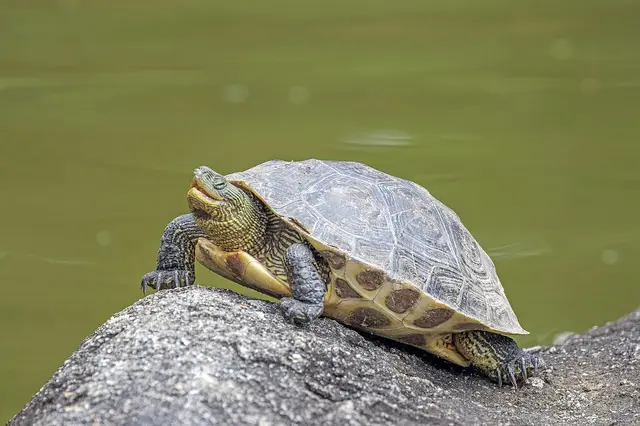
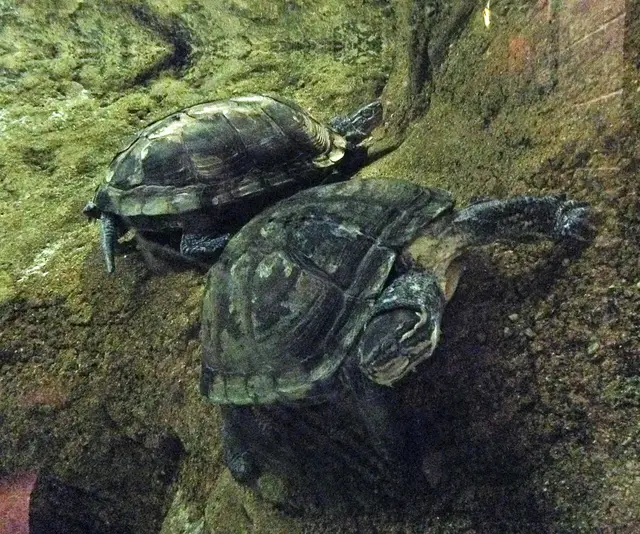
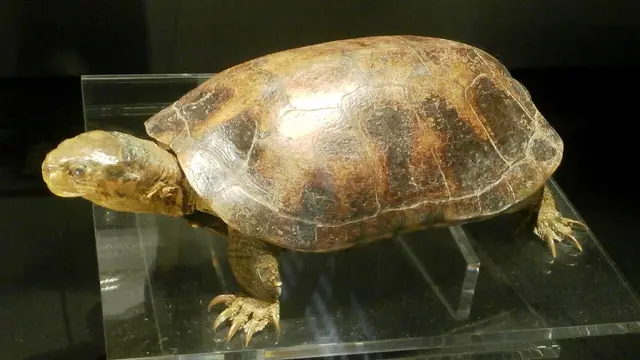
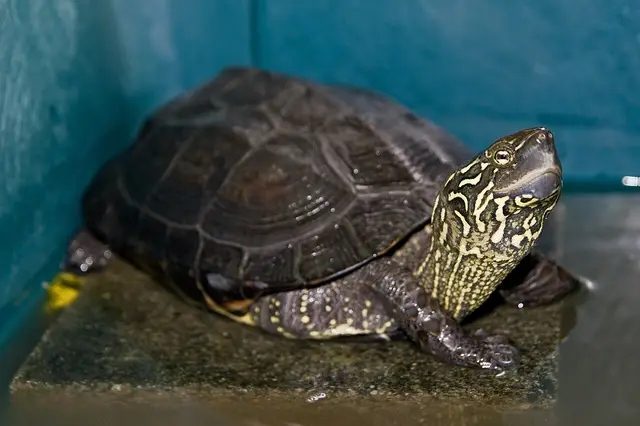
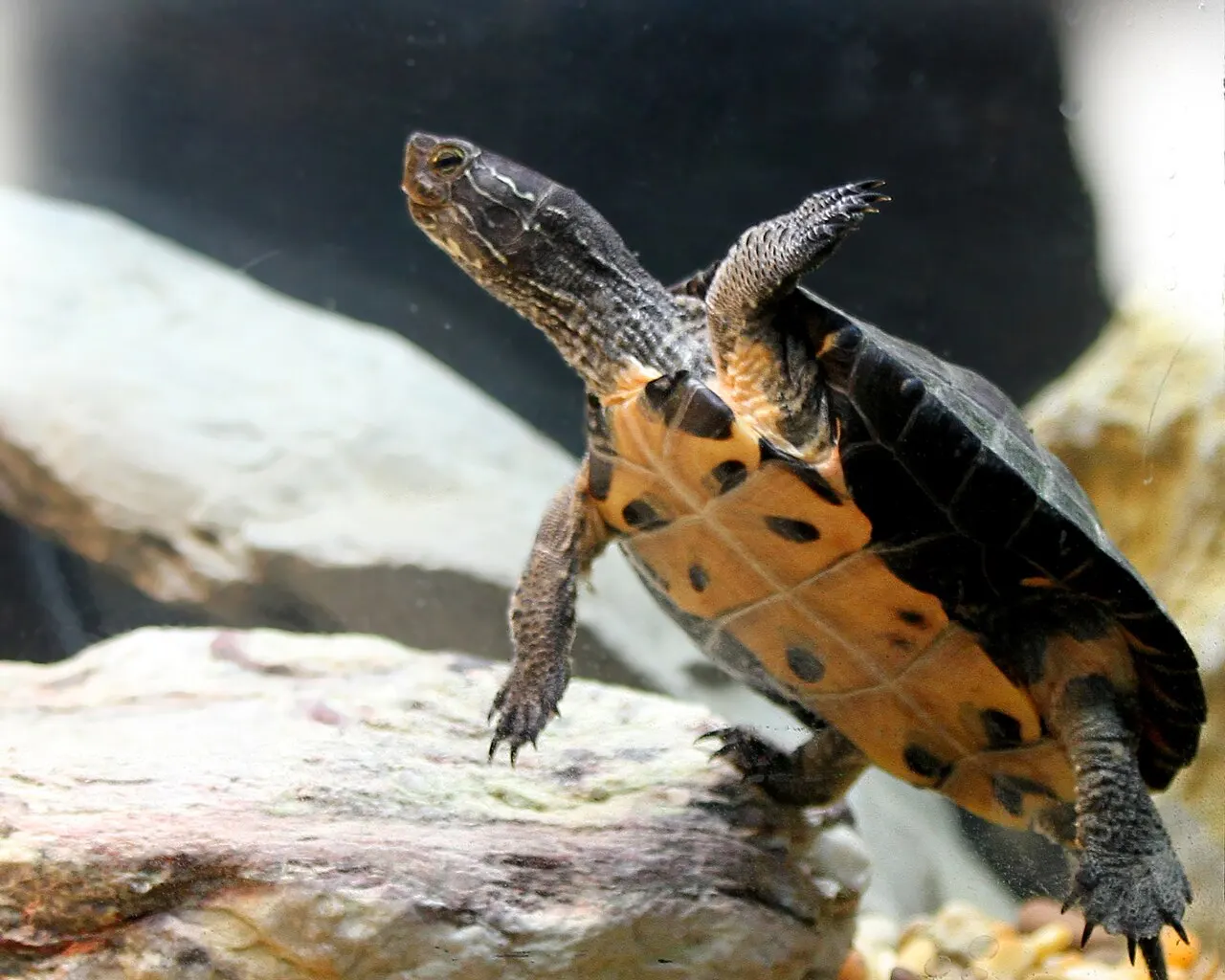
Adults have a smooth carapace that is dark brown to black, usually with little or no pattern. Females are much larger than males. The largest recorded male shell is 185 mm long, while females reach about 298 mm. Females usually show narrow white, cream or yellow lines on the sides of the head, and some have very broad heads. Keepers call these big-headed animals "dumb-heads".
Males can turn yellow, orange or pinkish red on the head, shoulders, legs and tail, most strongly in the breeding season, and their undershell is often tinted orange or pink. Hatchlings are black above and orange to deep red below, marked with black spots that fade as they grow.
Where it lived
The species lives, or lived, in montane streams and pools in forested hills, mainly in Guangdong and Guangxi provinces in southern China. The IUCN Tortoise and Freshwater Turtle Specialist Group describes its range as the Pearl River drainage, and says it may also reach nearby river systems. Records from Fujian, Hainan and northeastern Vietnam remain possible but doubtful. Fossil skull remains show it once also reached northern Vietnam and Hainan.
Pins are Wikidata “endemic to” fields. Orange dots, when present, are GBIF occurrence tiles — survey bias included.
How it lives
Little is known from the wild, and much of what is written comes from captive animals. It is omnivorous and accepts almost any food offered. In captivity females lay from early May to early August, up to four clutches a season, each of 4 to 13 eggs. They dig two nest cavities side by side and split each clutch between them. Mating takes place underwater, mostly in late winter and early spring.
Incubation temperature is thought to influence the sex of the hatchlings, though this is still being researched.
Why it is in trouble
The Turtle Survival Alliance names habitat destruction, collection for the food, pet and medicinal trades, and interbreeding with related turtles as the main threats. The specialist group points to a restricted range and growing collector demand. It says no surviving wild populations are known despite several recent field surveys, and the Turtle Survival Alliance describes the species as presumed extinct in the wild. A survey in 2009 failed to find it in its old habitat.
The official listing lags behind this. The Red List assessment, dated 2000 and made under the older version 2.3 system, says Endangered. The specialist group's own draft list rates the species Critically Endangered.
What is being done
The species is legally protected in China and is subject to international trade controls. Sources disagree on the level: the specialist group records CITES Appendix III, listed by China, while the Turtle Survival Alliance gives Appendix II. Conservation now rests on captive breeding, assurance colonies and genetic management, together with further field surveys. The specialist group notes that managed captive stock may be vital for any future reintroduction.
It is also kept and bred by hobbyists. For rules on keeping turtles, see the page on exotic pet laws at /exotic-pet-laws-by-state/.
Sources
Written for this catalog in our own words from the sources below, checked against them on 12 November 2026. Population figures are estimates and carry the year they were made. Status and assessment year: IUCN. 2026. The IUCN Red List of Threatened Species. Version 2026-1. iucnredlist.org.