Endangered
Western red colobus
Piliocolobus badius
The western red colobus (Piliocolobus badius) is a red-and-black tree-dwelling monkey of West African forests, from Senegal south to Côte d'Ivoire. The IUCN Red List assessed it as Endangered in 2020, estimating that numbers fell by about half over three generations. Hunting and forest loss are the main causes.
How to recognise it
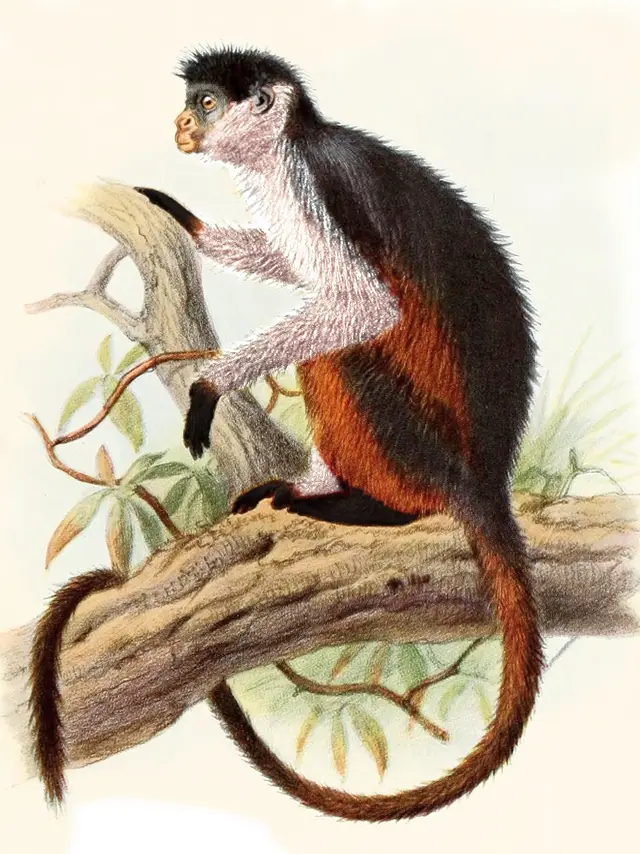
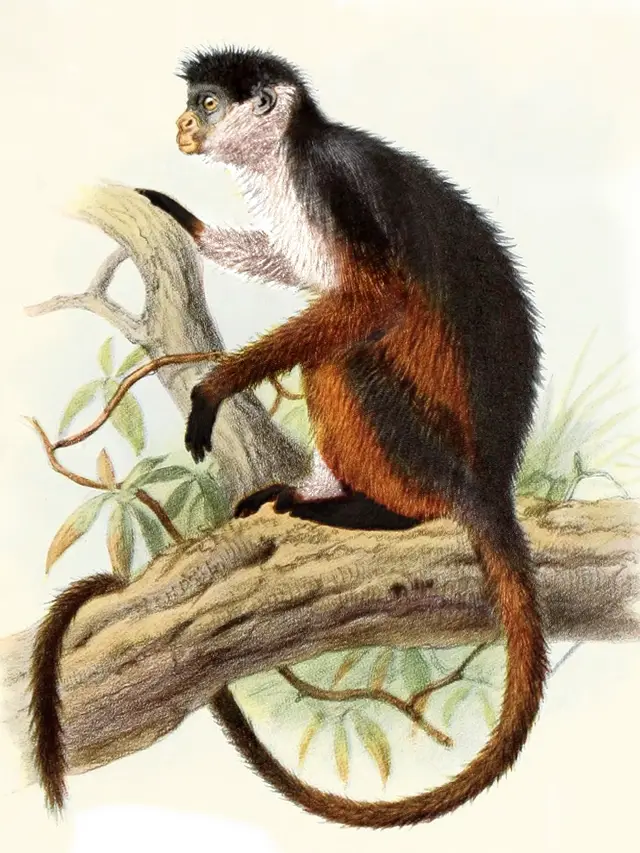
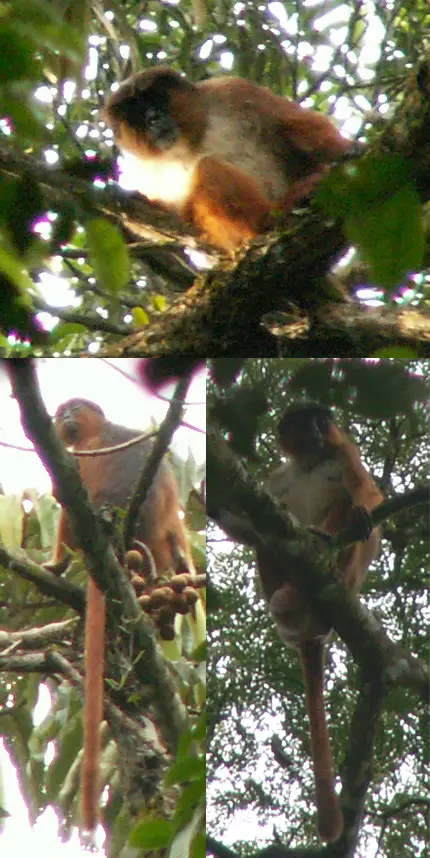
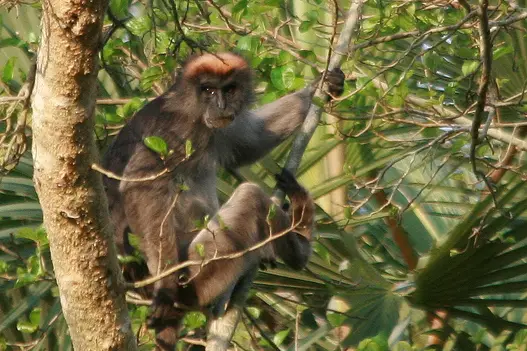
This is a fairly large monkey. Head and body measure roughly 45 to 67 cm, the tail is 52 to 80 cm, and adults weigh about 5 to 11 kg (one source gives up to 12 kg). The head and limbs are red or chestnut-brown, while the back is black, slate-grey or dark brown. Unlike the black-and-white colobus monkeys, it has no long hair fringes or tail tuft.
The species is also called the bay, rust red or Upper Guinea red colobus. Taxonomists disagree about how far the name stretches. The IUCN treats Temminck's red colobus, from the northern end of the range, as a subspecies, while the Handbook of the Mammals of the World ranks it as a separate species.
Where it lives
The IUCN lists Senegal, The Gambia, Guinea-Bissau, Guinea, Sierra Leone, Liberia and Côte d'Ivoire. Some other accounts add Ghana. Populations are fragmented in Sierra Leone and more continuous in Liberia, Guinea and western Côte d'Ivoire. The IUCN records it from sea level up to about 900 m.
It is an arboreal species, found mainly in primary rainforest but also in secondary and gallery forest. The IUCN also lists swamp forest, mangrove, and moist and dry savanna woodland among its habitats.
Pins are Wikidata “endemic to” fields. Orange dots, when present, are GBIF occurrence tiles — survey bias included.
How it lives
Groups are large, reportedly 12 to 80 animals, with several males and up to three times as many adult females. A rank order controls who gets food, space and grooming.
Red colobus feed mainly on young leaves, flowers and unripe fruit. A 2023 study in Frontiers in Ecology and Evolution analysed DNA in 368 droppings from Gola Rainforest National Park in Sierra Leone and Cantanhez National Park in Guinea-Bissau. It found 97 plant types in the diet, with the monkeys leaning heavily on a few key trees. Cultivated plants made up about 11 percent of the diet in farmland-fringed Cantanhez, with mango in about 9 percent of samples, against about 3 percent in the largely intact forest at Gola.
Chimpanzees hunt this monkey regularly. In 1994, chimpanzees that had hunted and eaten red colobus became infected with Ebola virus, which spread to many others in the group.
Why it is in trouble
The IUCN's 2020 assessment estimates a population reduction of about 50 percent over three generations (generation length is put at 10 years), based on habitat loss, relative abundance and hunting. The decline is continuing, and the causes have not ceased.
Threats listed include farming and plantations of all scales, shifting agriculture, more frequent fires, mining, civil unrest and direct hunting.
What is being done
The IUCN records that the species is covered by international legislation and trade controls, that a recovery plan exists, that conservation sites have been identified across the entire range, and that it occurs in at least one protected area. A 2023 study notes that a 2021 to 2026 conservation action plan names Gola and Cantanhez as key areas. Recommended work includes habitat restoration, site management, awareness campaigns, and trade and harvest management.
Sources
Written for this catalog in our own words from the sources below, checked against them on 12 November 2026. Population figures are estimates and carry the year they were made. Status and assessment year: IUCN. 2026. The IUCN Red List of Threatened Species. Version 2026-1. iucnredlist.org.