Critically Endangered
Niger Delta red colobus
Piliocolobus epieni
The Niger Delta red colobus (Piliocolobus epieni) is a monkey found only in the marsh forests of the western Niger Delta in Nigeria. The IUCN Red List rated it Critically Endangered in 2019. Its numbers have collapsed, but a community-run conservation area set up in 2021 is reportedly helping a small population recover.
How to recognise it
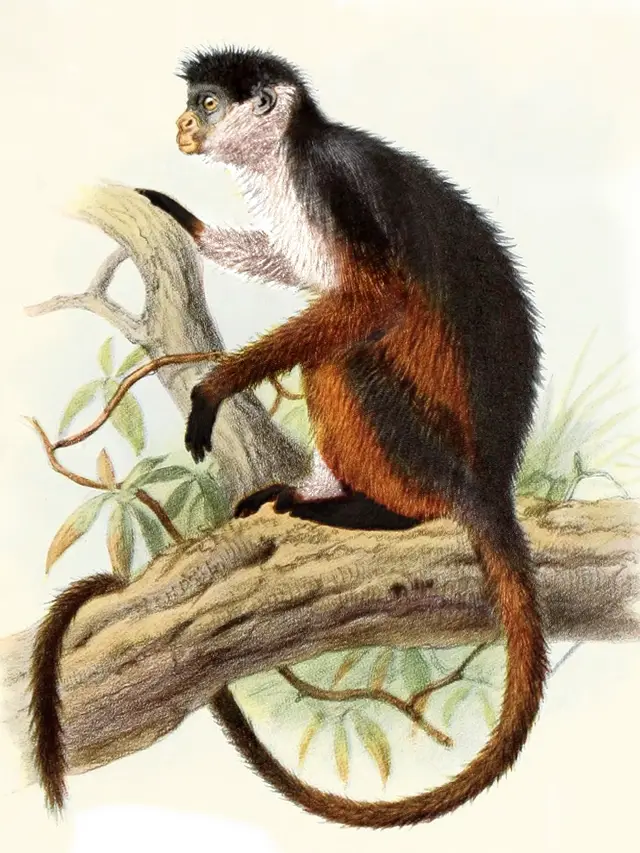
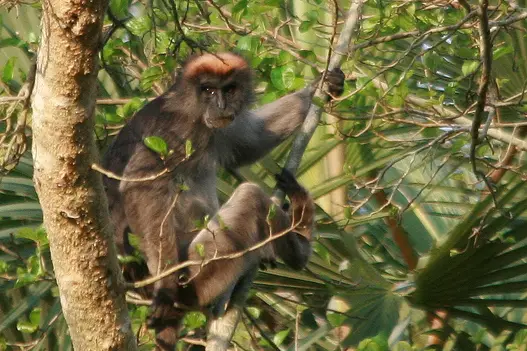
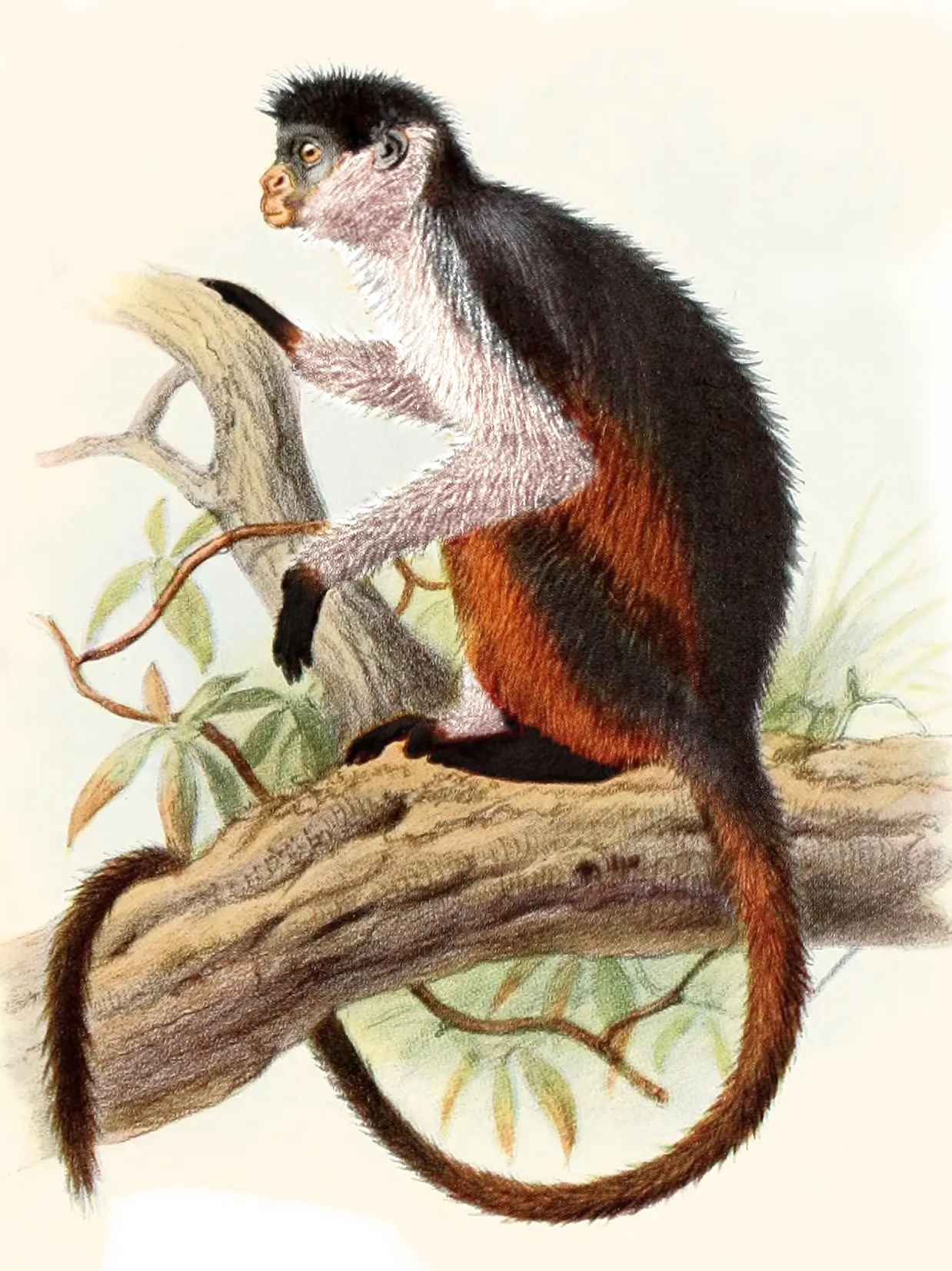
This is a strikingly patterned monkey. The back is black from head to rump, while the flanks and outer legs are orange-brown. The belly, inner legs and most of the arms are white, the hands and feet are black, and white whiskers frame the face. The tail is red-brown above and chestnut to maroon below, darkening toward the tip.
Scientists only learned of it in 1993. For years it was filed as a subspecies of the western or Pennant's red colobus, and it was recognised as a full species in 2007.
Where it lives
It is endemic to Nigeria and lives only in the western part of the Niger Delta, at elevations from sea level to about 10 m. Its habitat is marsh forest, where the water table stays high all year without the ground flooding badly.
It shares that forest with other monkeys, including the Nigerian white-throated guenon, the red-capped mangabey, the putty-nosed monkey and the mona monkey, and it often travels in mixed groups with several of them.
Pins are Wikidata “endemic to” fields. Orange dots, when present, are GBIF occurrence tiles — survey bias included.
How it lives
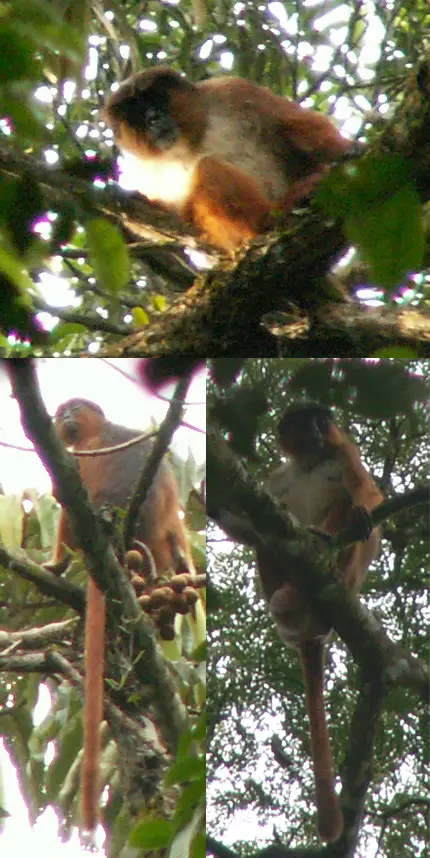
It is social and usually seen in large groups. The abura tree (Hallea ledermannii) is one of its most important food trees. Camera traps in a community conservation area had recorded 15 videos by early 2025, showing the monkeys eating fruit and leaves and moving through the canopy. They were the first video footage of the species.
Local hunters have described it as slower and easier to kill than other monkeys.
Why it is in trouble
The IUCN assessment records a population reduction of about 80% and rates hunting for food as the highest-impact threat. Farming and small-scale wood harvesting are also listed. A 2013 report in Mongabay called logging the largest threat: abura is a valuable timber tree and one of the first felled when loggers move in, so the monkeys lose food and habitat together.
Surveys show a steep fall. In the 1990s the species was recorded in 16 community forests. By 2013 it was found in only four, and Rachel Ikemeh, who led the surveys, said it had vanished from most of the forests her team visited. She put the remaining population at no more than about 500 animals, which she called a very generous guess.
Decades of poorly managed oil development in the delta, with spills, canals and pipelines, have altered local waterways, and disputes over oil have hindered efforts to set land aside. As of 2013 no Nigerian law protected the species, so hunting it was not illegal. The IUCN notes it is covered by international legislation and trade controls, and it is not known from any protected area.
What is being done
In 2021 a Nigerian grassroots group, the SW/Niger Delta Forest Project, set up a community-managed conservation area around the last viable population, then thought to be fewer than 200 monkeys. Ikemeh said in 2025 that the population has roughly doubled, though a rigorous survey is still pending.
Ikemeh has called for at least 500 square kilometres of current and former range to be made strict conservation areas where logging is prohibited. The IUCN lists site protection and harvest management as the conservation actions needed.
Sources
Written for this catalog in our own words from the sources below, checked against them on 12 November 2026. Population figures are estimates and carry the year they were made. Status and assessment year: IUCN. 2026. The IUCN Red List of Threatened Species. Version 2026-1. iucnredlist.org.