Endangered
Bouvier's red colobus
Piliocolobus bouvieri
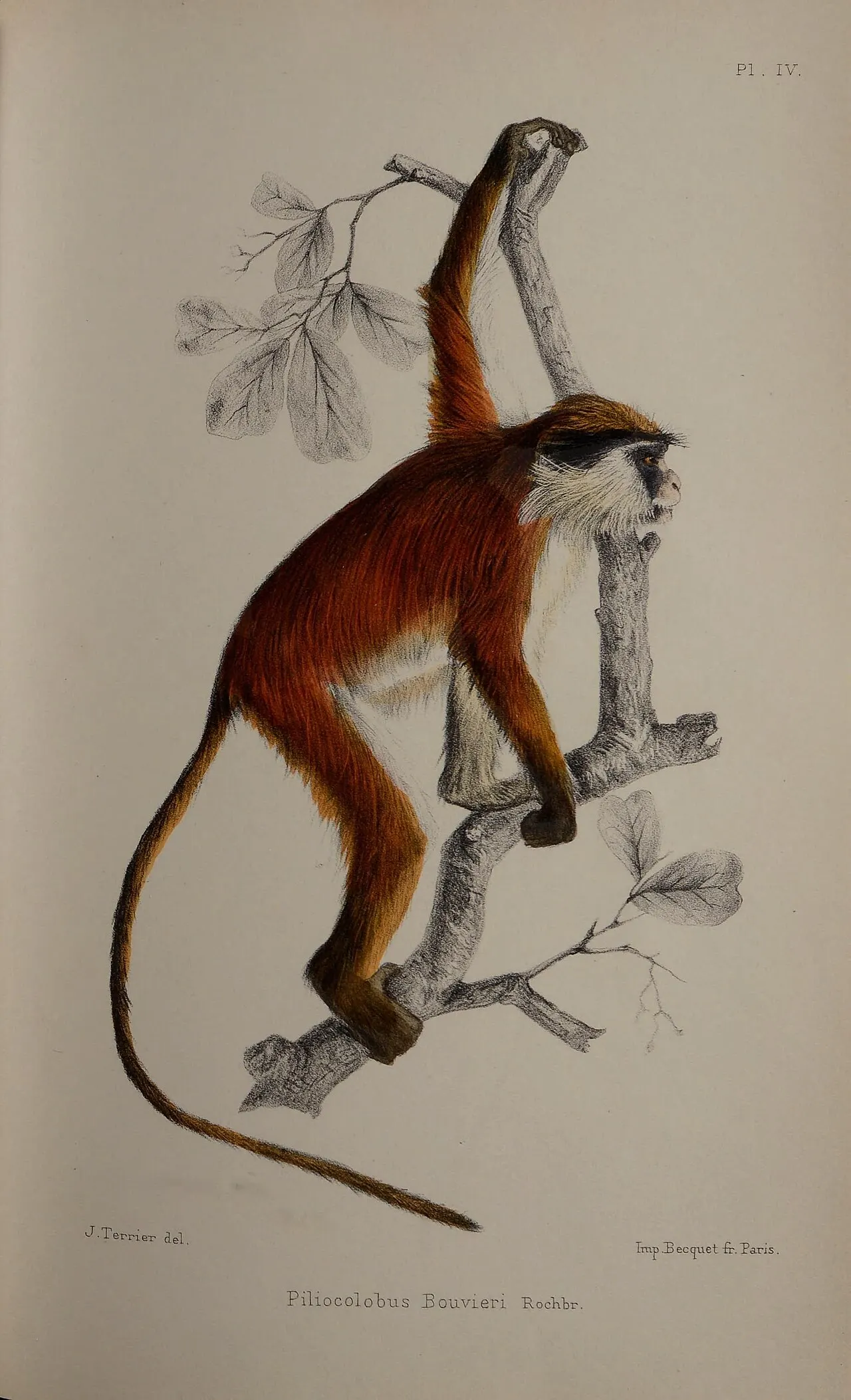
Bouvier's red colobus (Piliocolobus bouvieri) is a reddish, long-tailed monkey of swampy riverside forest in the Republic of the Congo. The IUCN Red List rated it Endangered in 2022. It went decades without a confirmed sighting before a 2015 expedition photographed it in the wild for the first time.
How to recognise it
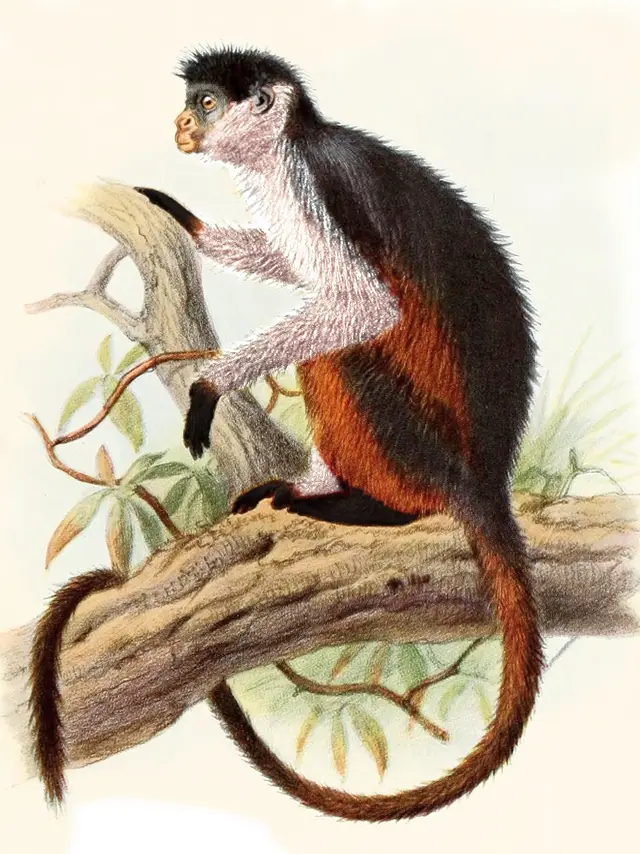
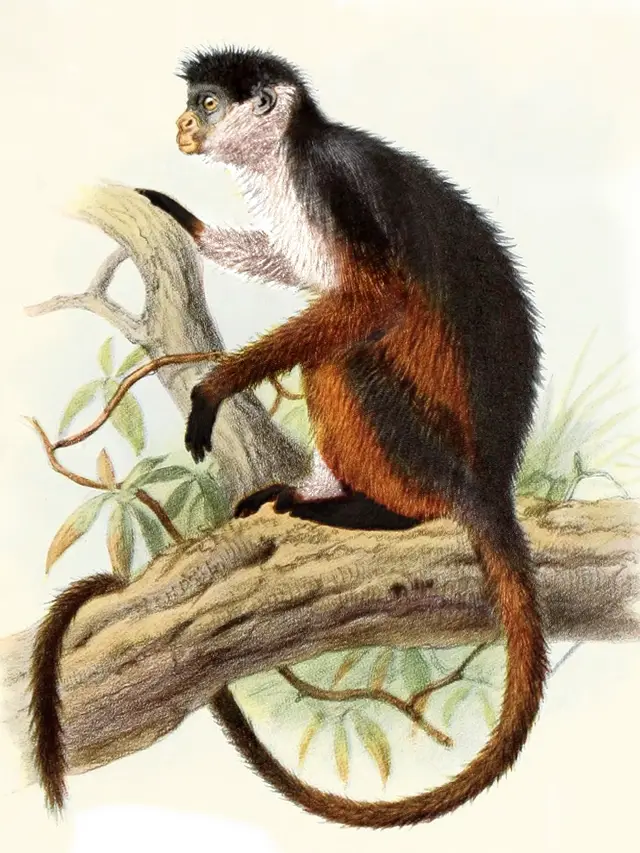
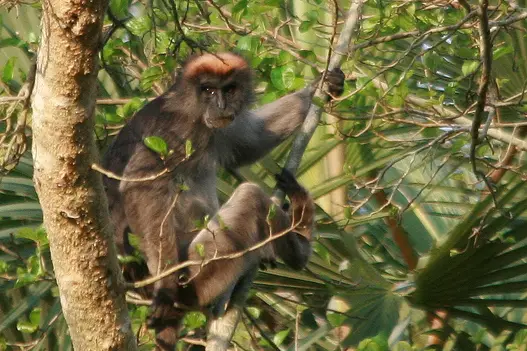
It's a brownish-red monkey, paler than its close relative Pennant's colobus. The head carries a smaller patch of black to chocolate-brown fur, there's a white chin and whiskers, and a dark band runs from above the eyes toward the temples. Large pink rings circle the eyes, and the long tail is dark at the base and reddish-brown toward the tip.
Faces vary quite a bit from one animal to the next. Body size and weight haven't been measured well in this species, so figures usually quoted are borrowed from other red colobus.
Where it lives
The monkey is tied to wet forest. The IUCN assessment lists lowland moist forest and swamp forest as its habitat, at roughly 200 to 800 metres above sea level, and gives the Republic of the Congo as the country where it is currently found. It was long thought to be restricted to swamp forest around the Congo River basin between the Alima and Oubangui rivers.
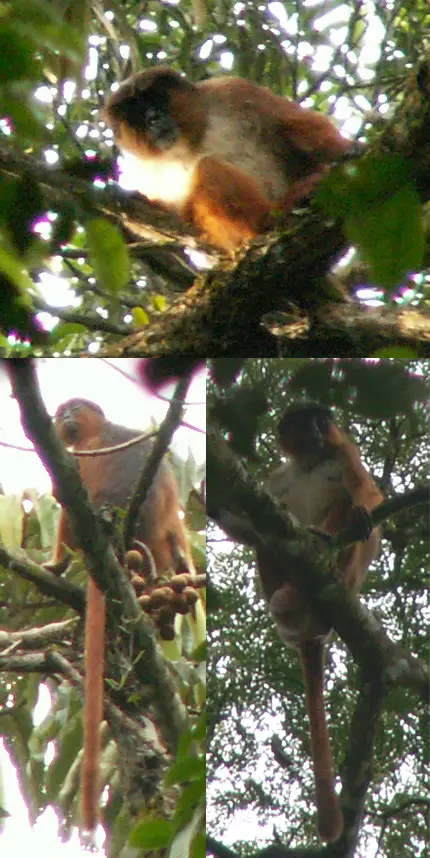
That picture changed in 2015. Belgian researcher Lieven Devreese and Congolese co-leader Gael Elie Gnondo Gobolo found a female with an infant along the Bokiba River in Ntokou-Pikounda National Park, in the north of the country. The photographs, taken in early March 2015, were the first of the species, and the pair stayed in clear view for more than twenty minutes. Local hunters were the team's main source on where the monkeys could be found.
A second population turned up far to the south. A 2016 mammal survey of the Lefini and Lesio-Louna reserves, reported in Primate Conservation in 2019, found a group along a river in a remote part of Lesio-Louna. The species had not been recorded in that area since the early 1970s and was presumed locally extinct.
Pins are Wikidata “endemic to” fields. Orange dots, when present, are GBIF occurrence tiles — survey bias included.
How it lives
Very little has been studied directly. Red colobus monkeys as a group live in large troops and eat mostly leaves, and Bouvier's is presumed to do the same. Like other red colobus it often doesn't flee from people, which makes it easy for hunters to approach.
Why it is in trouble
Hunting is the main threat. Devreese described a commercial bushmeat trade that uses rivers as transport routes, with smoked meat sent to cities such as Brazzaville. Because red colobus travel in big groups and often don't flee, a hunter can kill many at one site. The IUCN lists the species as hunted for human food, and shifting agriculture and small-holder farming add habitat pressure.
The 2022 assessment records a decreasing population and an estimated 50 percent reduction over the past generations, driven by exploitation. No overall population size has been published. Earlier assessments rated the species Critically Endangered (2008 and 2016); it was moved to Endangered in 2019 after populations became known in the north.
What is being done
Ntokou-Pikounda National Park protects forest in the north. The IUCN records that 21 to 30 percent of the population lives inside protected areas, that conservation sites have been identified across its whole range, and that a monitoring scheme is in place. In the south, the 2019 survey team credits patrols on the main rivers of Lesio-Louna, along with its remoteness (the nearest roads and villages are 45 and 65 kilometres away), for the monkeys' survival there.
Devreese has said the northern park exists mainly on paper, though he also pointed to a motivated ranger team.
Sources
Written for this catalog in our own words from the sources below, checked against them on 12 November 2026. Population figures are estimates and carry the year they were made. Status and assessment year: IUCN. 2026. The IUCN Red List of Threatened Species. Version 2026-1. iucnredlist.org.