Critically Endangered
Preuss's red colobus
Piliocolobus preussi
Preuss's red colobus (Piliocolobus preussi) is a leaf-eating monkey of the lowland forests along the Cameroon and Nigeria border. The IUCN assessed it as Critically Endangered in 2019 after steep declines from hunting and forest loss. Its stronghold is Korup National Park.
How to recognise it
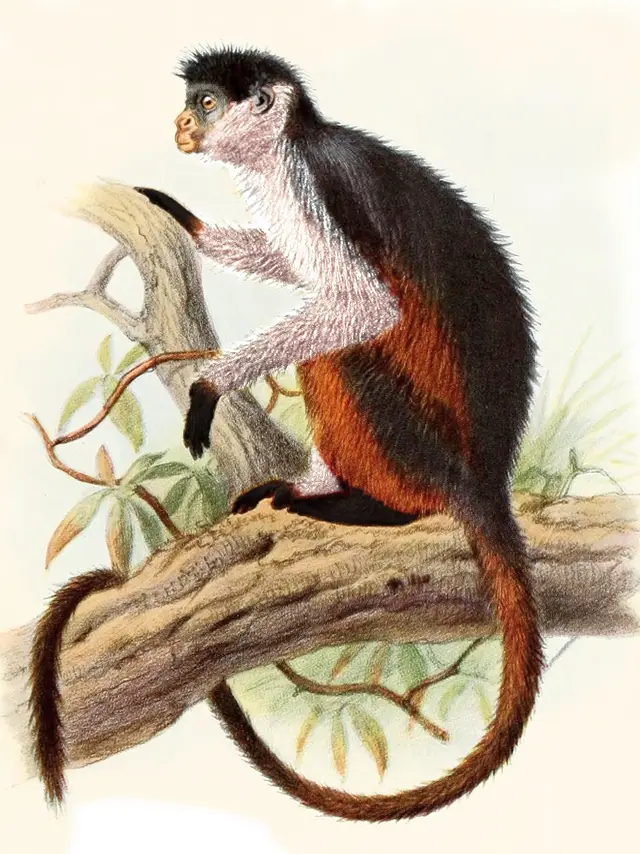
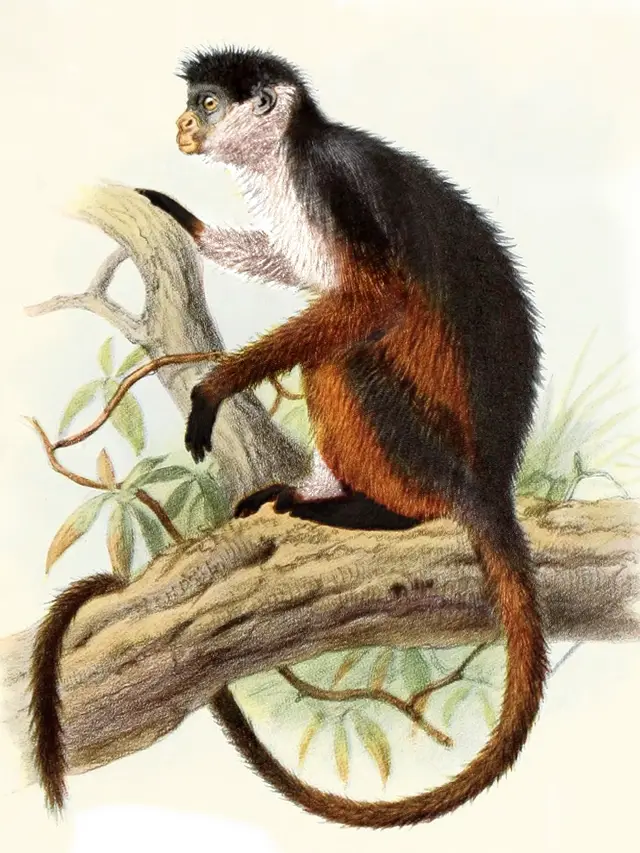
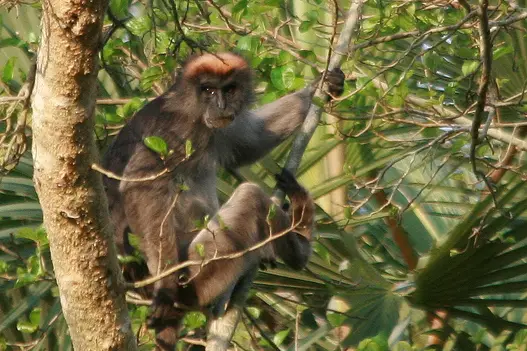
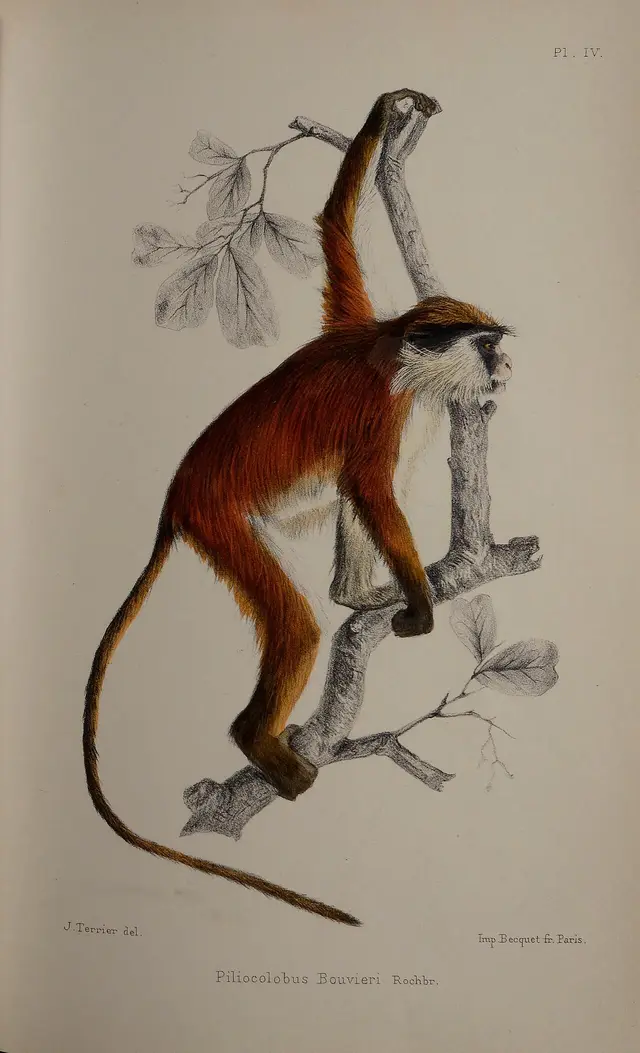
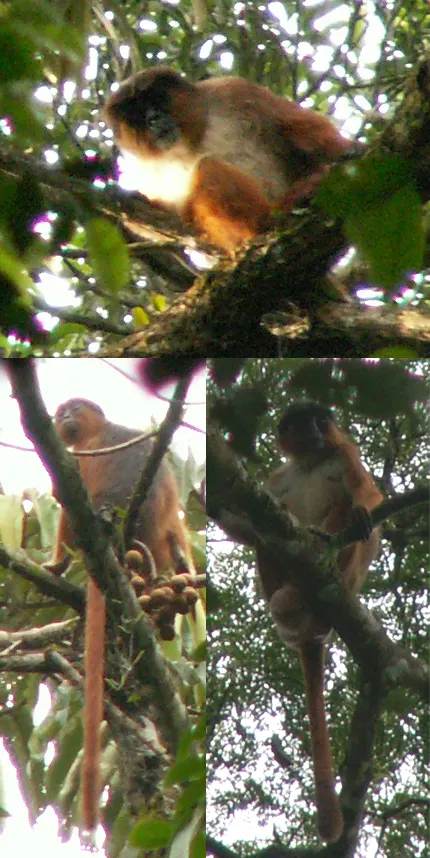
The head is black and the back is black ticked with orange, while the cheeks, tail and limbs are bright red. Like other colobus monkeys it is mainly a leaf eater, and it lives in forest trees.
Where it lives
The species is found only in the Cross-Sanaga rivers region of Cameroon and Nigeria. The IUCN lists lowland and montane moist forest between about 50 and 1,000 m. The largest population is in Korup National Park in Cameroon, with animals also in the adjoining Cross River National Park (Oban division) in Nigeria.
A 2021 study in the International Journal of Primatology by Linder and colleagues found that the monkeys have declined in Korup over the last 30 years, with possibly 3,290 to 4,430 remaining there. It found the species now mostly confined to Korup and Oban, and largely gone from the Ebo, Makombe and Ndokbou forests. A 2026 news report describes about 3,000 animals in the main Korup and Cross River population and no sightings in the Yabassi area for over a decade.
Pins are Wikidata “endemic to” fields. Orange dots, when present, are GBIF occurrence tiles — survey bias included.
How it lives
Groups of 20 to 60 feed mostly on young leaves from a limited set of tree species, including Lecomtedoxa klaineana and Xylopia aethiopica. When alarmed, the monkeys tend to freeze instead of fleeing, which makes them easy targets for hunters. Groups are often met near the main tourist camps in Korup.
Why it is in trouble
Hunting for bushmeat is the most immediate threat in Cameroon and southeastern Nigeria. A 2002 paper in Oryx by Waltert and colleagues, based on two years of monitoring in the zone around Korup National Park, found that the species had declined further and was probably facing local extinction there. Hunting was the main cause, and logging also appeared harmful.
The IUCN also lists industrial and small-scale farming and civil unrest. Logging targets trees the monkeys depend on, and oil palm plantations are expanding into their range. In Nigeria, poorly marked boundaries in Oban have let farming and illegal logging in.
What is being done
Much of the remaining population sits inside protected areas, and the IUCN notes conservation sites identified across the range. A regional action plan covering 2021 to 2026 is under way. In Nigeria's Cross River National Park it includes monthly ranger patrols, monitoring and community education, and no new oil palm concessions have been granted.
In Cameroon, civil unrest in the English-speaking south-west since 2016 has hindered work around Korup, though outreach in Ebo Forest continues.
Sources
Written for this catalog in our own words from the sources below, checked against them on 12 November 2026. Population figures are estimates and carry the year they were made. Status and assessment year: IUCN. 2026. The IUCN Red List of Threatened Species. Version 2026-1. iucnredlist.org.