Endangered
Golden mahseer
Golden mahseer
The golden mahseer, Golden mahseer, is a big, scaly river carp of the Himalayan foothills, native to the Indus, Ganges and Brahmaputra basins. It's a prized sport fish and the national fish of Pakistan. The IUCN Red List lists it as Endangered (2018), with an estimated population reduction of about 50 percent.
How to recognise it
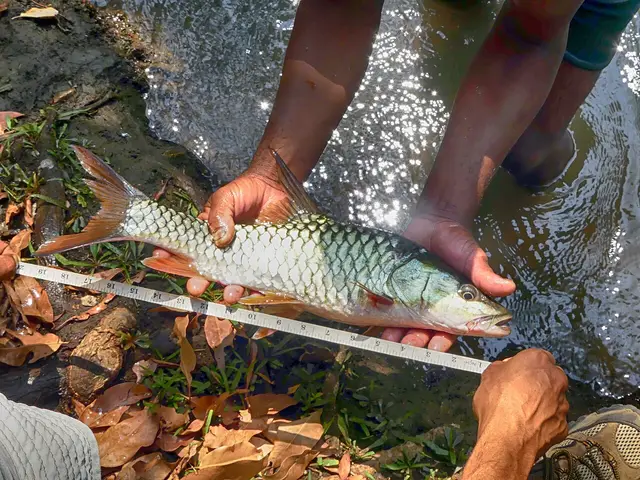
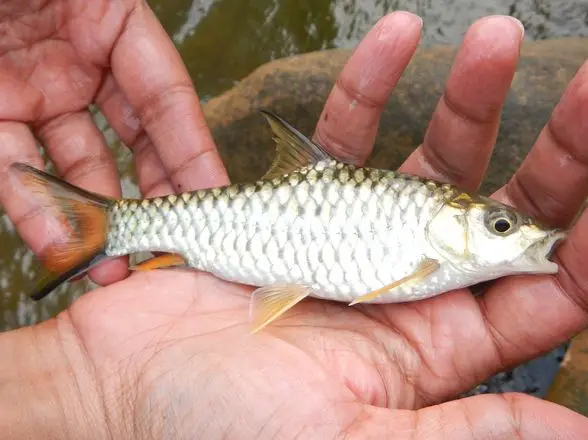
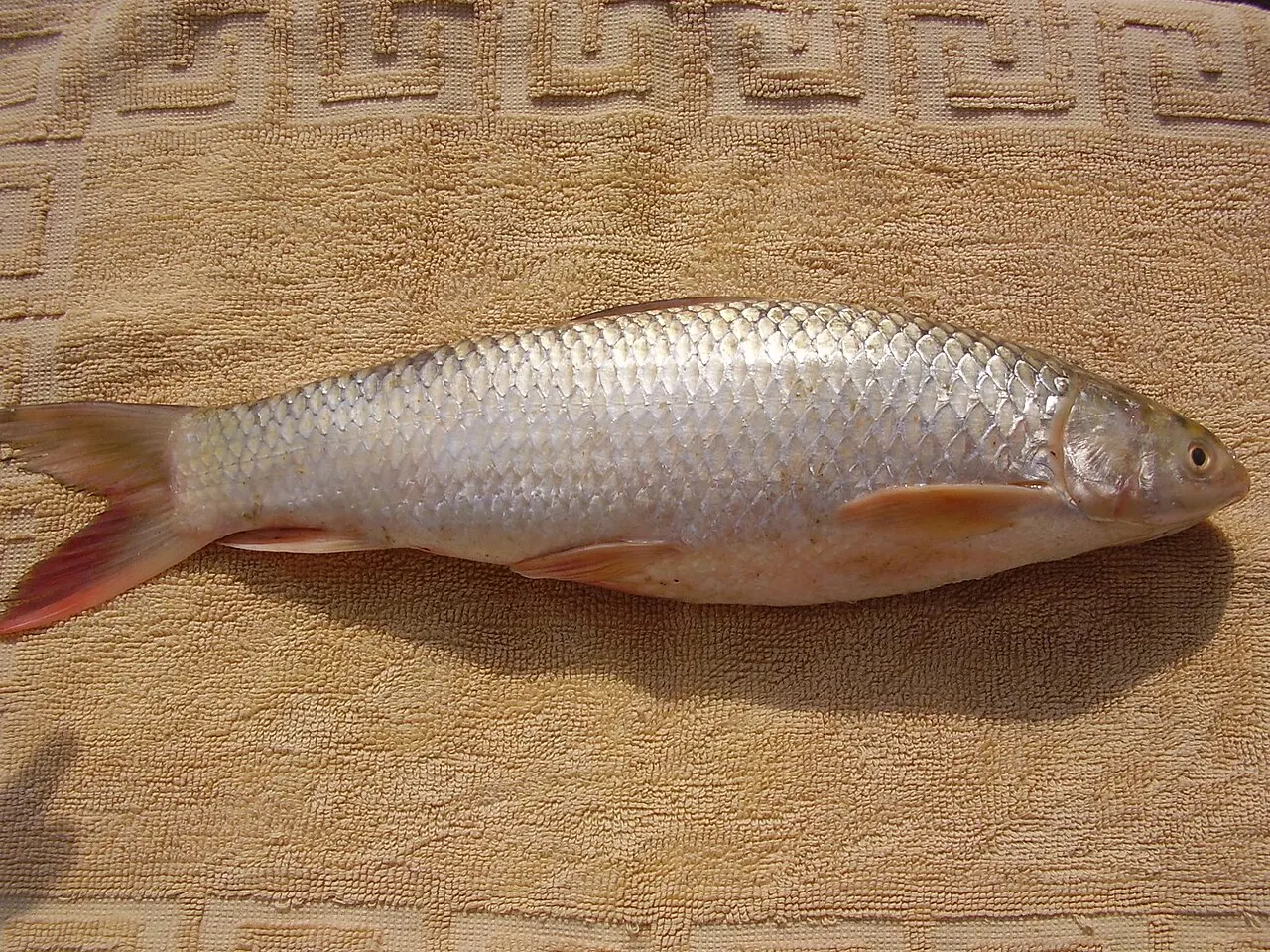
Adults are golden above the lateral line, and the fins carry a reddish-gold tint. The scales are very large, so large that the naturalist Francis Buchanan-Hamilton reportedly saw them made into playing cards in Dacca. The head is large with a big mouth, but its shape varies so much between individuals that it's an unreliable way to separate this fish from other mahseers.
It's one of the largest members of the carp family. Older records give a maximum near 2.7 metres and 54 kilograms, though most fish caught today are much smaller.
Where it lives
The golden mahseer lives in fast, rocky streams, deep river pools and lakes across the Himalayan region. The Red List records it from Afghanistan, Pakistan, India, Nepal, Bhutan and Bangladesh, and FishBase adds Myanmar. It prefers warm, well-oxygenated water between about 13 and 30 degrees Celsius, usually near the surface.
It can live in the still water of dam reservoirs. That hasn't saved it, because dams also block the migration routes and spawning grounds it needs.
Pins are Wikidata “endemic to” fields. Orange dots, when present, are GBIF occurrence tiles — survey bias included.
How it lives
It eats almost anything. Adults take smaller fish, zooplankton, fly larvae and plant matter, while fingerlings graze mainly on algae. It's a migratory fish. Adults move from the lower to the middle reaches of a stream or river to spawn over gravel and stones, timed to the low phase of a flood, and then return to permanent pools. The fry shelter among stones in shallow margins.
Why it is in trouble
The 2018 Red List assessment estimated a population reduction of about 50 percent, judged from direct observation, catch indices, habitat loss and levels of exploitation, and it lists the population as decreasing and severely fragmented. The main causes are hydropower dams, which fragment rivers and block spawning runs, and fishing. Poison, dynamite, electric shock and fine-meshed nets are all still used. The assessment also lists sewage, run-off, pesticides, sand and gravel mining, water abstraction and silt from erosion.
Introductions have caused harm too. Golden mahseer moved to new waters in India in the 1850s and 1870s are thought to have helped wipe out a local endemic fish in Bhimtal, and their descendants are spreading south. Hatchery fish supplied to Papua New Guinea also escaped into the Sepik River system.
What is being done
Hatchery breeding and release is the most common response. Artificially bred fish have been released in Nagaland, near the Melghat Tiger Reserve, and in the Teesta River in Sikkim and West Bengal. Stocking isn't a full substitute for healthy wild runs, and releasing fish into non-native waters can erode genetic diversity.
Bhutan, where the fish is called Ser-Nya, allows only catch-and-release angling for it, with single barbless hooks, artificial lures, certified guides for foreign anglers and online permits. Keeping a golden mahseer, dead or alive, is illegal there. The species occurs in at least one protected area, but when it was assessed there was no recovery plan or systematic monitoring scheme.
Sources
Written for this catalog in our own words from the sources below, checked against them on 12 November 2026. Population figures are estimates and carry the year they were made. Status and assessment year: IUCN. 2026. The IUCN Red List of Threatened Species. Version 2026-1. iucnredlist.org.