Critically Endangered
Three-striped roofed turtle
Batagur dhongoka
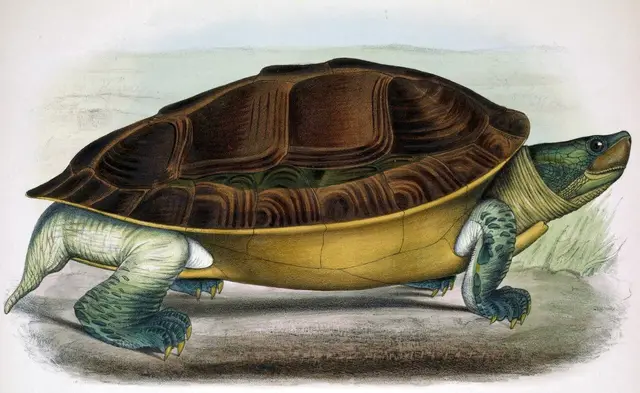
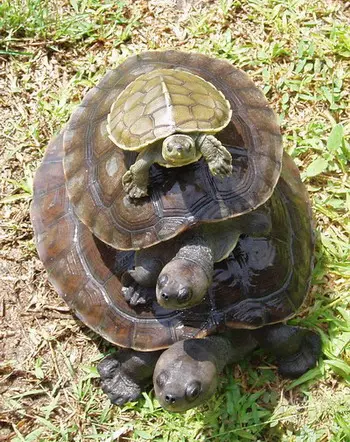
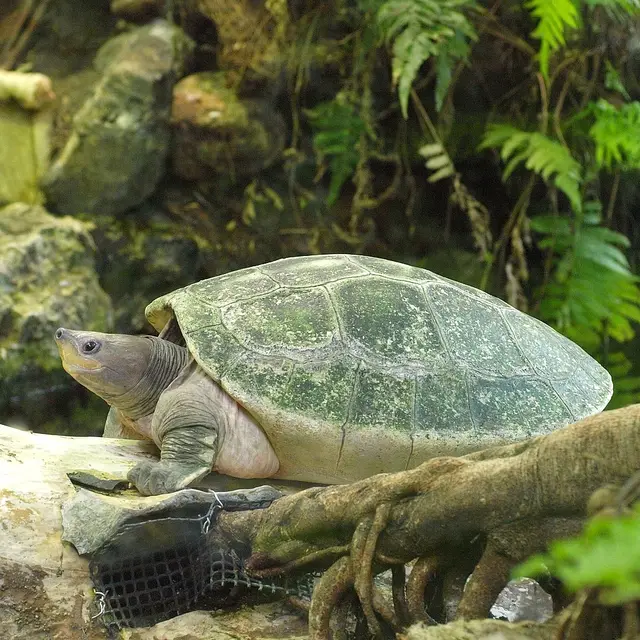
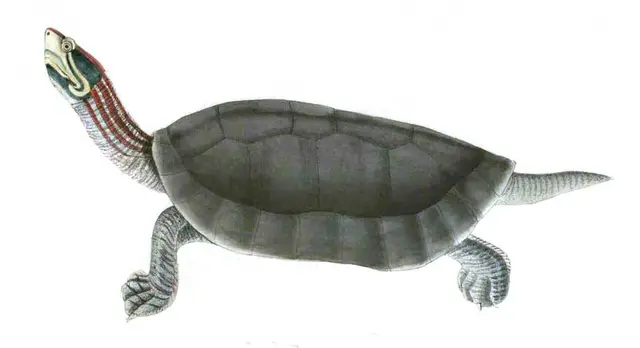
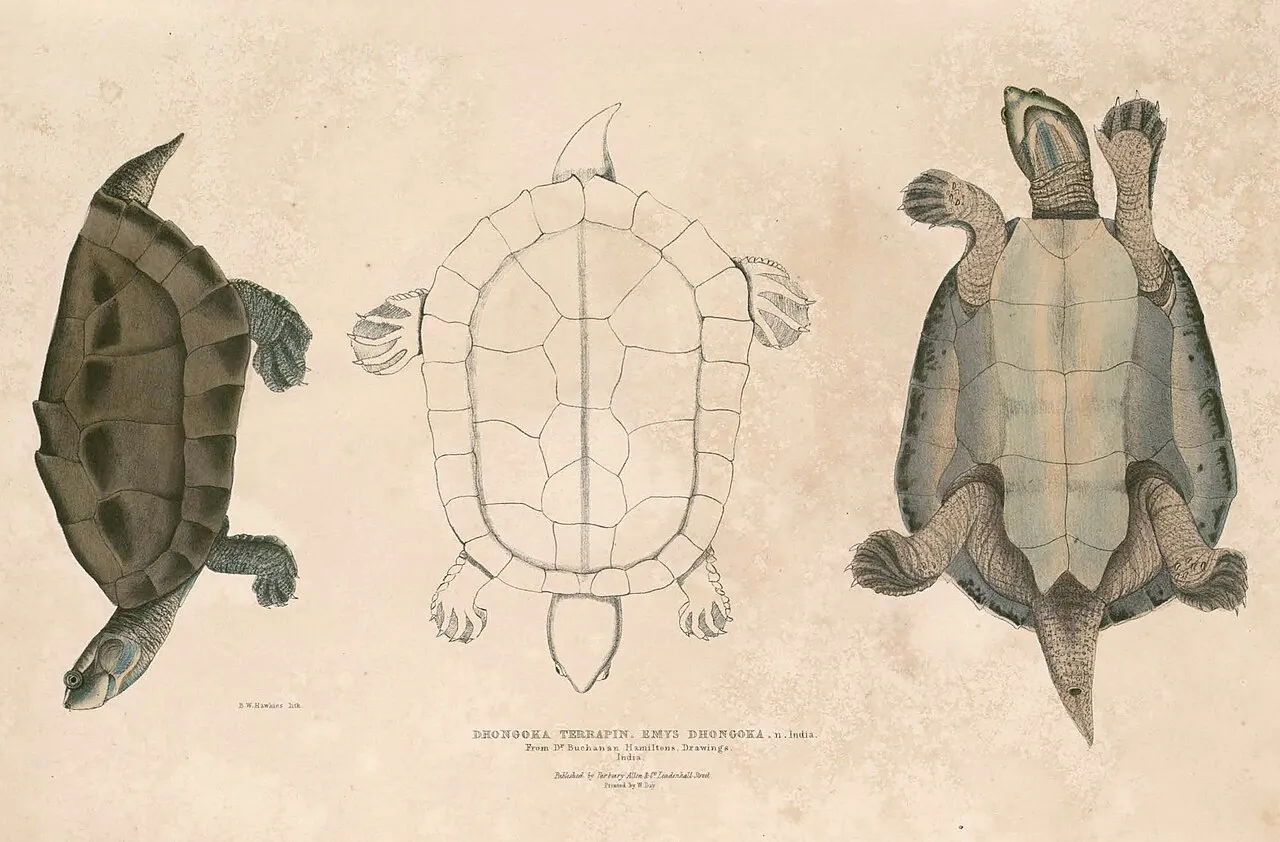
The three-striped roofed turtle (Batagur dhongoka) is a freshwater turtle of the Ganges and Brahmaputra river systems in northern and eastern India and Bangladesh. The IUCN Red List rated it Critically Endangered in 2019 and lists its population as decreasing. It nests on river sandbanks, including along the Chambal.
Names and relatives
It belongs to the family Geoemydidae, the Asian river and pond turtles, and to the genus Batagur, which includes several river turtles. John Edward Gray described it in the 1830s under the name Emys dhongoka. It has carried many names since, including Kachuga hardwickii, so older books and papers may list it under those.
Its close relative the red-crowned roofed turtle (Batagur kachuga) shares some of the same Chambal River sandbanks. Both are rated Critically Endangered.
Where it lives
The species is native to South Asia. It occurs in Bangladesh and in the Indian states of Assam, Bihar, Madhya Pradesh, Rajasthan, Uttar Pradesh and West Bengal. The IUCN lists Nepal as a place where its presence is uncertain, and it may also occur in Bhutan.
It lives in permanent rivers and streams, including tributaries and estuaries, from sea level up to about 140 m. It lays eggs. The IUCN puts a generation at about 25 years, so a population takes decades to recover from losses.
Pins are Wikidata “endemic to” fields. Orange dots, when present, are GBIF occurrence tiles — survey bias included.
How it nests
A study published in Reptiles and Amphibians surveyed a 30 km stretch of the Chambal River, covering eight sandbanks, in the nesting seasons (February to early April) of 2017, 2018 and 2019. It found 640 nests of the two Batagur species combined. The three-striped turtles crawled significantly farther from the water to reach their nest sites than the red-crowned turtles did. They also left four different crawl patterns, where the red-crowned turtle left one, and their nests differed in shape.
The paper points out that work on sea turtles links nest position to predation, heat stress, drying out and the energy a female spends getting there, all of which can affect whether eggs and hatchlings survive. Where this turtle chooses to nest may matter in the same way.
Why it is in trouble
The 2019 IUCN assessment rates the species Critically Endangered under criteria A2cd+4cd and lists the population trend as decreasing, with the area it occupies still shrinking. Those criteria rest on an observed or suspected population decline, linked here to habitat loss and to actual or potential exploitation.
Threats recorded by the IUCN include dams, small-scale harvest of the turtles, sewage, and soil erosion and silt in the rivers. The species is on Appendix II of CITES, the international agreement that regulates trade in listed wildlife.
What is being done
The IUCN records that conservation sites have been identified over the whole range and that the turtle occurs in at least one protected area. It is also held in captivity as part of ex-situ conservation. Actions recorded as in place or needed include site management and protection, resource and habitat protection, national-level action, awareness and communications, and captive breeding.
Sources
Written for this catalog in our own words from the sources below, checked against them on 12 November 2026. Population figures are estimates and carry the year they were made. Status and assessment year: IUCN. 2026. The IUCN Red List of Threatened Species. Version 2026-1. iucnredlist.org.