Critically Endangered
Painted terrapin
Batagur borneoensis
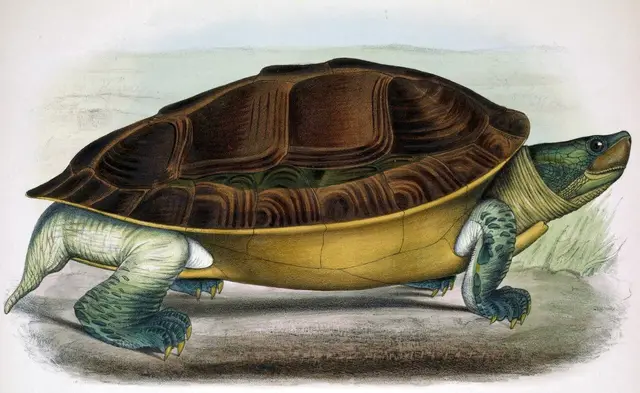
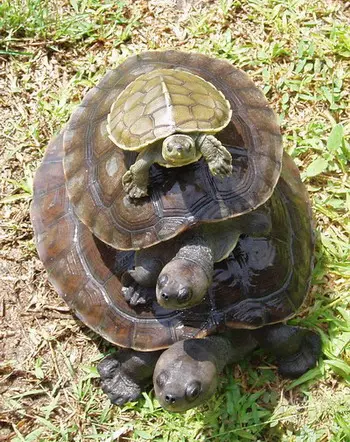
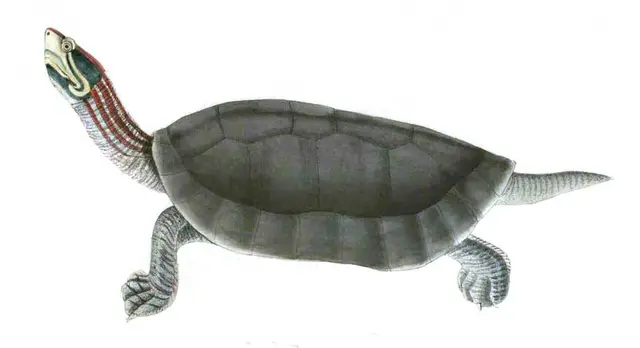
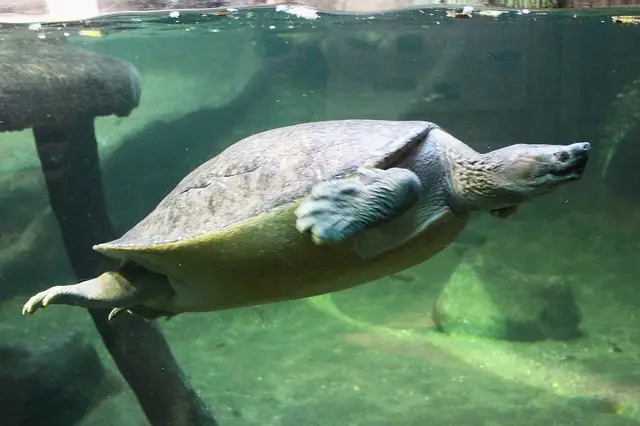
The painted terrapin (Batagur borneoensis) is a large river turtle of tidal estuaries in Sumatra, Borneo, Peninsular Malaysia and southern Thailand. The IUCN Red List has listed it as Critically Endangered since its 2021 assessment. Breeding males turn white-headed with a bright red band between the eyes.
How to recognise it
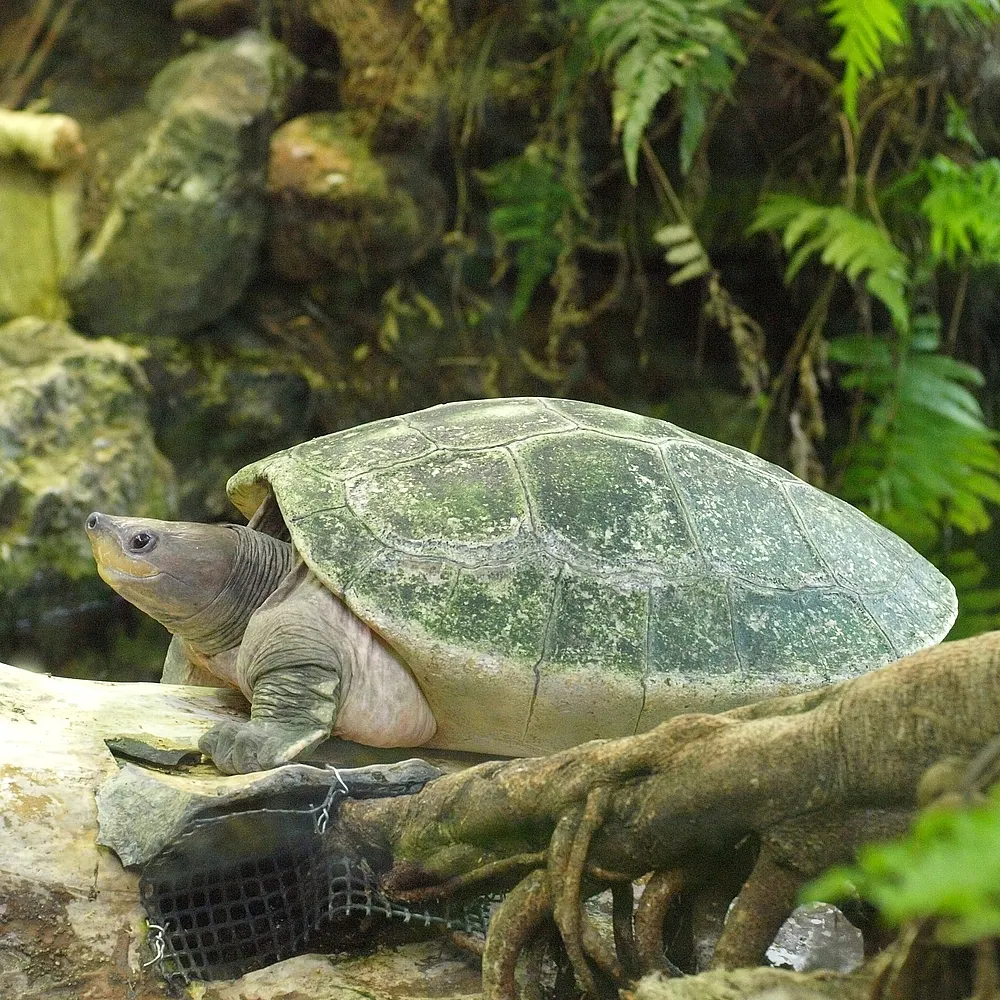
This is a big freshwater turtle, with a shell that can reach about 50 cm long. Three black stripes run down the length of the shell. The species is also called the painted batagur.
The breeding season changes the males dramatically. Their heads turn white, a red band edged in bright indigo appears between the eyes, and the shell lightens.
Where it lives
The species is recorded from Brunei, Indonesia (Sumatra and Kalimantan), Peninsular Malaysia and Thailand. It lives in the lower, tide-influenced stretches of medium and large rivers and in brackish estuaries, with mangroves and coastal sand dunes among the habitats the IUCN lists. It occurs from sea level to about 20 m.
A survey in Peninsular Malaysia confirmed it in 14 rivers and judged it might also occur in 19 more.
Pins are Wikidata “endemic to” fields. Orange dots, when present, are GBIF occurrence tiles — survey bias included.
How it breeds
Females come ashore to nest, sometimes on sea beaches. In Peninsular Malaysia nesting usually runs from May to July. A clutch is 10 to 16 eggs, which incubate for 70 to 90 days. Hatchlings make their own way to the river.
In its hatchery work, the Turtle Conservation Society of Malaysia reports incubating eggs in a hatchery to produce females and in styrofoam boxes to produce males.
Why it is in trouble
For decades, collecting of eggs and meat has left little or no recruitment of young turtles, according to the Turtle Conservation Society. Turtles are also taken for the pet trade because of their colouring. The IUCN assessment lists harvest, mining and quarrying, small-holder farming, garbage and habitat alteration among the threats, and records a decreasing population trend.
Habitat is being lost to dam construction, sand mining and coastal development, and conversion of land to oil palm plantations and to fish and shrimp farms is reported as a major threat. In Terengganu, the number of protected clutches fell from several hundred a year to fewer than 100 by 2010.
What is being done
The species is in CITES Appendix II, and the IUCN lists protection, captive breeding, reintroduction, trade management and awareness work among its conservation actions.
In Aceh Tamiang, northern Sumatra, the Satucita Foundation ran nest patrols and raised hatchlings in a facility for about six months before release. It let go 77 of them on 3 October 2013, aiming for at least 600 by 2017. In Terengganu, a WWF-Malaysia project from mid-2024 to the end of 2025 secured and incubated 162 painted terrapin nests (1,835 eggs). Hatching success was 81%, or 1,482 eggs hatched.
Sources
Written for this catalog in our own words from the sources below, checked against them on 12 November 2026. Population figures are estimates and carry the year they were made. Status and assessment year: IUCN. 2026. The IUCN Red List of Threatened Species. Version 2026-1. iucnredlist.org.
- IUCN Red List assessment, Batagur borneoensis (2021)
- Turtle Conservation Society of Malaysia, painted terrapin
- Mohamed bin Zayed Species Conservation Fund, WWF-Malaysia Terengganu project
- Mohamed bin Zayed Species Conservation Fund, Satucita Foundation Aceh project
- Wikipedia, Painted terrapin
- The Reptile Database, Batagur borneoensis