Endangered
Thick shelled river mussel
Unio crassus
The thick-shelled river mussel (Unio crassus) is a freshwater bivalve of clear European rivers, from France east to the Ural basin. The IUCN Red List rated it Endangered in 2024 after a decline of about half. Its larvae must ride on the gills of fish, so its survival depends on them.
How to recognise it
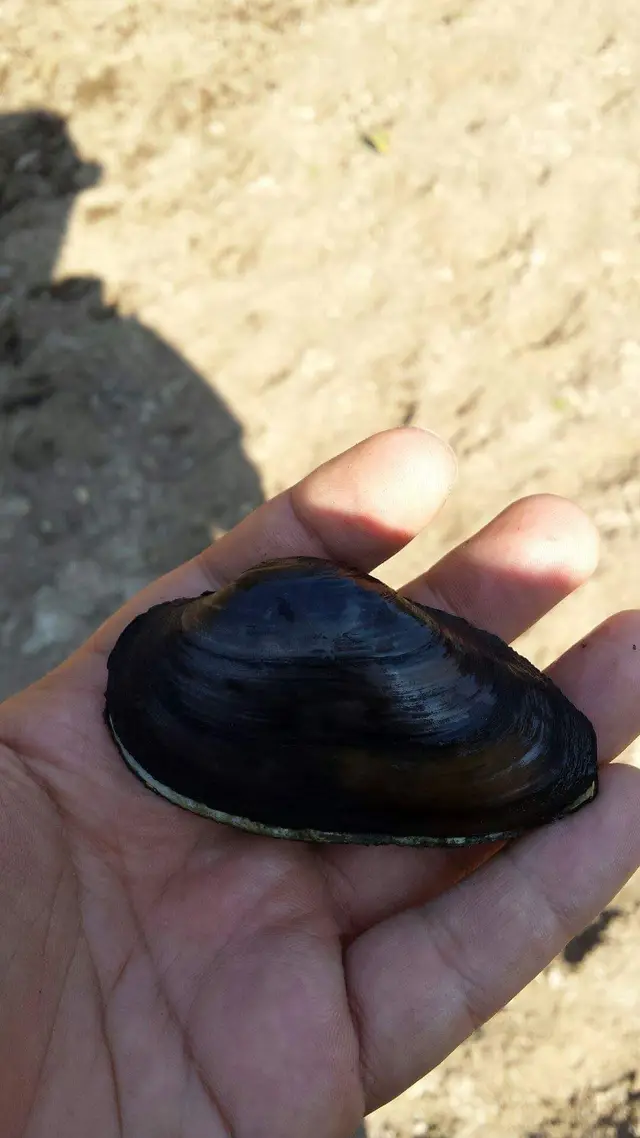
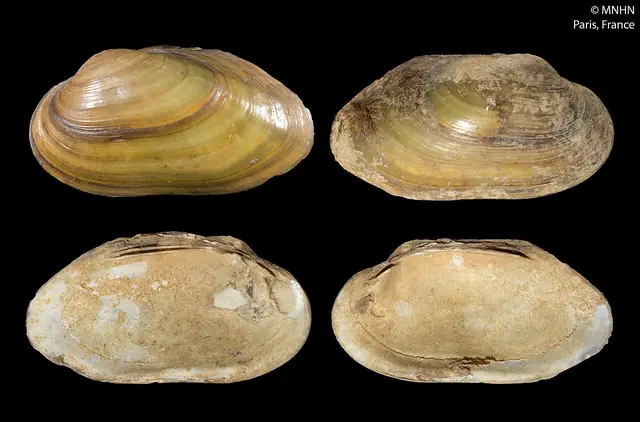
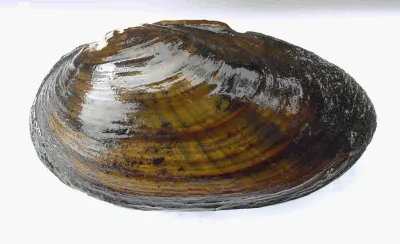
It's a river mussel with a heavy, thick-walled shell. Most adults measure about 3 to 7 cm long, though a few reach 9 to 11 cm, and shell shape shifts with the river and the population it comes from.
The taxonomy has been reworked. In 2009 a second species, Unio tumidiformis, was separated from it, and genetic work has found two clades that may be subspecies.
Where it lives
The species occurs across much of Europe and into western Asia, from France east to the Ural River basin in Russia and Kazakhstan. Britain, Italy and the Iberian Peninsula fall outside its range. The Red List assessment records it from Sweden, Norway and Finland south to Bulgaria, Croatia and North Macedonia, and up to about 900 m above sea level.
It lives in permanent rivers and streams, usually clean, well-oxygenated ones with sand or gravel beds. It sits partly buried, often near banks, roots or boulders in slower water. It is reportedly extinct in the Netherlands, where the last sightings date from the late 1960s.
Pins are Wikidata “endemic to” fields. Orange dots, when present, are GBIF occurrence tiles — survey bias included.
How it lives
Like other river mussels, it filters food from the water through siphons held above the sediment. Lifespans are reported at up to 80 or 90 years depending on the source, with 20 to 30 years given as a typical figure. The Red List uses a generation length of 20 years.
Females release larvae, called glochidia, in spring and summer, and a single female can produce around 100,000. The larvae clamp onto the gills of fish such as bullhead, minnow, chub, bleak, ide and perch for roughly 20 to 50 days, then drop off and live buried in the bed for one to three years. Suitable hosts differ between rivers. Roach and sterlet cannot carry the larvae through to juveniles.
Why it is in trouble
Across Europe the mussel declined by as much as 50 percent in the 20th century, and the Red List assessment gives a past reduction of 50 percent. In Germany it has reportedly vanished from about 90 percent of its former range. The remaining populations are patchy and severely fragmented, and the most stable ones are reportedly in Russia and northern Europe.
The Red List threat list reads like a catalogue of river damage: nutrient loads, sewage, pesticides and herbicides, silt and soil erosion, dams, water abstraction and drought. A 2020 study reportedly named habitat destruction, muskrat predation and a shortage of host fish as the main drivers. A Swedish conservation project adds acidification, dredging and stream clearing, and notes that without host fish few young mussels join the population.
What is being done
The mussel is listed in Annexes II and IV of the EU Habitats Directive, so member states must designate protected areas for it. The Red List assessment records that it occurs in at least one protected area and is covered by international legislation. It lists site protection, habitat restoration, captive breeding and education among its conservation actions.
One method described by a Swedish stream-restoration project is to catch host fish, hold them in tubs with gravid mussels so more larvae attach, and release the fish back into the watercourse. A Polish project in the Biała Tarnowska river, using captive breeding and infected fish, reportedly doubled the local population.
Sources
Written for this catalog in our own words from the sources below, checked against them on 12 November 2026. Population figures are estimates and carry the year they were made. Status and assessment year: IUCN. 2026. The IUCN Red List of Threatened Species. Version 2026-1. iucnredlist.org.