Endangered
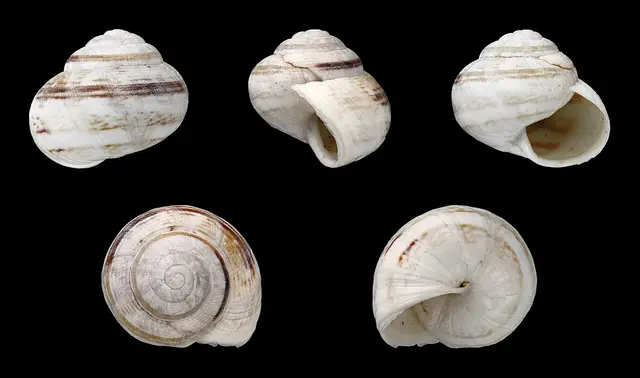
Theba grasseti
Theba grasseti
Theba grasseti is a land snail endemic to the Canary Islands, with records mainly from Gran Canaria, where it lives in dry lowland scrub. The IUCN Red List classed it as Endangered in 2025 because it occupies roughly 24 square kilometres at only three locations, which roads, housing and recreation put under pressure.
Where it lives
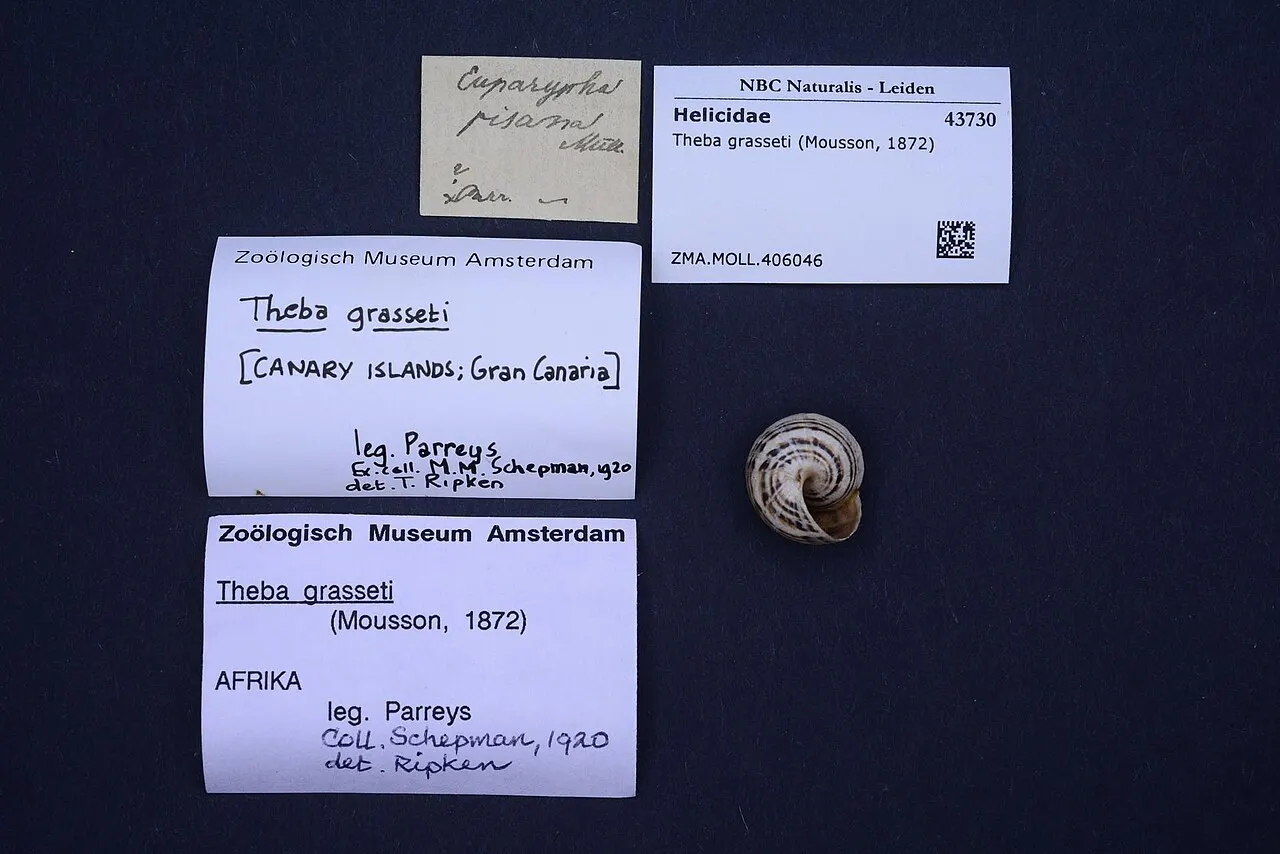
The Canary Islands government biodiversity databank treats Theba grasseti as a valid native species found only in the Canaries, and gives it the Spanish name caracol pintado de Gran Canaria, the painted snail of Gran Canaria. Mousson described it in 1872 under the name Helix grasseti. It belongs to Theba, a genus of snails in the family Helicidae found around the Mediterranean, in the Canaries and in Morocco.
The IUCN counts three locations, between 35 and 150 m above sea level, with an extent of occurrence of about 155 square kilometres and an area of occupancy of about 24. The habitat is Mediterranean-type shrubland, which the Canary databank files under tabaibal-cardonal, a dry scrub type of the islands.
Nearly all dated records on GBIF are from Gran Canaria: La Isleta in the north-east (a specimen from 2008), a hill southwest of Agaete (observations from 2018) and a barranco site collected in 1982 at about 300 m. The Canary catalogue also lists Fuerteventura and Lanzarote, so the full range is not settled.
Pins are Wikidata “endemic to” fields. Orange dots, when present, are GBIF occurrence tiles — survey bias included.
Why it is in trouble
The Endangered classification rests on criterion B1ab(ii,iii)+2ab(ii,iii): a very small range at few locations, with continuing decline in the area it occupies and in habitat quality. The IUCN lists the threats as roads, housing and urban areas, and recreational activities.
Whether the number of snails is rising or falling is unknown. The population trend is listed as unknown, and there is no population size estimate.
What is being done
Conservation sites have been identified over part of its range. The IUCN says the species occurs in at least one protected area, and that 41 to 50 percent of the population lies inside protected areas. There is no recovery plan and no systematic monitoring scheme. The Canary Islands list it as Vulnerable in their catalogue of protected species.
Sources
Written for this catalog in our own words from the sources below, checked against them on 12 November 2026. Population figures are estimates and carry the year they were made. Status and assessment year: IUCN. 2026. The IUCN Red List of Threatened Species. Version 2026-1. iucnredlist.org.