Endangered
Sumatran surili
Presbytis melalophos
The Sumatran surili, also called the black-crested Sumatran langur (Presbytis melalophos), is a leaf-eating monkey found only in southwestern Sumatra and on one small island. The IUCN Red List lists it as Endangered (assessed 2020), with a decreasing population, mainly because its forest is being cleared.
How to recognise it
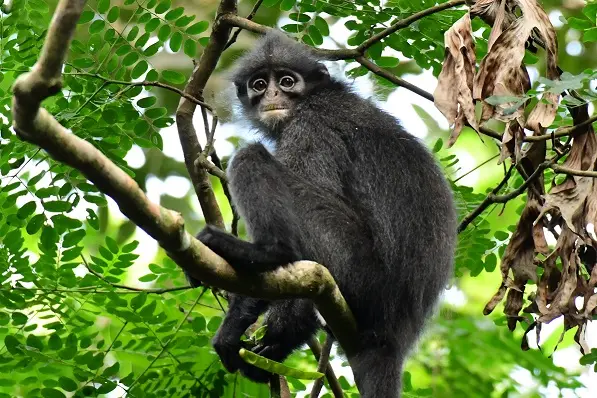
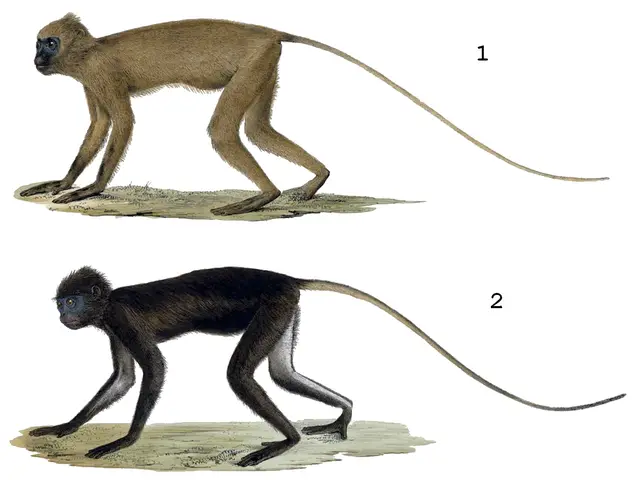
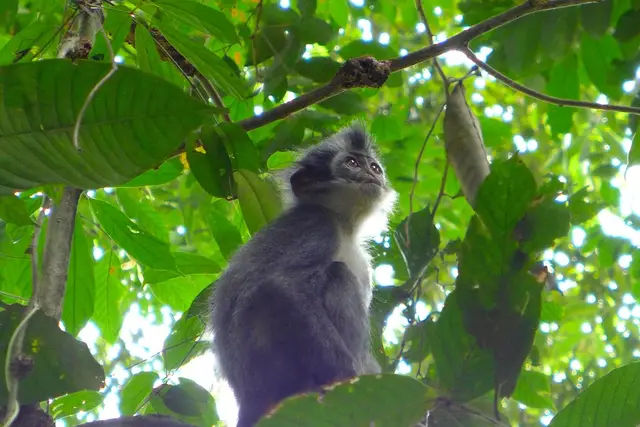
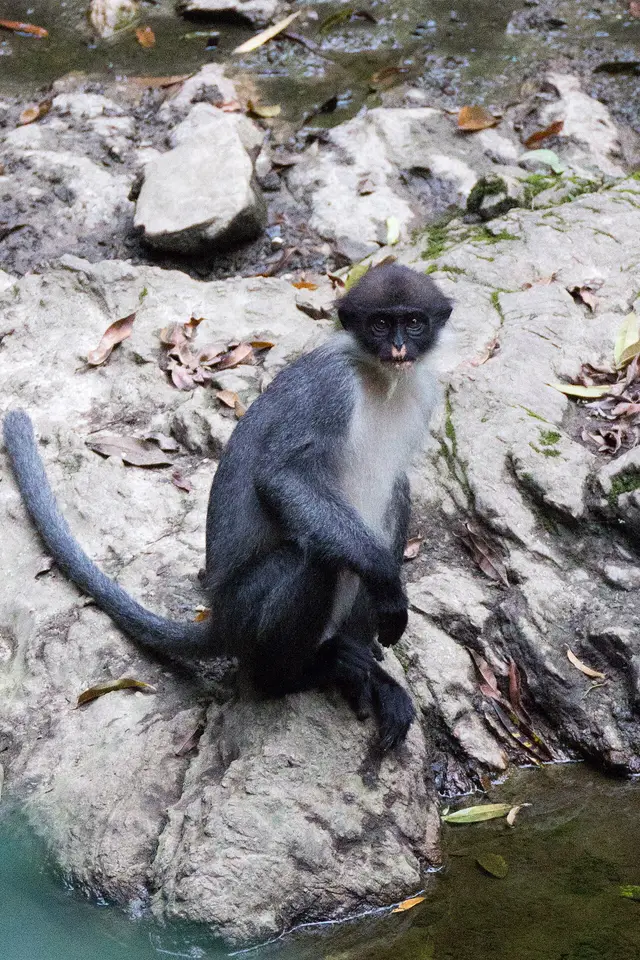
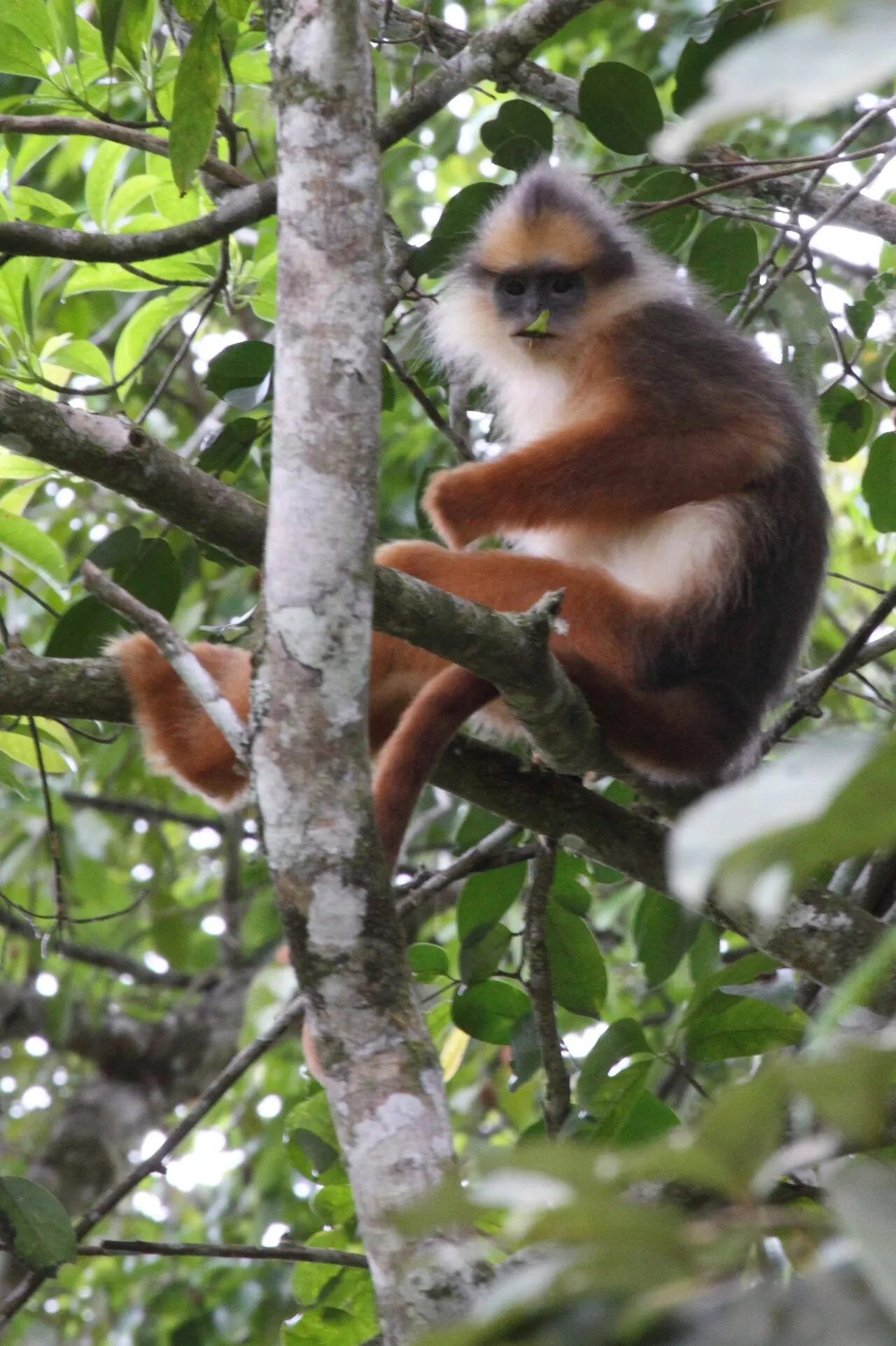
The arms, legs, tail and top of the head range from buttery yellow to bronze, fading to darker brownish fur on the back. The belly and inner thighs are white, and the white reaches up the neck like a collar. The face has black skin with pale pink rings around the eyes.
Fur on the crown rises to a black point, which gives the species its common name. Infants are whitish grey with a dark stripe down the back. Adults are estimated at 40 to 60 cm in head and body length and 5 to 8 kg, though no precise measurements have been published.
Where it lives
This monkey is endemic to Sumatra, Indonesia. Its range lies in the southwest of the island, south of the Wampu and Simpang Kiri Rivers, and it also occurs on Pini Island in the Batu Archipelago. Older treatments counted several other langurs, including the black Sumatran langur and the mitred langur, as subspecies, but these are now treated as separate species, so older books show a much wider range.
It lives from lowland up to about 1,000 m. The IUCN lists moist lowland and montane forest, and also degraded former forest, plantations and shrubland. It has been reported in primary and secondary forest and in rubber plantations, and the IUCN records it in at least one protected area.
Pins are Wikidata “endemic to” fields. Orange dots, when present, are GBIF occurrence tiles — survey bias included.
How it lives
Surilis eat mostly leaves, with flowers and seeds as well, and accounts differ on how much fruit they take. Groups usually have one adult male, several females and their young, and groups of roughly 2 to 8 animals are reported. Females stay in the group they were born into, and males leave at maturity.
Little is known about breeding in the wild. Details such as a gestation of 6 to 7 months and a single infant per birth are borrowed from other langurs. The IUCN gives a generation length of 12 years.
Why it is in trouble
Habitat loss is the main threat. An estimated 62 percent of its habitat was lost between 2000 and 2012, with forest burned and cleared for oil palm and also logged, legally and illegally. The IUCN lists small-holder farming, agro-industry plantations, housing, and deliberate hunting among the pressures. Some animals are shot for food or trapped for the illegal pet trade.
The IUCN estimates a population reduction of 50 percent, and records a continuing decline. The monkey tolerates some disturbed forest, but its habitat is patchy, and groups are being cut off from each other.
What is being done
The surili is on CITES Appendix II, and the IUCN records it as subject to international trade controls. The same assessment says there is no recovery plan, no systematic monitoring and no captive population, and it lists harvest management, trade management, awareness work and site protection among the actions needed.
Sources
Written for this catalog in our own words from the sources below, checked against them on 12 November 2026. Population figures are estimates and carry the year they were made. Status and assessment year: IUCN. 2026. The IUCN Red List of Threatened Species. Version 2026-1. iucnredlist.org.