Endangered
Black Sumatran langur
Presbytis sumatrana
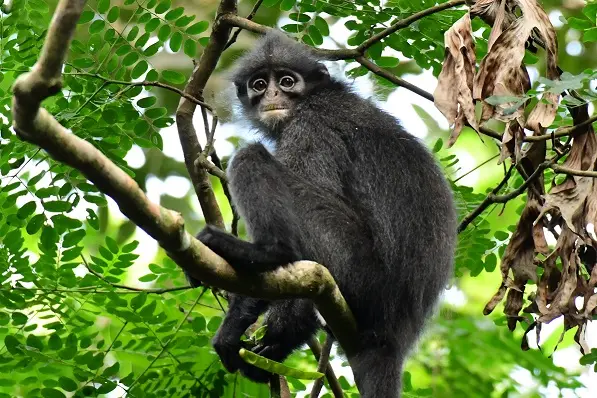
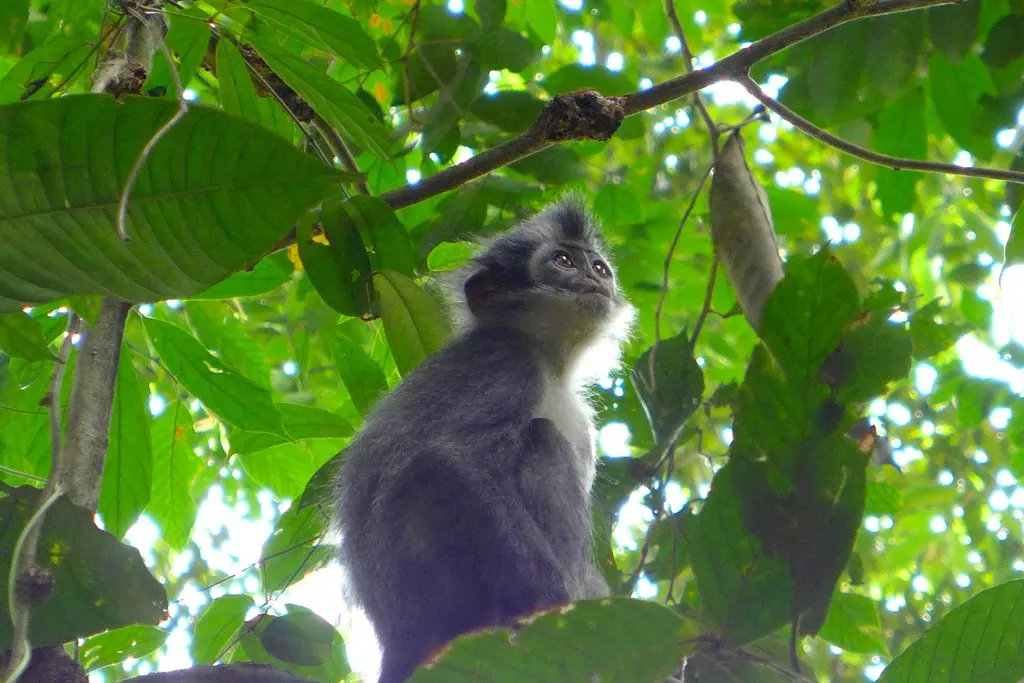
The black Sumatran langur (Presbytis sumatrana) is a long-tailed leaf monkey found only on the island of Sumatra, Indonesia. It lives in lowland and hill rainforest and is dark above and white below. The IUCN Red List rated it Endangered in 2020, mainly because its forest is being cleared for plantations.
How to recognise it
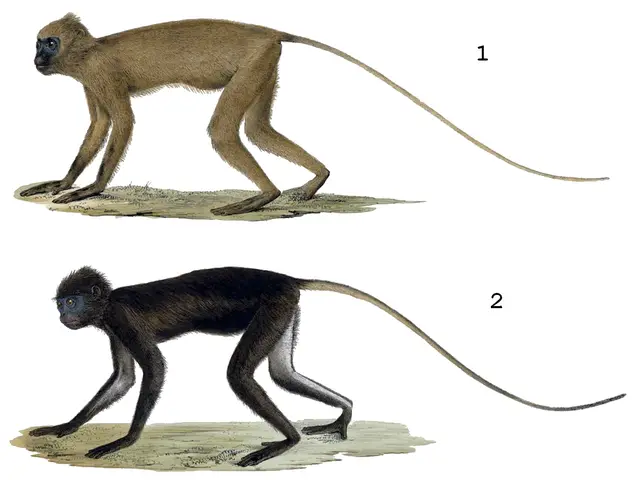
This is a slim monkey with a very long tail. Males measure 33 to 35 cm from head to rump and females 34 to 39 cm, and the tail adds another 64 to 84 cm. Males weigh roughly 4.9 to 7.2 kg and females 5.1 to 8.5 kg.
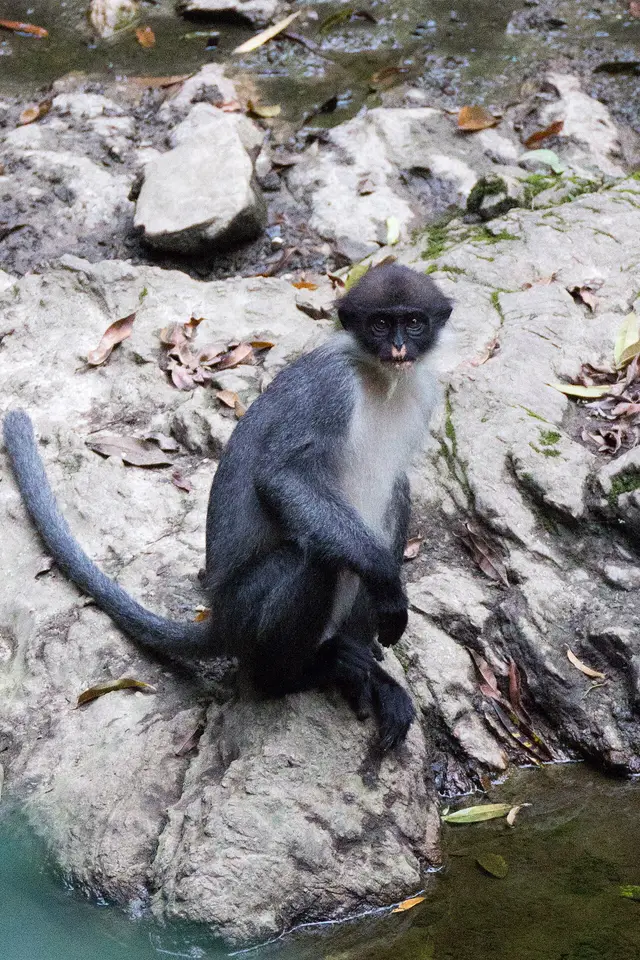
The back, outer limbs and top of the tail run from dark grey-brown to almost black. The throat, belly, underside of the tail and inner limbs are white, with a sharp line between the two colours. The crest on the head is grey to dark brown and can be hard to make out, and the face is mostly bluish. Northern animals are darker and blacker than southern ones, which look more brownish.
Where it lives
The species occurs in west and north-central Sumatra: the northern highlands and the west coast south of the Simpang Kiri River (north of Gunung Talamau), and the east side of the island from the Wampu River to the Barumun River and south-east to the Rokan River. It also lives on Pini Island in the Batu group, and it has been recorded in Batang Gadis National Park.
Habitat is rainforest in the lowlands and hills, including old growth and secondary forest. The IUCN assessment gives an elevation range of about 100 to 1,000 m.
Pins are Wikidata “endemic to” fields. Orange dots, when present, are GBIF occurrence tiles — survey bias included.
How it lives
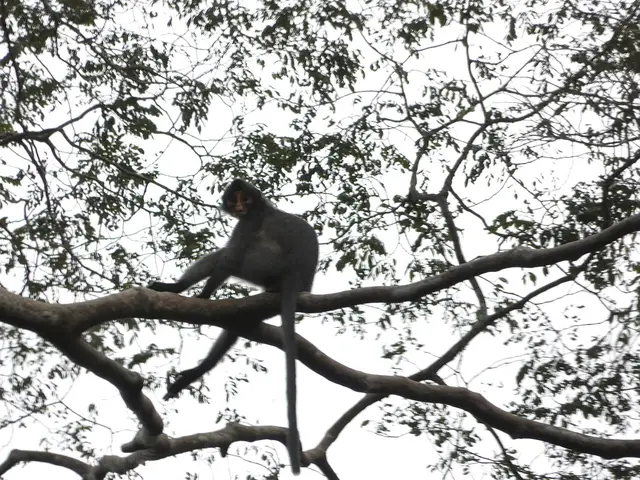
It is active by day and spends its life in the trees. Very little is known beyond that. The species has never been studied in the wild, and nothing is recorded about its breeding. Its diet is thought to be mostly young leaves, with unripe fruit, flowers, mature leaves and seeds as well. Like other surilis it probably lives in small groups with a single adult male that defend their own territory, though neither point has been observed for this species.
Why it is in trouble
The IUCN trend is decreasing. A 2013 primate handbook reported that about half of the forest in the species' range had been degraded over the previous 30 years, and what remains is a broken mosaic among commercial plantations. The IUCN assessment lists agro-industry plantations and farming as threats, along with capture of the monkeys themselves.
The illegal pet trade adds to the pressure. The black Sumatran langur is protected under Indonesian law and listed on CITES Appendix II.
What is being done
The assessment lists site protection and management, awareness work and species recovery among the conservation actions, but records no species recovery plan and no monitoring scheme. The monkey does occur in at least one protected area, Batang Gadis National Park.
Sources
Written for this catalog in our own words from the sources below, checked against them on 12 November 2026. Population figures are estimates and carry the year they were made. Status and assessment year: IUCN. 2026. The IUCN Red List of Threatened Species. Version 2026-1. iucnredlist.org.