Critically Endangered
Sarawak surili
Presbytis chrysomelas
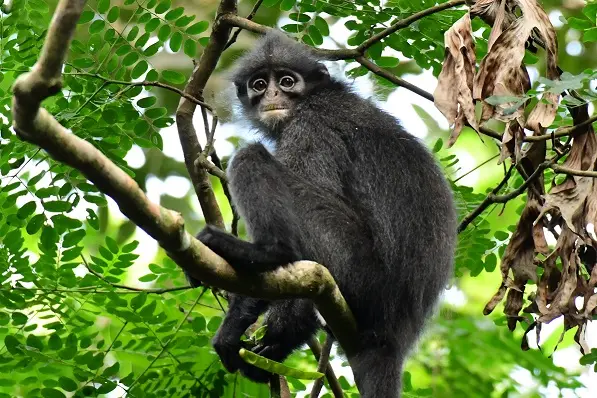
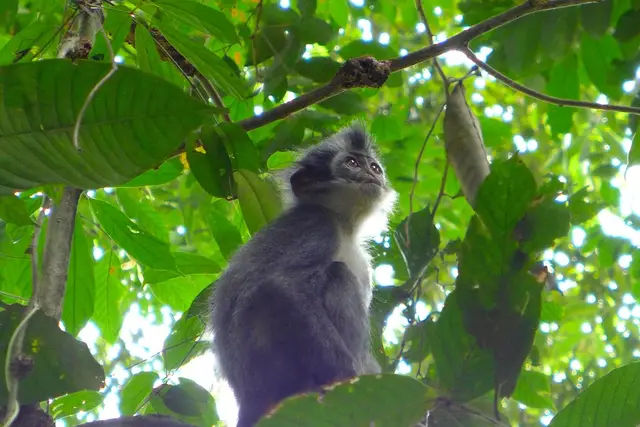
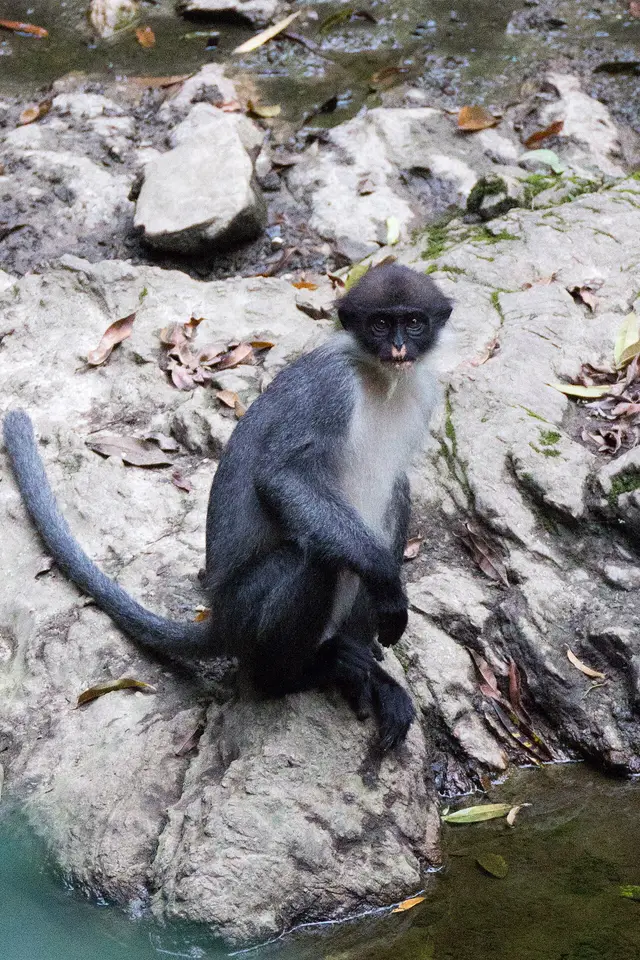
The Sarawak surili (Presbytis chrysomelas), also called the Bornean banded langur, is a slender leaf-eating monkey found only on northern Borneo. The IUCN Red List rated it Critically Endangered in 2020, with a decreasing population. It was once common but now survives at only a handful of sites.
How to recognise it
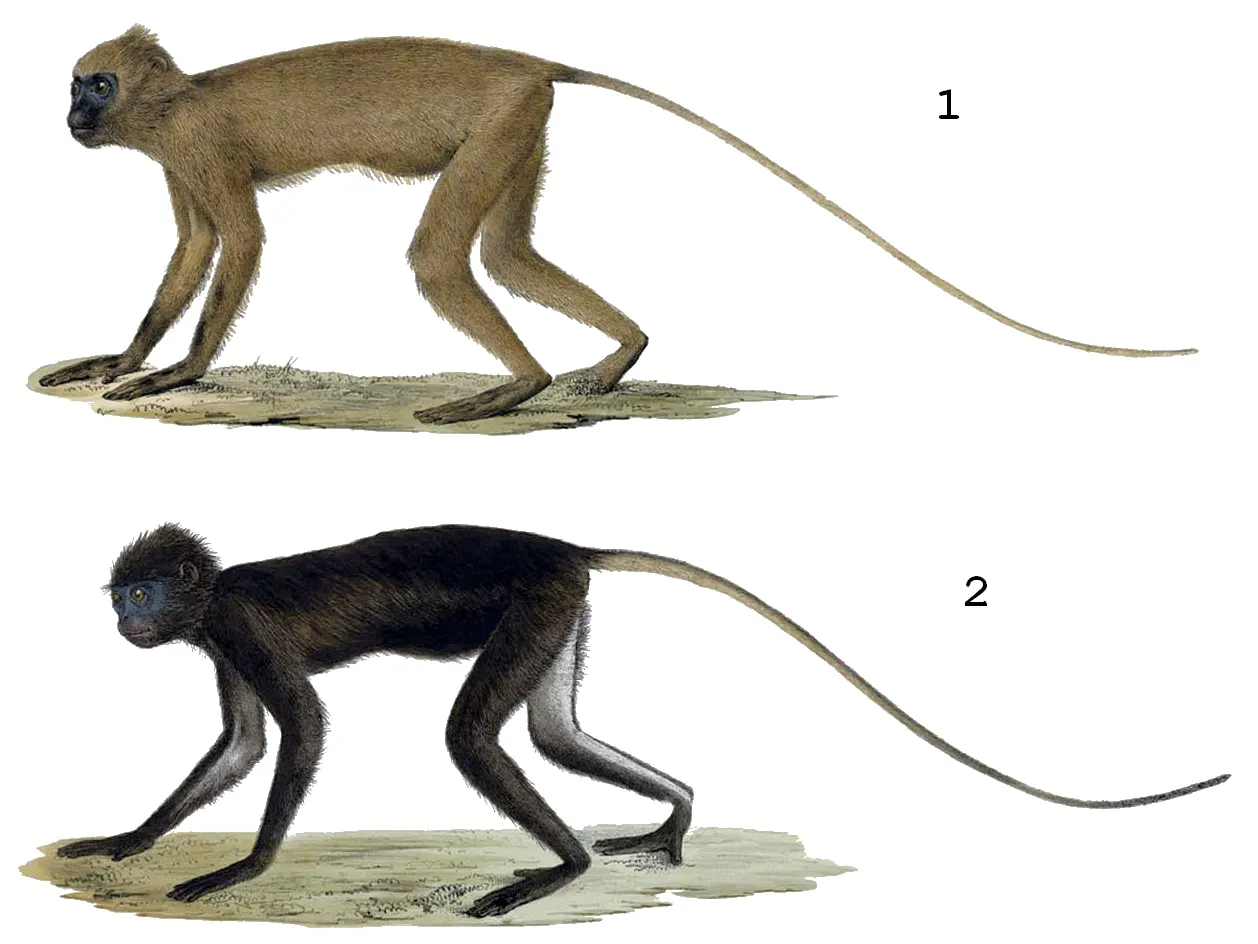
It's a medium-sized langur with a long, slender tail, a banded black-and-white coat and pale fur around the face. A conservation blog gives a body length of roughly 50 to 60 cm. Babies are reportedly born orange and darken as they grow.
Classification has been argued over for years. The species has at times been treated as a subspecies of Presbytis femoralis or Presbytis melalophos. Within it, two forms are recognised, the nominate one in the west of its range and one called cruciger from northeastern Sarawak to Sabah.
Where it lives
Its range covers northern Borneo, north of the Kapuas River in Kalimantan (Indonesia), in the Malaysian states of Sarawak and Sabah, and in Brunei. The Red List records it as a resident of Malaysia, Indonesia and Brunei.
The assessment lists two habitats, tropical moist lowland forest and mangrove forest above the high tide line, and puts its elevation range between sea level and 100 m. A Japanese threatened-mammal database names Maludam National Park, Samunsam Wildlife Sanctuary, Similajau National Park, Tanjung Datu National Park and the Lingga area of Sarawak among recent records, with Betung Kerihun National Park in Indonesia as a possibility.
Pins are Wikidata “endemic to” fields. Orange dots, when present, are GBIF occurrence tiles — survey bias included.
How it lives
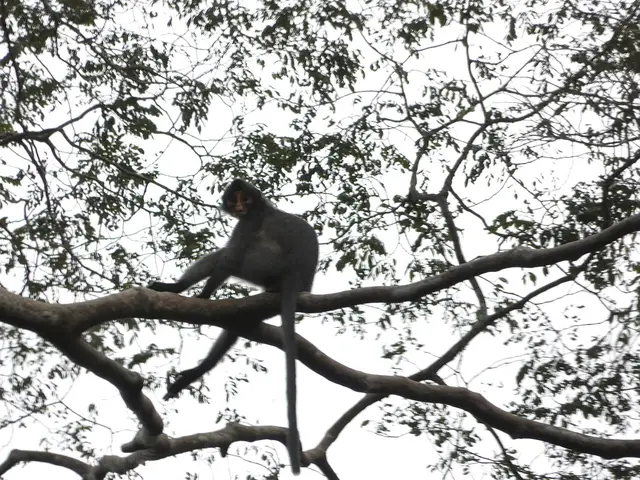
Surilis are tree-dwellers that mostly feed on young leaves, and reportedly also flowers, seeds and unripe fruit. Groups are small. The Japanese database gives 3 to 7 animals, while the conservation blog says 3 to 10, usually with a single adult male, several females and their young.
The Red List gives a generation length of 10 to 12 years and notes the species isn't a migrant.
Why it is in trouble
The animal was once considered common but has declined drastically. A 2015 estimate, cited by the Red List, put the total at about 200 to 500 animals across five sites. The Japanese database reports a fall of about 80 percent over 30 years and says the species now occupies less than 5 percent of its historic range.
The Red List names shifting agriculture, small-holder farming, agro-industry farming and plantations as ongoing threats, along with logging for an unrecorded purpose. Each is scored as medium impact and affects the majority of the population, and the stresses involved are ecosystem conversion and degradation.
What is being done
The species occurs in at least one protected area and is known from several national parks. It is covered by CITES Appendix II and reportedly protected by law in Sarawak. The 2020 assessment lists site protection, site management and national-level legislation among its conservation actions, but records no recovery plan, no systematic monitoring scheme and no captive population. The species appeared on the list of the world's 25 most endangered primates for 2023 to 2025.
Sources
Written for this catalog in our own words from the sources below, checked against them on 12 November 2026. Population figures are estimates and carry the year they were made. Status and assessment year: IUCN. 2026. The IUCN Red List of Threatened Species. Version 2026-1. iucnredlist.org.