Endangered
Surubim-do-Iguaçu
Steindachneridion melanodermatum
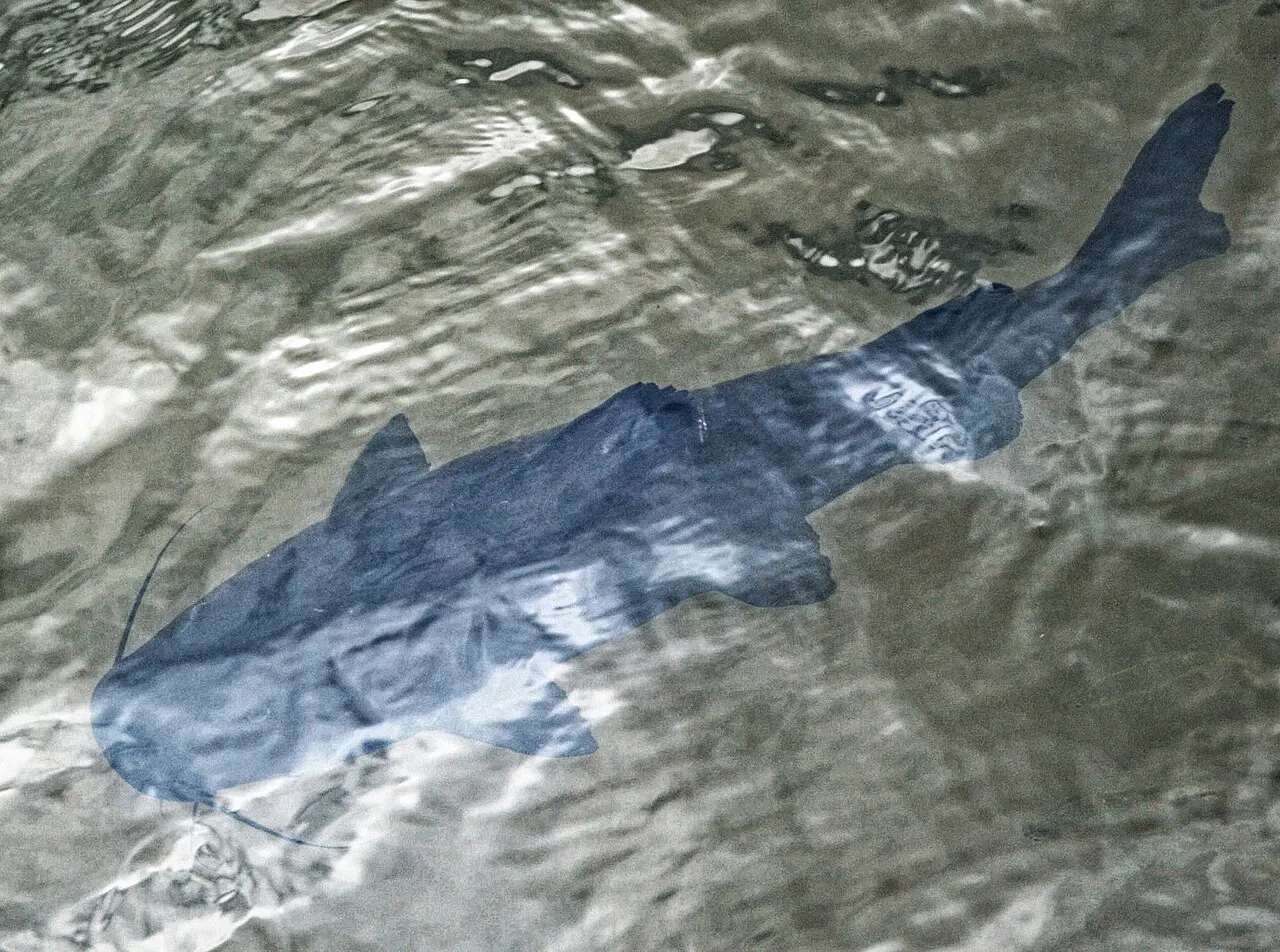
The surubim-do-iguaçu (Steindachneridion melanodermatum) is the largest catfish in the lower Iguaçu River basin of southern Brazil. Dams have cut its habitat apart, and the IUCN rated it Endangered in 2021. Its last stronghold is a free-flowing stretch of about 190 km above Iguaçu Falls.
How to recognise it
It's a long-whiskered catfish of the family Pimelodidae, described to science by Heraldo Garavello in 2005. The IUCN lists the Portuguese names surubim-do-iguaçu and monjolo. In a study of 182 fish caught between 2010 and 2016, total length ranged from 21 to 102 cm and body weight from about 83 g to 15.7 kg, which makes it a big fish by the standards of the basin. FishBase gives a smaller maximum of 53.2 cm standard length, so published figures differ.
Where it lives
The species is endemic to the Iguaçu River system. The IUCN lists it from Brazil, in the state of Paraná, and its habitat as permanent rivers and streams. A 2021 study found that the wild population has disappeared from most of the basin, probably because of habitat lost behind successive hydroelectric dams.
What remains is concentrated in the last free-flowing stretch of the river, about 190 km long, between the Salto Caxias dam and Iguaçu Falls, plus some tributaries. Of 180 fish sampled there between 2010 and 2016, the highest numbers came from a protected area near the falls, inside Iguaçu National Park.
Pins are Wikidata “endemic to” fields. Orange dots, when present, are GBIF occurrence tiles — survey bias included.
How it lives
Deep water matters. Hydroacoustic surveys and fishing campaigns identified 24 deep pools, between 5 and 25 m deep, with 21 in the main channel and three in tributaries. The catfish favour them, especially a pool known as Poço Preto and the water around it.
Breeding runs from about June to September, in winter and early spring, and can extend to November. Spawning goes with cooler water, high river flow and high dissolved oxygen. Females first mature at about 39.5 cm and males at about 43.9 cm.
Why it is in trouble
Dams are the main cause. The Red List scores dams, along with small-scale and large-scale harvesting, as ongoing low-impact threats, and records a decreasing, severely fragmented population with an estimated area of occupancy of about 100 square kilometres. A 2021 genetic study found adequate genetic diversity but signs of a recent bottleneck. It reported that the Baixo Iguaçu hydroelectric plant had recently isolated part of the population in a stretch of nearly 30 km.
Researchers also want illegal fishing checked more closely in the remaining pools.
What is being done
The IUCN lists species recovery, harvest management, habitat protection and policy measures as the needed actions. Researchers have called for the deep pools to be treated as ecological sanctuaries, for stricter checks on illegal fishing, and for the remaining tributaries to stay free of dams. The genetic study advised against stocking breeding fish below the Salto Caxias dam, to protect local gene pools, and recommended catching fish and moving them past the dam by hand while suitable fishways are developed.
Sources
Written for this catalog in our own words from the sources below, checked against them on 12 November 2026. Population figures are estimates and carry the year they were made. Status and assessment year: IUCN. 2026. The IUCN Red List of Threatened Species. Version 2026-1. iucnredlist.org.
- IUCN Red List assessment, Steindachneridion melanodermatum (2021)
- Deep Pools: Ecological Sanctuaries for Steindachneridion melanodermatum, Water 2021
- Genetic Diversity of the Surubim-do-Iguaçu, Diversity 2021
- Population structure and reproduction of Steindachneridion melanodermatum, Marine and Freshwater Research 2021
- FishBase, Steindachneridion melanodermatum
- GBIF species record 2338970




