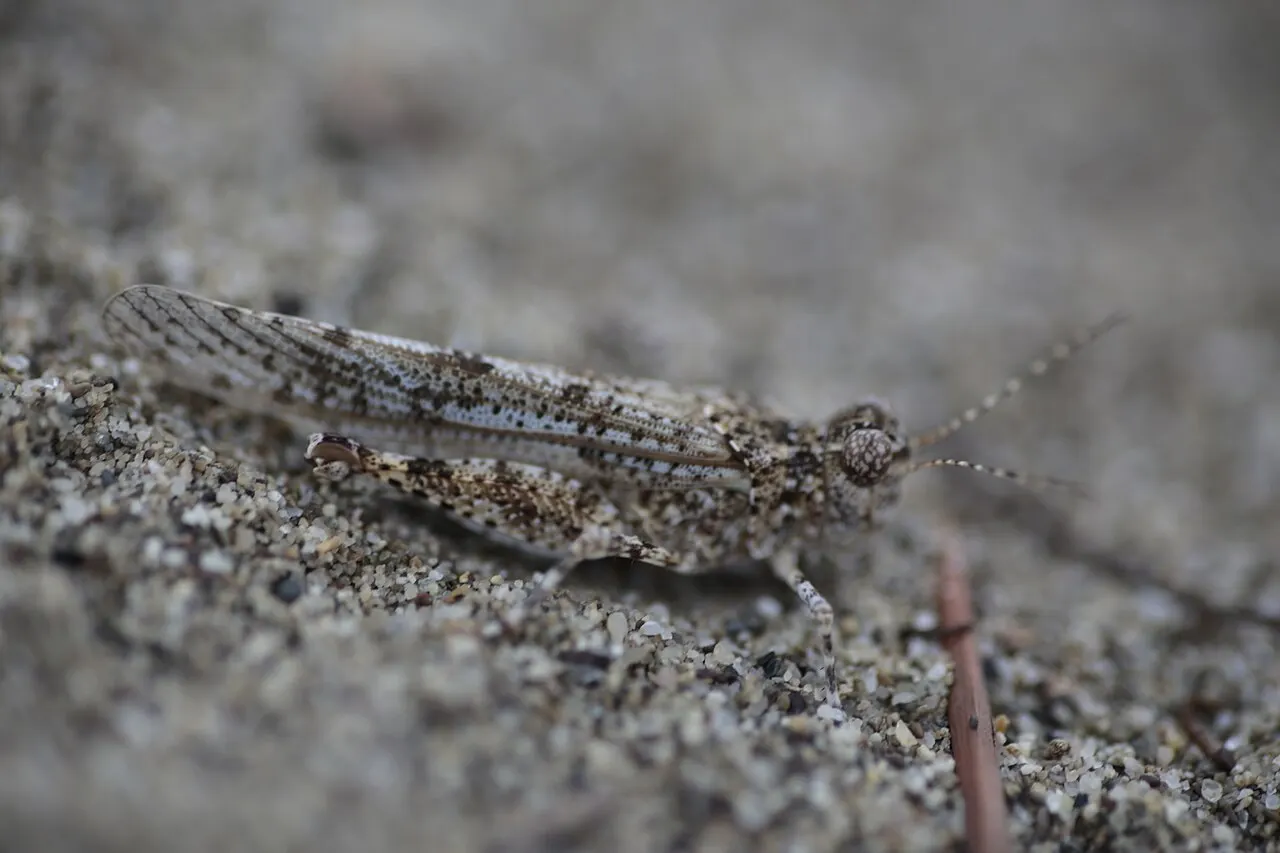
Endangered
Italian Sand Grasshopper
Sphingonotus personatus
The Italian sand grasshopper (Sphingonotus personatus) is a small dune specialist, recorded mainly along the coasts of mainland Italy. The IUCN Red List rated it Endangered in 2016. It lives on the strip where open beach sand gives way to sparse dune plants, a habitat that tourism and building keep eating away.
Names and relatives
Zanon described it in 1926 as a subspecies of Leptopternis candidus, a grasshopper now placed in Sphingonotus. The type specimens, a male and a female, came from sand dunes on an Italian beach at Sabandia. Italian checklists have treated it as a full species since 1994, and the IUCN assessment does the same.
Where it lives
The Red List gives its range as Italy (the mainland and Sicily) and Greece. A naturalist's species page describes it as restricted to the coasts of mainland Italy and largely absent from the north. Of the roughly 80 records held by GBIF in 2026, most are Italian, with a handful from Greece and Spain.
It stays right at the sea. The assessment puts it between sea level and about 10 m, and estimates the area it actually occupies at 252 to 500 square kilometres.
Pins are Wikidata “endemic to” fields. Orange dots, when present, are GBIF occurrence tiles — survey bias included.
How it lives
This is a coastal dune species, found most often in the transition zone between sandy beach and sparse vegetation. In observations on the Gargano peninsula, adults lived in a dune strip only a few metres wide between the beach and the forest behind it, and were commonest in open patches of a few square metres.
Adults are expected on the wing from at least July to early November. A naturalist recorded them at Lago di Varano in late September 2016.
Why it is in trouble
The Red List counts the population as decreasing. The listed threats are recreational activities, tourism and recreation areas, and commercial and industrial building. The 2016 European Red List of grasshoppers, crickets and bush-crickets gives this species as an example of a coastal dune insect hit by recreational facilities that destroy or degrade the dunes.
The Endangered rating (criterion B2ab) rests on a small area of occupancy together with continuing declines in habitat quality, in the number of locations or subpopulations, and in the number of adults.
What is being done
It is known from at least one protected area. The assessment calls for habitat and site protection and for awareness raising, and lists research needs on population size and trends, life history and threats. It gives no population size.
Sources
Written for this catalog in our own words from the sources below, checked against them on 12 November 2026. Population figures are estimates and carry the year they were made. Status and assessment year: IUCN. 2026. The IUCN Red List of Threatened Species. Version 2026-1. iucnredlist.org.




