Endangered
Southern pig-tailed macaque
Macaca nemestrina
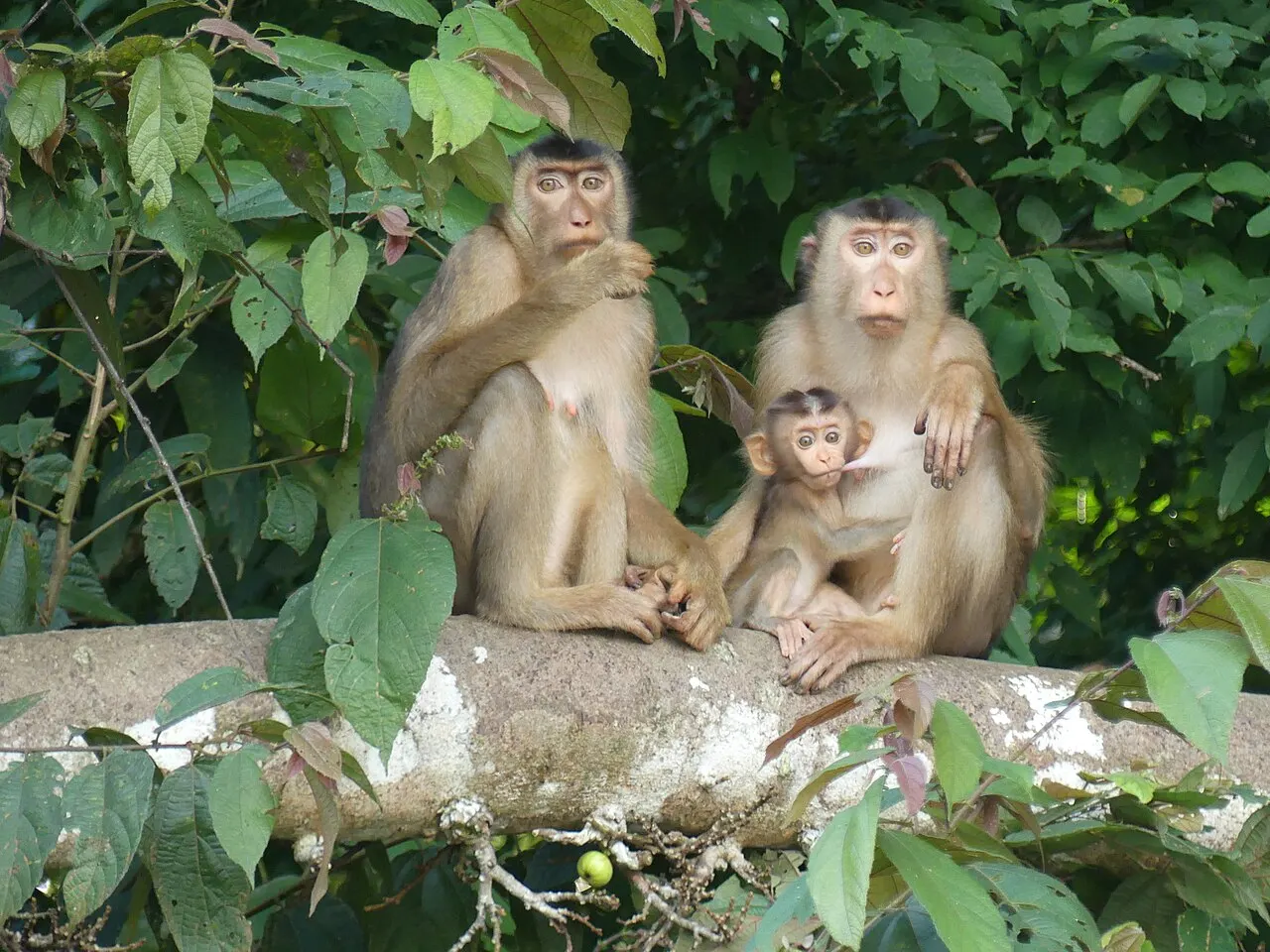
The southern pig-tailed macaque (Macaca nemestrina) is a stocky, buff-brown monkey of the rainforests of the Malay Peninsula, Sumatra and Borneo, named for its short, semi-erect tail. The IUCN rated it Endangered in 2022, with its population decreasing and badly fragmented by forest and farmland change.
How to recognise it
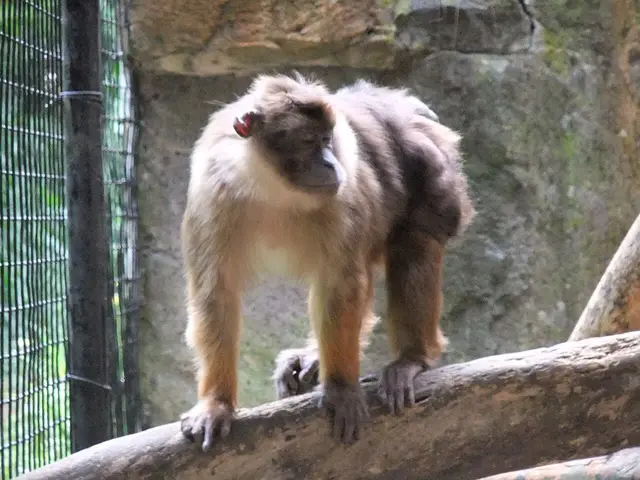
It is a medium-sized, buff-brown macaque, darker on the back and paler on the belly, with a short tail carried semi-erect, like a pig's. Males are bigger than females. Males measure about 50 to 58 cm and weigh 5 to 12 kg, while females are 38 to 48 cm and 4.5 to 6 kg. In Indonesia it is called beruk.
Taxonomy has changed. The northern pig-tailed macaque, the Pagai Island macaque and the Siberut macaque were once treated as subspecies and are now separate species, so older papers on pig-tailed macaques may cover more than one animal.
Where it lives
It occurs in southern Thailand, Peninsular Malaysia, Sumatra, Borneo (Kalimantan, Sabah, Sarawak and Brunei) and Bangka Island. Most of its habitat is lowland and montane rainforest, up to 1,900 m in the Red List and about 2,000 m in other accounts. It also uses swamp and mangrove forest, degraded forest, plantations, gardens and even urban edges.
Pins are Wikidata “endemic to” fields. Orange dots, when present, are GBIF occurrence tiles — survey bias included.
How it lives
Groups include both males and females. Reported group sizes average 15 to 40, with one group of 81 on record. Females stay in their birth group, while males leave at around five to six years old. Large groups often split into smaller parties to forage by day.
Fruit makes up most of the diet, including figs, mangoes, rambutan and durian, plus seeds, fungi and invertebrates. In Peninsular Malaysia it was reportedly the main, and possibly the only, seed disperser of two rattan species. Females usually bear a single infant after a pregnancy of about 5.7 months (162 to 186 days in one account), and births are about two years apart. Accounts differ on ground use: one calls it mainly terrestrial, while another puts it on the ground only about 8 percent of the time, mostly in the mid and lower canopy.
Why it is in trouble
The Red List scores agricultural expansion, especially oil palm and other plantations, as the most serious threats, at high impact. Housing, roads, oil and gas development, droughts, storms, pesticides and small-scale and shifting farming add medium-level pressure. It also records use of the species for food, as pets or display animals, and for research. The population is described as severely fragmented and still declining.
A camera-trap study in Peninsular Malaysia, published in PeerJ in 2021, found that clear-cutting made local extinctions more likely, and that site occupancy in the heavily degraded Pasoh Forest Reserve fell by 10 percent between 2013 and 2017. Selective logging showed no clear effect on occupancy in two forests, so moderately disturbed forest may still support viable groups.
What is being done
The species is on CITES Appendix II. The Red List notes that it occurs in at least one protected area, but records no recovery plan, harvest management plan or systematic monitoring scheme. Recommended actions include trade management, site protection and management, and habitat restoration.
Pig-tailed macaques are trained to pick coconuts in southern Thailand, a practice news reports date to around 400 years ago, though that figure is not backed by a historical record. Wild macaques also raid crops such as maize, rice, papaya and aubergine, which can bring them into conflict with farmers.
Sources
Written for this catalog in our own words from the sources below, checked against them on 12 November 2026. Population figures are estimates and carry the year they were made. Status and assessment year: IUCN. 2026. The IUCN Red List of Threatened Species. Version 2026-1. iucnredlist.org.