Endangered
Arunachal macaque
Macaca munzala
The Arunachal macaque (Macaca munzala) is a stocky, dark-faced monkey of the eastern Himalaya, living mostly in the hills of western Arunachal Pradesh, India, at roughly 2,000 to 3,500 m. Scientists described it in 2005. The IUCN rated it Endangered in 2020, with numbers falling.
How to recognise it
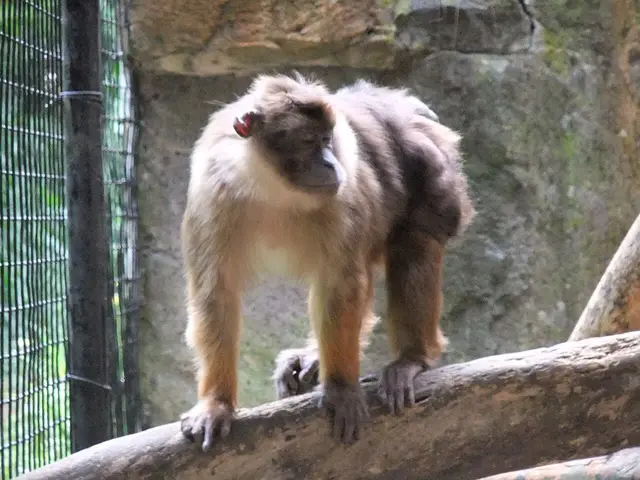
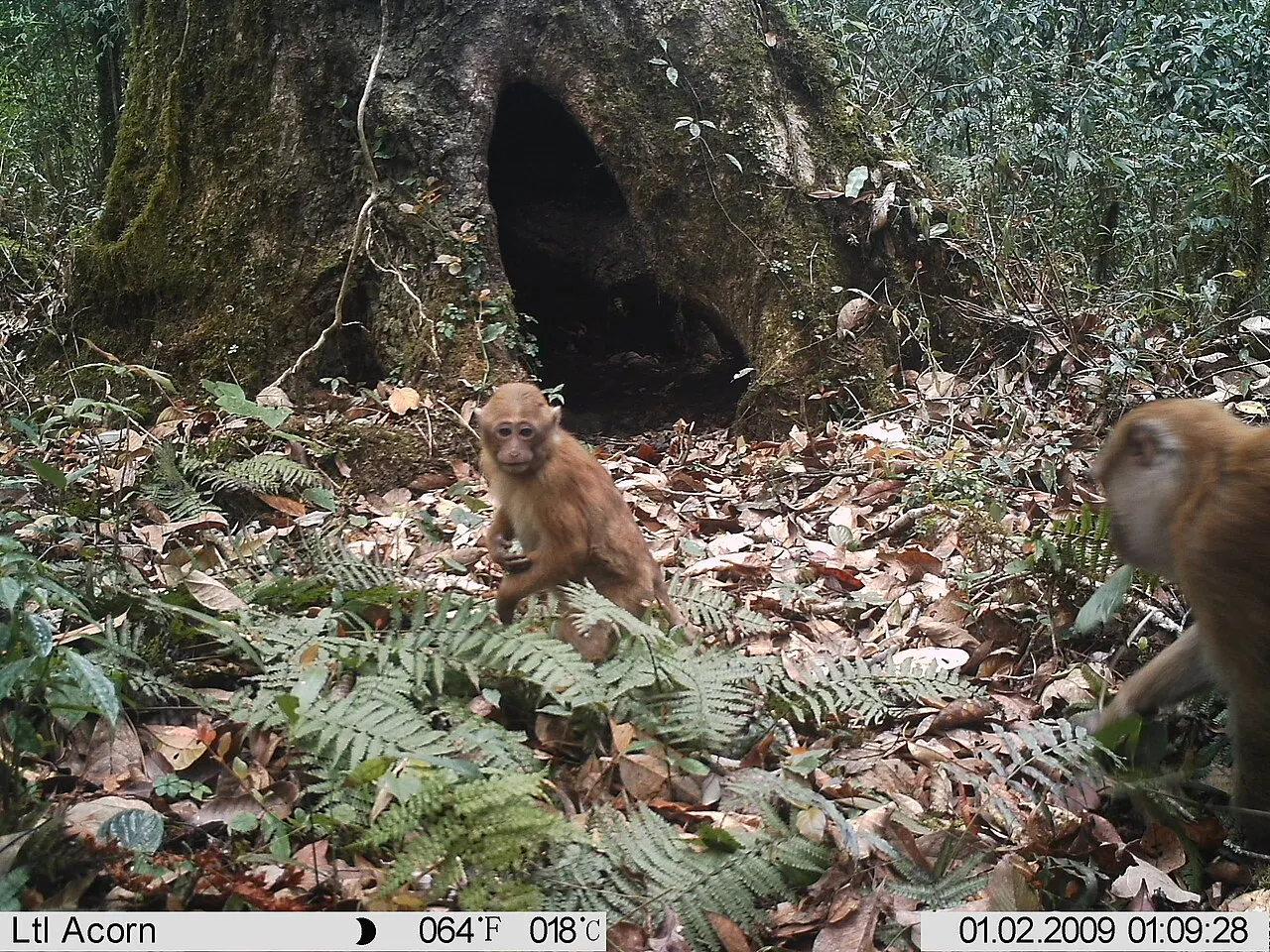
It is a fairly large brown macaque, compactly built, with a short tail and a very dark face. It looks similar to the Assamese and Tibetan macaques, but is reportedly closer genetically to the bonnet macaque of southern India.
The local Monpa people call it mun zala, which means deep forest monkey.
A recent discovery
Anwaruddin Choudhury found the animal in 1997 and took it for a form of the Tibetan macaque. A team from the Nature Conservation Foundation in India described it as a new species in 2005, from animals first reported in the Zemithang area of Tawang district. It was the first new macaque species named since the Pagai macaque in 1903.
Where it lives
Most records come from the Tawang and West Kameng districts of Arunachal Pradesh. The Red List counts India as certain and China and Bhutan as possible, and Bhutan has at least one documented record, from 2006. The assessment gives 3 to 4 locations, between 2,000 and 3,500 m.
A 2004 to 2005 survey found most animals at 2,000 to 2,250 m, and recorded them up to 3,000 m in fir forest. Villagers reported them seasonally as high as 3,500 m. More than 75 percent of the macaques seen were in forest or human-modified land, and over half of those were in degraded broadleaf forest and scrub near villages, so the species tolerates some disturbance.
Pins are Wikidata “endemic to” fields. Orange dots, when present, are GBIF occurrence tiles — survey bias included.
How it lives
Troops are mixed groups of males and females. In the 2004 to 2005 survey, troops ranged from single animals to more than 60, averaging about 16. A 2017 study in the American Journal of Primatology counted 971 animals in 41 troops, averaging about 24, and modelled suitable habitat as about 2.4 percent of Arunachal Pradesh.
Infants were few compared with adult females, which suggests that females do not breed every year. Notes on six troops pointed to a gap of about two years between births, though longer study is needed.
Why it is in trouble
The macaques raid crops. Maize and millet are among those hit, and damage peaks from July to September. In about 55 percent of 64 villages surveyed, people named the macaque as a cause of crop loss. In the four villages where killing was confirmed, people reported an average of 35 macaques killed over five years, most often by snaring, and also with guns and bows. Eight macaques were found kept as pets, which gives hunters a further reason to catch them.
Counts differ between sources. The 2004 to 2005 survey found at least 569 animals and called that a minimum, the 2017 study found 971, and the 2020 Red List assessment estimates 240 to 250 mature individuals with a continuing decline.
What is being done
The Red List lists habitat protection, harvest management, site protection and awareness work as actions needed. It records no recovery plan or monitoring scheme in place. The 2008 conservation assessment argued the species must be protected in land shared with people, and suggested buffer crops, deterrents, better crop protection and compensation or insurance schemes. In Zemithang, village councils ban hunting, and the macaque reaches about 22 animals per square km there.
Sources
Written for this catalog in our own words from the sources below, checked against them on 12 November 2026. Population figures are estimates and carry the year they were made. Status and assessment year: IUCN. 2026. The IUCN Red List of Threatened Species. Version 2026-1. iucnredlist.org.
- IUCN Red List assessment, Macaca munzala (2020)
- Kumar et al. 2008, Oryx 42(3): 360-366, In search of the munzala
- Wikipedia, Arunachal macaque
- Nature Conservation Foundation, Sinha et al. 2006 Primate Conservation 21
- Sarania et al. 2017, American Journal of Primatology 79(2), abstract figures
- Kumar et al. 2008, Oryx, full text PDF (Cambridge)