Endangered
Smalleye smooth-hound
Mustelus higmani
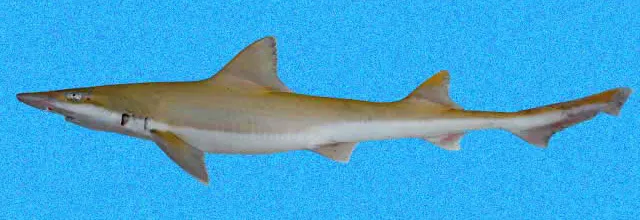
The smalleye smooth-hound (Mustelus higmani) is a small houndshark of the western Atlantic continental shelf, from Colombia and Venezuela down the South American coast to Brazil. It matures at under half a metre and bears live young. The IUCN Red List rated it Endangered in 2020, mainly because of fishing pressure.
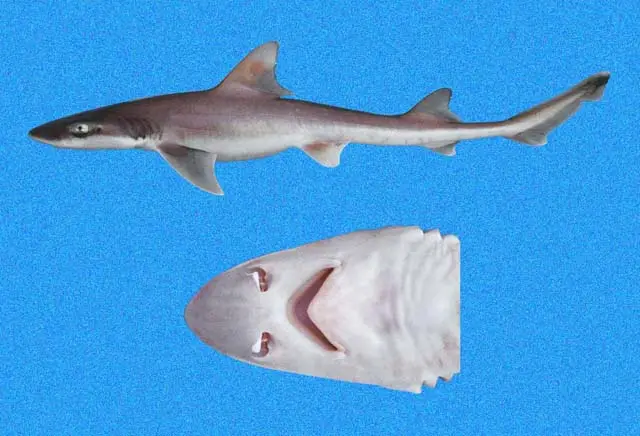
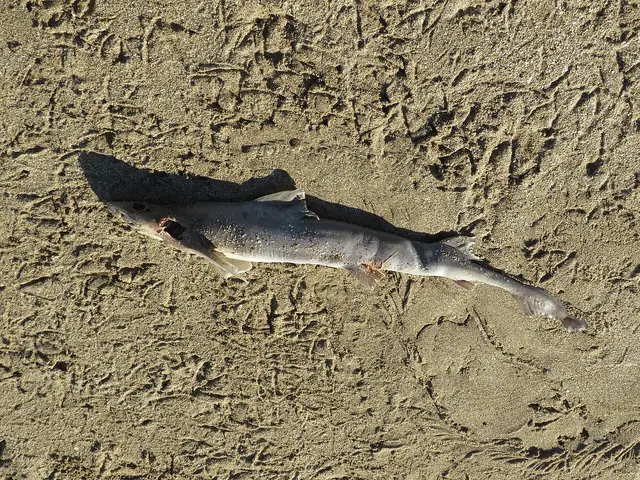
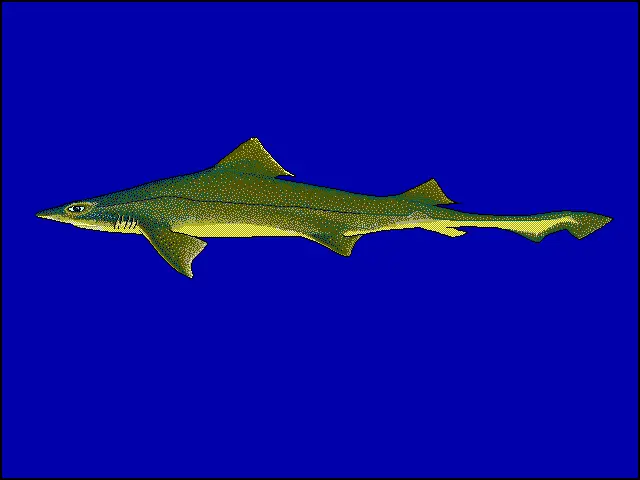
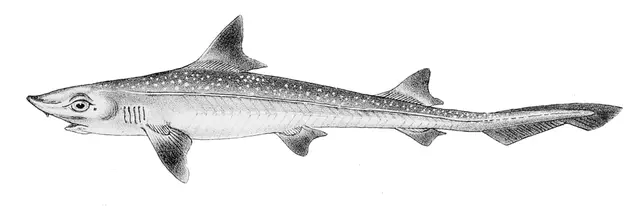
How to recognise it
This is a small shark. Reported maximum lengths vary by source, from about 70 centimetres to 77 centimetres, and the largest female in one 2015 to 2016 sample from the south-eastern Caribbean measured 72.5 centimetres. The heaviest weight FishBase lists is 1.6 kilograms.
It belongs to the smooth-hound genus Mustelus in the houndshark family, and was formally described in 1963. It is harmless to people.
Where it lives
Smalleye smooth-hounds are found along the northern and eastern coast of South America. The IUCN lists them in Colombia, Venezuela, Trinidad and Tobago, Guyana, Suriname, French Guiana and Brazil. They stay close to the sea floor over sand, sandy mud, mud and gravel. The IUCN puts them in shallow water, from the surface to about 130 metres, while other references give a wider range down to 900 metres. They can also turn up in shallow brackish water.
Pins are Wikidata “endemic to” fields. Orange dots, when present, are GBIF occurrence tiles — survey bias included.
How it lives
The diet is mostly bottom-living crustaceans such as shrimps and crabs, plus small fish, mantis shrimps and squid. A 2015 study of 266 stomachs from fish landed on Margarita Island, Venezuela, found decapod crustaceans dominated.
Females nourish their young through a yolk-sac placenta, and the reproductive cycle is annual. Litters are small, and counts differ between studies: 2 to 9 embryos in northeastern Venezuela, an average of 4 on Margarita Island, and 1 to 8 in the south-eastern Caribbean. Pups are born at roughly 23 to 26 centimetres. In the south-eastern Caribbean, mating and births were recorded all year, with a peak from November to February.
Maturity comes at roughly 47 to 48 centimetres in studies from Margarita Island and the south-eastern Caribbean. A 2009 study from northeastern Venezuela put it higher, at 52.5 centimetres for males and 59.9 for females, so figures vary from study to study. Catches are often mostly one sex, which suggests males and females partly separate.
Why it is in trouble
Almost all of the pressure comes from fishing. The sharks are taken for food in small-scale fisheries and as unintended catch in larger ones, across most of their range. In 2009, researchers working with artisanal fishers in northeastern Venezuela found this was the most commonly landed shark, making up 40.8 percent of the elasmobranch catch, and that a significant share of the fish taken were immature.
The IUCN estimated a past decline of 50 to 79 percent, based on levels of exploitation, and lists the trend as still decreasing. A generation is about 11 years. FishBase rates the species as having very low resilience, with a population doubling time of more than 14 years.
What is being done
Not much yet. The assessment calls for harvest and trade management, species recovery work and protected areas, but it records no recovery plan and no regular monitoring scheme. A 2020 study of the south-eastern Caribbean population noted heavy harvesting and no management measures in the area studied.
Sources
Written for this catalog in our own words from the sources below, checked against them on 12 November 2026. Population figures are estimates and carry the year they were made. Status and assessment year: IUCN. 2026. The IUCN Red List of Threatened Species. Version 2026-1. iucnredlist.org.
- IUCN Red List, Mustelus higmani (2020)
- FishBase, Mustelus higmani
- Wikipedia, Smalleye smooth-hound
- Reproductive biology of the smalleye smooth-hound, south-eastern Caribbean (Journal of the Marine Biological Association, 2020)
- Scientia Marina 2015, Margarita Island study
- Gulf and Caribbean Fisheries Institute proceedings, vol 62 (2009)