Endangered
Common smooth-hound
Mustelus mustelus
The common smooth-hound (Mustelus mustelus) is a slim, grey-brown houndshark of the eastern Atlantic and Mediterranean, found from the British Isles to South Africa. Harmless to people but heavily fished, it was assessed as Endangered on the IUCN Red List in 2021, after population declines estimated at 50 to 79 percent.
How to recognise it
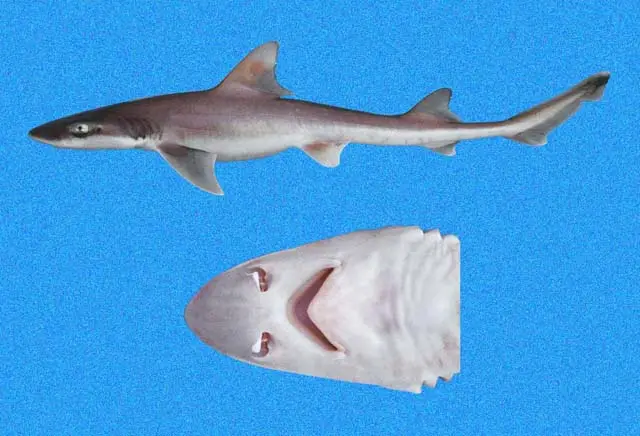
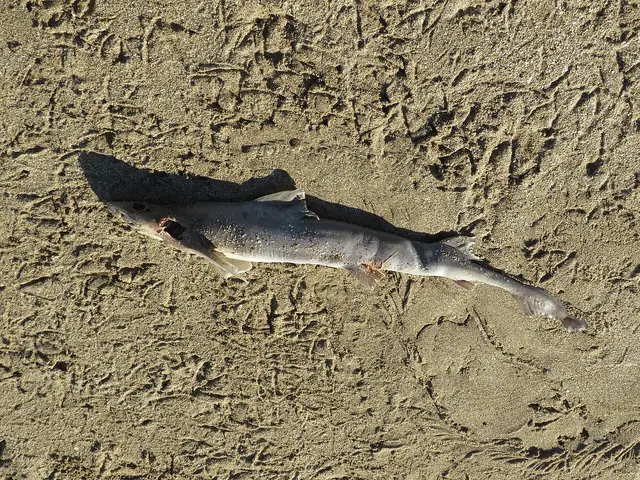
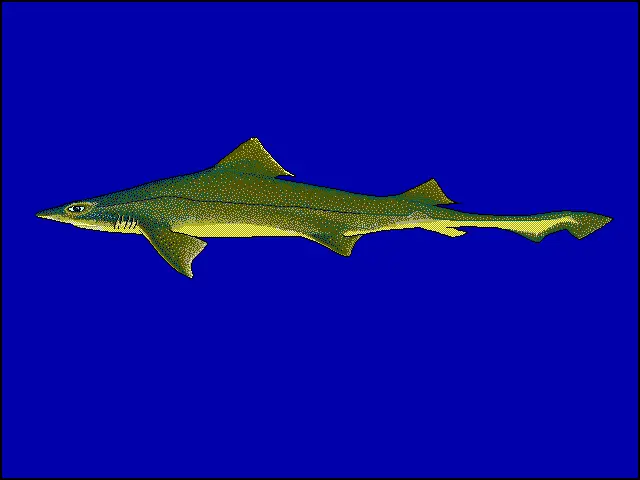
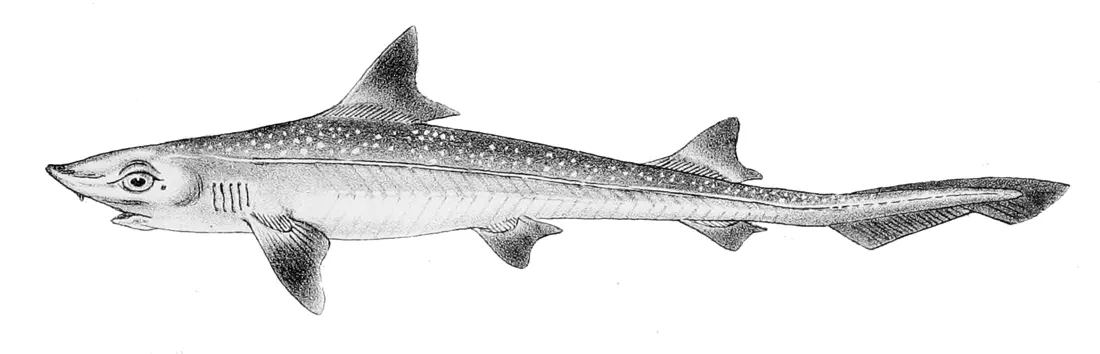
It's a slender shark with a grey-brown back and a white underside. It has two dorsal fins of similar size and, unlike true dogfish, no fin spines. Most adults measure 100 to 120 cm, though 150 cm is a usual maximum and the largest recorded is 200 cm. Pups are born at around 35 to 40 cm, depending on the source.
Two lookalikes cause confusion. The starry smooth-hound has white spots on its back, though spots can fade and mislead observers. The tope shark has a smaller second dorsal fin than the common smooth-hound.
Where it lives
It ranges through the eastern Atlantic from the British Isles south to South Africa, and through the Mediterranean, Madeira and the Canary Islands. The IUCN lists about 50 countries and territories in its range, from Ireland and Portugal to Namibia, Egypt and Türkiye.
It lives on or near the seabed on sand, mud, gravel and rocky reef, usually at 5 to 50 m deep. The IUCN gives a deepest record of 438 m, while other accounts give about 625 m.
Pins are Wikidata “endemic to” fields. Orange dots, when present, are GBIF occurrence tiles — survey bias included.
How it lives
Crustaceans form most of its diet, with some octopus, squid and bony fish. Its low, flat teeth suit crushing shells rather than slicing flesh.
It is slow to recover from losses. Pups develop inside the mother, nourished through a yolk-sac placenta, in litters of 4 to 17. Maturity is reported at roughly 70 to 80 cm, and the oldest recorded age is 24 years. The IUCN uses a generation length of 17.8 years.
A 2022 study in Ecology and Evolution, based on sightings and fish landings in the Canary Islands, found adults far more often in the eastern and central islands than the western ones. Juveniles gather in very shallow water in spring and summer, and it recommended protecting those sites and closing fishing from April to October.
Why it is in trouble
Fishing is the threat. The IUCN lists both deliberate catch and accidental bycatch, by large commercial fleets and small-scale fishers, as ongoing across most of the species' range. It is eaten, and also used for oil and fishmeal, and anglers take it from shore and boats.
The IUCN estimates a past population reduction of 50 to 79 percent, based on abundance indices and on actual or potential levels of exploitation. It judges the cause understood and potentially reversible, but not yet stopped. Regional assessments differ: a 2022 Canary Islands study notes the European regional assessment is Vulnerable.
What is being done
The IUCN records a harvest management plan, inclusion in international legislation, and at least one protected area covering part of its range. No species recovery plan or monitoring scheme was in place at the time of assessment. Management and research needs listed include harvest and trade monitoring and population studies.
Sources
Written for this catalog in our own words from the sources below, checked against them on 12 November 2026. Population figures are estimates and carry the year they were made. Status and assessment year: IUCN. 2026. The IUCN Red List of Threatened Species. Version 2026-1. iucnredlist.org.