Endangered
Siberut langur
Presbytis siberu
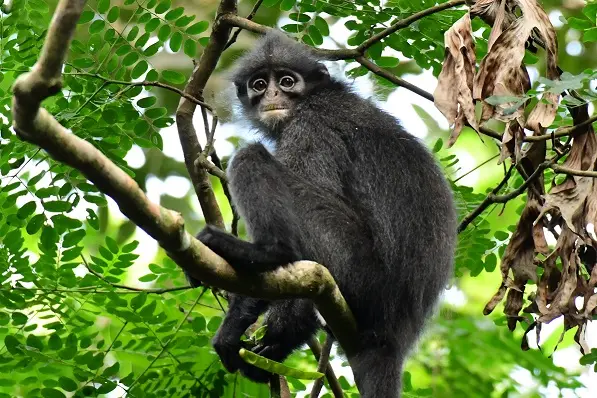
The Siberut langur (Presbytis siberu) is a dark, white-maned monkey found only on Siberut, the northernmost of the Mentawai Islands off Sumatra. The Red List classed it as Endangered in 2020. Forest loss, oil palm plantations and hunting have all cut into its numbers.
How to recognise it
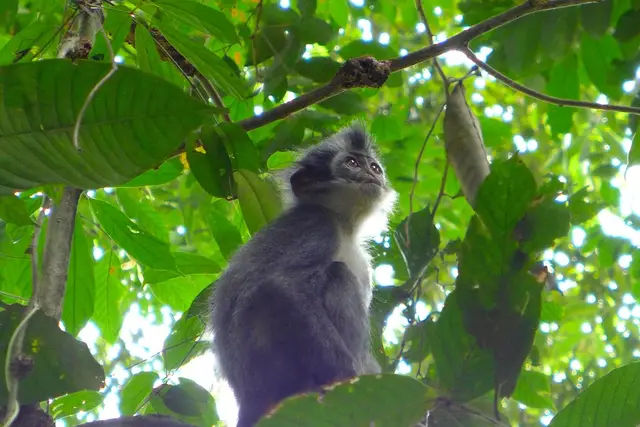
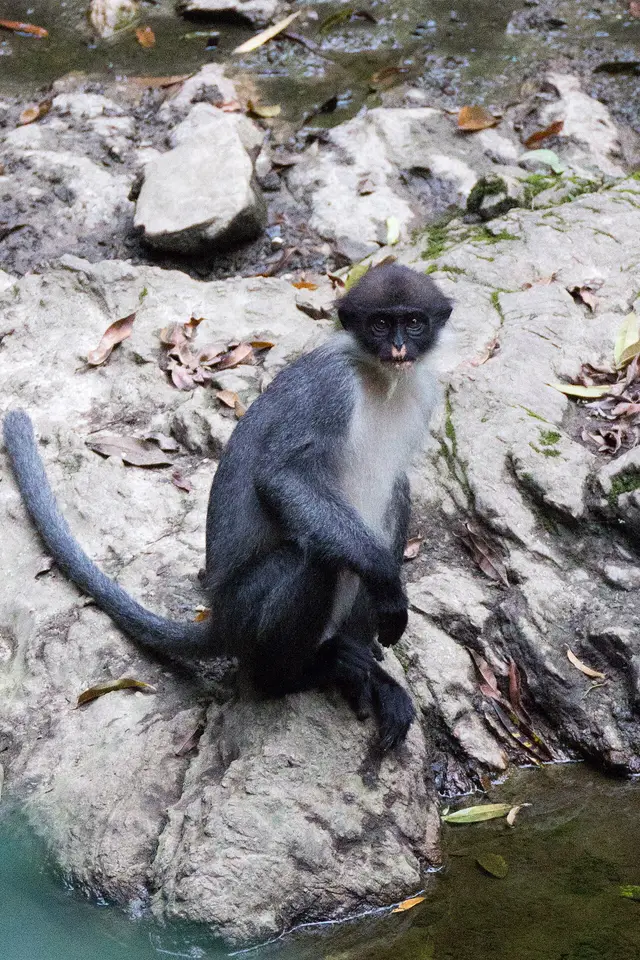
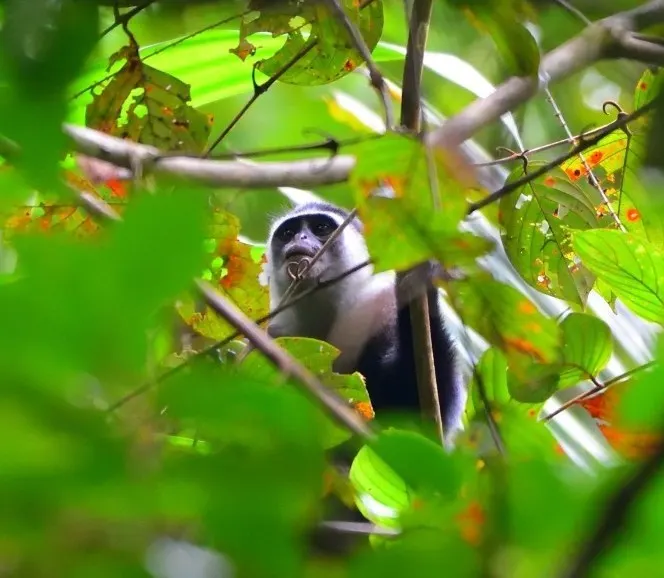
The Siberut langur is reportedly dark grey to black, with a white mane around the face. Adults are said to measure roughly 48 to 50 centimetres in body length, with a tail of 58 to 64 centimetres, and weigh around 4 to 6 kilograms.
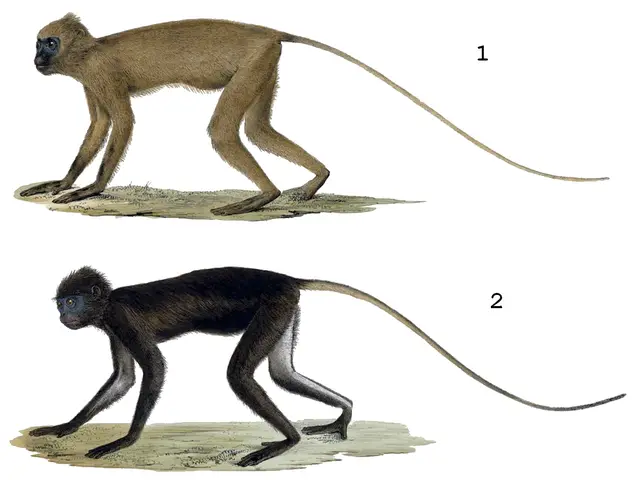
Chasen and Kloss described it in 1928. For decades it was treated as a subspecies of the Mentawai langur, and many older records and papers use that name. Genetic work later showed the two are separate species.
Where it lives
The Siberut langur lives on one island. The Red List records it between about 10 and 200 metres above sea level in lowland moist forest, swamp forest and mangrove forest, and it also turns up in rural gardens and urban areas. Its extent of occurrence is put at about 4,440 square kilometres.
Siberut National Park covers about 40 percent of the island and is the only formal protected area where the species occurs. The Peleonan forest in the north is reported to hold high primate densities but has only informal local agreements against logging.
Pins are Wikidata “endemic to” fields. Orange dots, when present, are GBIF occurrence tiles — survey bias included.
How it lives
These are tree-living monkeys that eat mostly fruit, supplemented with leaves, according to a primate conservation group's species summary. Groups are usually one male with one female, though one male with up to three females has been seen. Home ranges are reportedly 15 to 30 hectares, and males call loudly in the hours before dawn.
Females reportedly give birth to one infant roughly every other year, and infants take on adult colouring at about 3 to 4 months. Generation length is estimated at 12 to 13 years.
Why it is in trouble
The Red List names plantations (oil palm among them), hunting that targets the species, and unintended harvest. It qualifies under A2cd+4cd, a past and continuing decline of about 50 percent linked to habitat loss and exploitation.
Population figures are loose. A summary from the Northeast Primate Conservancy reports about 46,000 animals in the 1980s and 11,000 to 27,000 within the national park since the 2000s, but gives no primary citation, and unprotected areas are poorly surveyed. A 2005 survey in the Peleonan forest estimated about 330 langurs of the Mentawai langur group (then lumped together with this species) in its roughly 40 square kilometre study area.
Hunting is a major pressure. A 2014 interview survey of 390 people in 50 villages, published in the Journal of Threatened Taxa, found that 24 percent were active hunters and 68 percent of hunters targeted the Siberut langur. It estimated that at least 4,800 primates of four species are killed each year. The 2008 Oryx survey found that Mentawai primate habitat shrank by at least half in 25 years, from about 4,200 to 2,400 square kilometres.
What is being done
The species is protected under Indonesian law and was listed in CITES Appendix I under its former name. The Red List records site protection, site management, awareness work and species recovery actions, and notes there is no recovery plan or monitoring scheme in place. Researchers have called for stronger enforcement in Siberut National Park, formal protection for the Peleonan forest, and education about hunting.
Sources
Written for this catalog in our own words from the sources below, checked against them on 12 November 2026. Population figures are estimates and carry the year they were made. Status and assessment year: IUCN. 2026. The IUCN Red List of Threatened Species. Version 2026-1. iucnredlist.org.