Endangered
Salvelinus profundus
Salvelinus profundus
The deepwater charr (Salvelinus profundus) is a small, pale fish found only in the deepest water of Lake Constance, on the borders of Germany, Austria and Switzerland. It was declared extinct in 2008, then rediscovered. The IUCN Red List now lists it as Endangered (2024 assessment).
How to recognise it
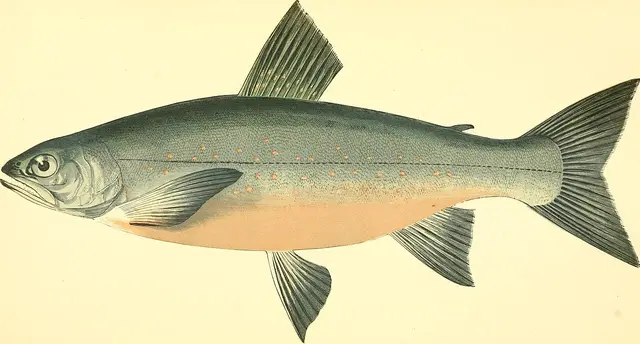
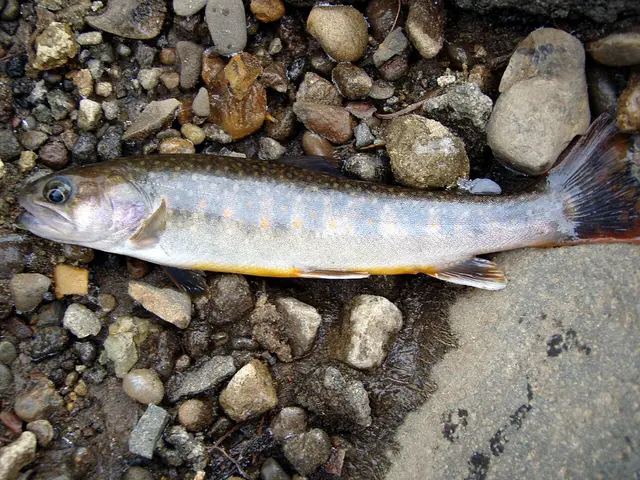
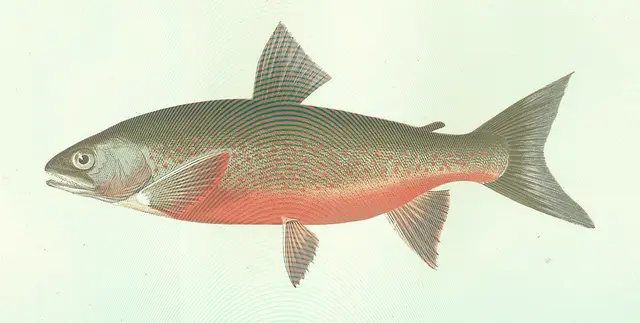
It grows to about 24 centimetres. The snout is blunt and the mouth sits slightly underneath, with an overbite and large eyes suited to dim deep water. The flanks are silvery to yellowish with pale blue spots, the belly can be reddish, and the lower fins lack the white edges seen on other charrs.
Where it lives
The species is known only from Lake Constance, the Bodensee, a single location with a range of about 536 square kilometres according to the IUCN. It lives and spawns near the lake bed, at depths reported as roughly 80 to 100 metres, far below where most nets are set.
Pins are Wikidata “endemic to” fields. Orange dots, when present, are GBIF occurrence tiles — survey bias included.
How it lives
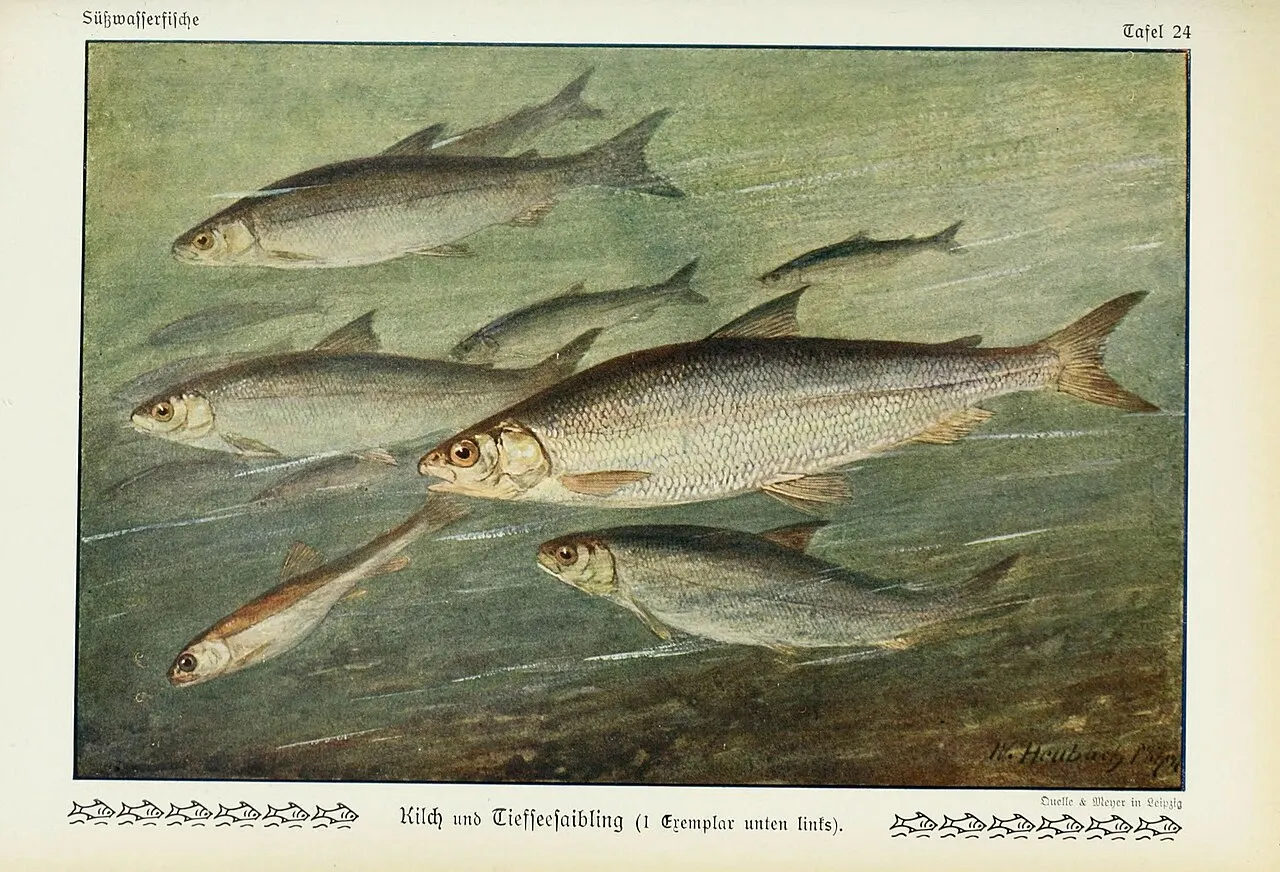
It feeds on worms and crustaceans on the lake bottom. Its eggs are laid in deep water, so oxygen near the lake bed matters a great deal to it. Lake Constance also holds a larger, ordinary charr, and the two forms keep clearly different spawning grounds and spawning times.
Why it is in trouble
Fishermen caught it commercially until the 1960s. Nutrients from sewage and farmland built up in the lake from the 1950s, oxygen in the deep water dropped, and the eggs could not develop properly. The IUCN lists nutrient loads and sewage as past threats. After about a decade of unsuccessful sampling, the species was declared extinct in 2008.
Ongoing threats listed by the IUCN include the invasive quagga mussel (Dreissena bugensis) and shifting or altered habitat. A fisheries scientist interviewed in 2023 named climate-driven changes in the lake's water layers as the main possible risk, since the fish needs cold, oxygen-rich water, but said no such danger was evident yet. The IUCN lists the population trend as unknown.
What has been done
In 2012 a colleague at the University of Konstanz reported a suspicious small catch, but researchers stayed cautious because another fish had been mistaken for this one before. Fisheries researchers at Langenargen (Germany) and the Swiss institute Eawag then fished the deep lake for several years and caught deepwater charr in 2014, the first record in more than 40 years.
In the Project Lac survey, Carmela Doenz and Ole Seehausen set extra nets at the site of the last recorded catch from 1972, found using an old sketch map, and caught seven charr, with one more elsewhere in the survey. The results appeared in the journal Ecology in 2020. A separate genetic study, published in Ecological Applications in 2022, found today's fish nearly identical in DNA to historical deepwater specimens, suggesting they descend from the original population.
Doenz said the team could not estimate the population's size, though one local fisheries scientist guessed at several hundred to a few thousand fish in 2023. At its 2024 assessment the IUCN recorded no recovery plan, monitoring scheme or protected area for the species.
Sources
Written for this catalog in our own words from the sources below, checked against them on 12 November 2026. Population figures are estimates and carry the year they were made. Status and assessment year: IUCN. 2026. The IUCN Red List of Threatened Species. Version 2026-1. iucnredlist.org.