Endangered
Ryukyu shrew
Crocidura orii
The Ryukyu shrew (Crocidura orii), also called the Amami shrew, is a small insect eater found only on a few islands in the Amami group of southern Japan. The IUCN Red List rated it Endangered in 2025. It is known from very few specimens and lives in broadleaf forest.
How to recognise it
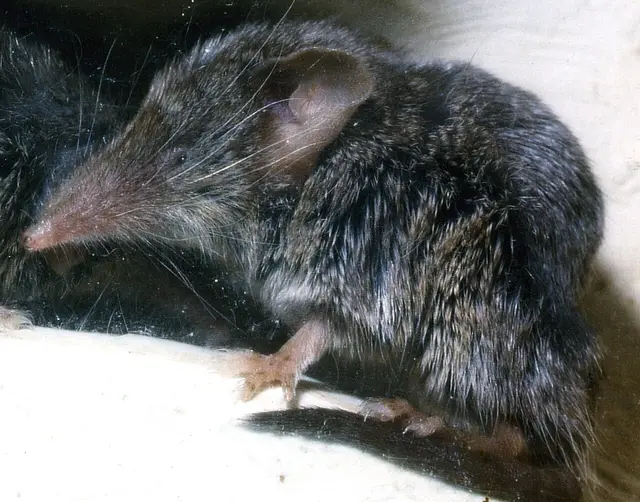
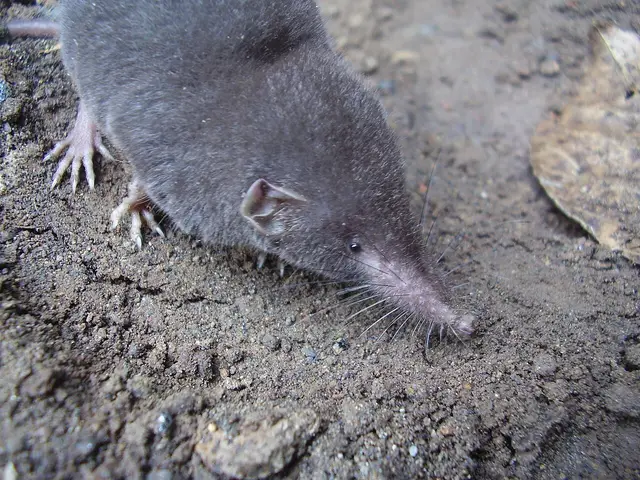
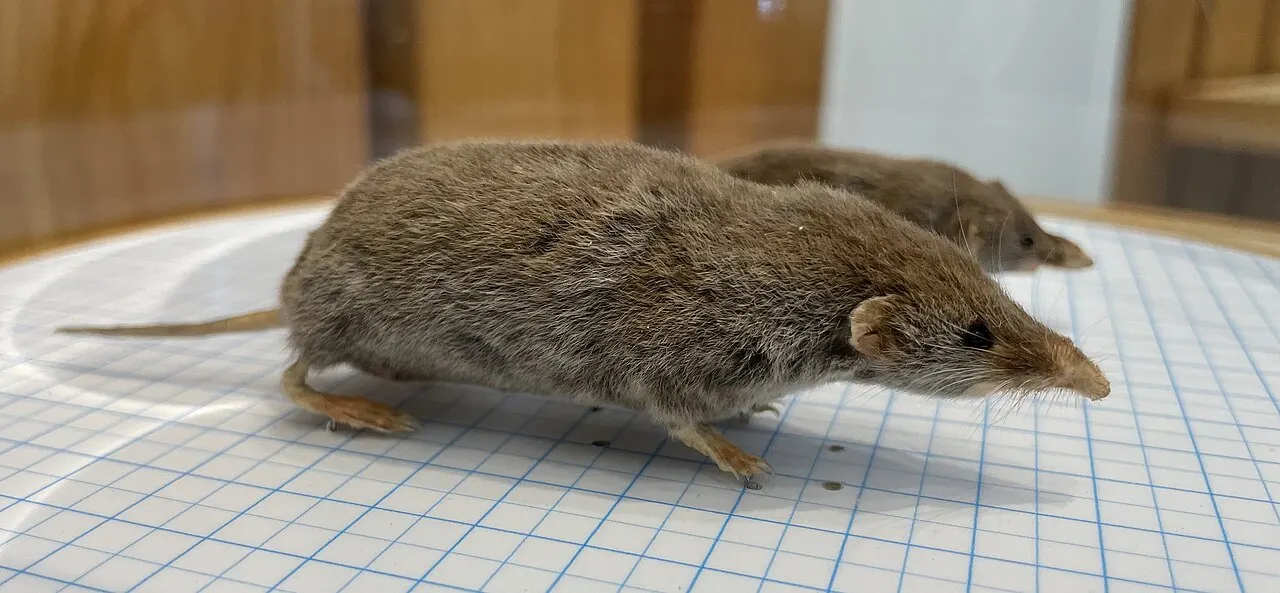
This is a medium-sized shrew. Head and body together measure about 65 to 90 mm, with a tail of 41 to 51 mm, roughly half to two-thirds of the body length. The fur is light seal brown above and fades to light gray underneath.
Two details set it apart from other white-toothed shrews. The hairs on the middle of the back are about 6 mm long, where most Crocidura shrews have fur under 5 mm. And the forefeet are large and broad with long, sturdy claws, which suggests it may dig or burrow in leaf litter and soil.
Where it lives
The species is endemic to Japan, restricted to the Amami Islands in the central Ryukyu chain. Records come from Amami Oshima, Kakeromajima and Tokunoshima. The IUCN puts its extent of occurrence at about 2,336 km2 and counts three locations.
It has been caught only in natural broadleaf forest, from sea level to about 300 m. The Lesser Ryukyu white-toothed shrew (Crocidura watasei) lives in the same forests.
Pins are Wikidata “endemic to” fields. Orange dots, when present, are GBIF occurrence tiles — survey bias included.
How it lives
Very little is recorded. Beetles have turned up in the stomachs of examined animals. Breeding, activity patterns, home range and social life have not been documented.
Its history in science is just as thin. Nagamichi Kuroda described it in 1924 as an island subspecies of the Dsinezumi shrew, from the skin and skull of a single male. Yoshinori Imaizumi raised it to full species in 1961, and Masaharu Motokawa confirmed that in 1998 after studying five more specimens from Amami Oshima and Tokunoshima. A 2008 molecular study placed it near the base of an Asian lineage of Crocidura, which points to an old, relict line.
Why it is in trouble
Natural broadleaf forest on the islands has been lost and broken up, and the IUCN lists roads among the threats. The assessment records a continuing decline in the area the shrew occupies.
Introduced mongooses are a second problem. They prey on small animals, and shrews are among those reported. The native Okinawa pit viper also eats them; one of the few known specimens came from a viper's stomach. Capture rates are low, so the population is presumed small, though no count exists.
What is being done
The shrew occurs in at least one protected area, and the IUCN lists site and area management as an action in place. No population estimate has been published, so how the species is faring remains largely unmeasured.
Sources
Written for this catalog in our own words from the sources below, checked against them on 12 November 2026. Population figures are estimates and carry the year they were made. Status and assessment year: IUCN. 2026. The IUCN Red List of Threatened Species. Version 2026-1. iucnredlist.org.