Endangered
Relict darter
Etheostoma chienense
The relict darter is a small freshwater fish that lives in a single stream system, the Bayou de Chien in western Kentucky. The Red List last assessed it as Endangered in 2013, but a US federal rule in 2023 judged it threatened rather than endangered. Males guard egg clusters that are sometimes laid on old tires and plastic.
How to recognise it
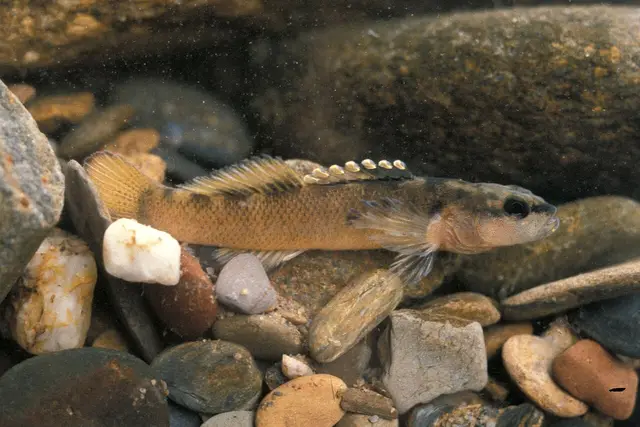
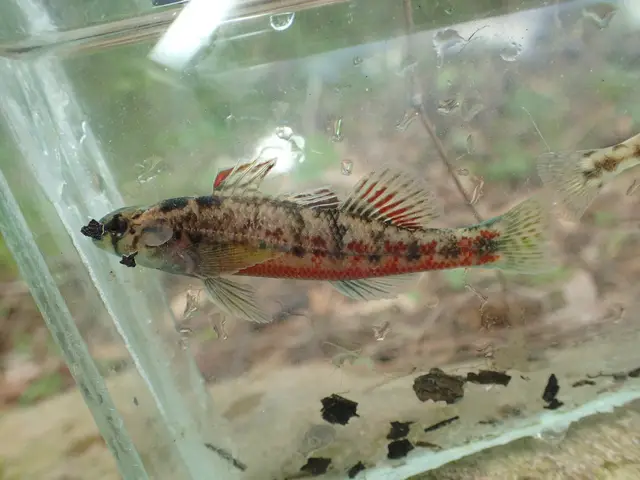
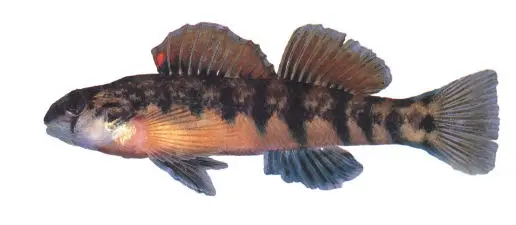
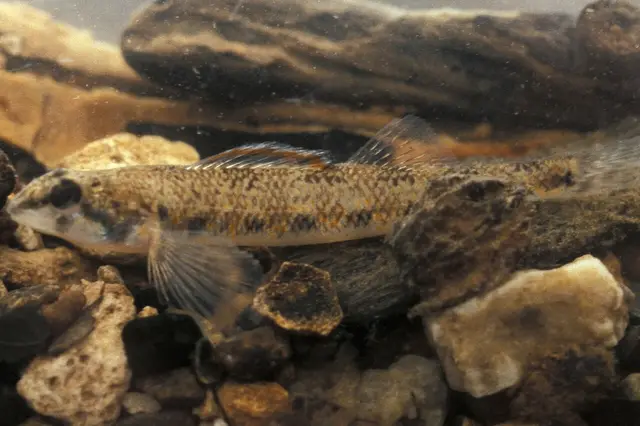
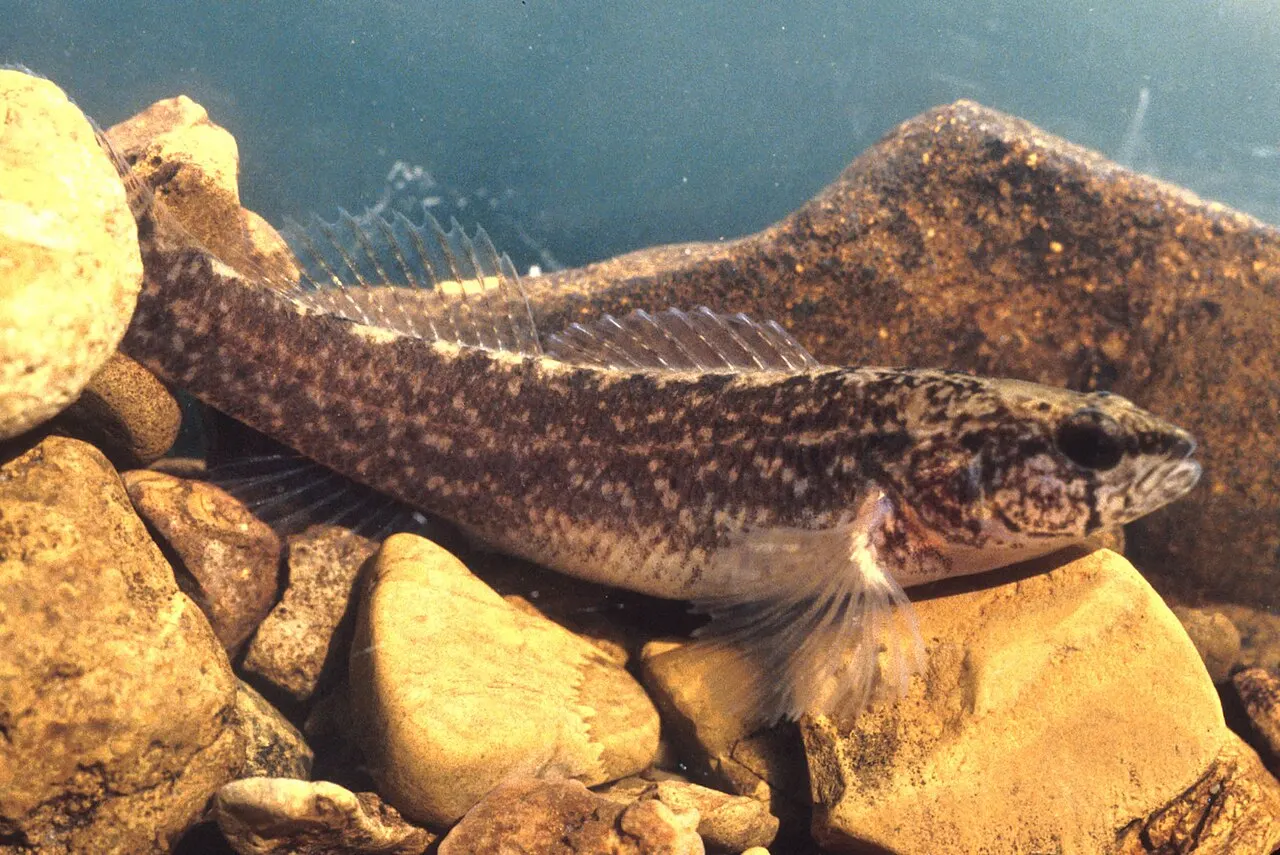
The relict darter reportedly reaches about 7.2 cm. Females and non-breeding males are light tan on the back and sides, with brown mottling and six to eight dark brown saddles, and a plain white belly. Breeding males have gray to dark brown backs and sides, and reportedly develop white, lollipop-like knobs on the tips of the second dorsal fin.
It belongs to the Etheostoma squamiceps complex, a group of darters that lay their eggs in clusters and guard them. It was only formally described in 1992.
Where it lives
The species is found only in the Bayou de Chien system in Fulton, Graves and Hickman counties, Kentucky. The bayou is a slow, sand, gravel and silt-bottomed stream that runs about 47 km west to Obion Creek near Hickman. Today the darter occupies roughly 52.5 km of stream.
There are two populations that don't mix much. One lives in the Bayou de Chien mainstem and Jackson Creek, and the other in Little Bayou de Chien, where the fish was first found in 2017. When the species was federally listed in 1993, only the first population was known.
It favors slow runs, glides and pools over sand and gravel, usually near undercut banks, snags or piles of woody debris.
Pins are Wikidata “endemic to” fields. Orange dots, when present, are GBIF occurrence tiles — survey bias included.
How it lives
Midge larvae and other small invertebrates make up most of the diet. Spawning runs from mid-March to early June. Females stick eggs to the underside of submerged objects and the male guards the cluster until it hatches. A relict darter lives 3 to 4 years at most.
Nest sites can be oddly human. In a 1999 survey, 37% of nests were on rubber tires, plastic, shingles, glass, concrete blocks, road signs and slabs, and the rest were on natural material such as rocks, wood and live roots.
Why it is in trouble
Most of the Bayou de Chien has been straightened for farming, and everything except the last 8 to 10 km of channel has been altered. Row crops dominate the watershed. Silt smothers the stream bed, streamside vegetation has been lost, and the Red List assessment also names pesticides, nutrient loads, and water taken for agriculture.
The range is tiny and the fish was uncommon in the 1990s, with 1 to 23 per site. Genetic work suggests a population bottleneck, and an effective population size averaging about 221 individuals, well below the 500 often used as a safety threshold. A chemical spill in the wrong stretch could do serious harm.
What is being done
The fish was listed as endangered in the United States in 1993. Since then the US Fish and Wildlife Service and partners have fenced cattle out of several kilometers of stream, removed a culvert, added artificial spawning structures, planted more than 20 hectares of native grasses and wildflowers, and helped landowners place over 1,700 acres under permanent wetland easements.
Numbers have improved. Jackson Creek and a 22.6 km reach of Bayou de Chien now hold the highest densities, 0.43 and 0.30 darters per square meter, and the fish is breeding there. In a rule effective 27 October 2023 the species was reclassified from endangered to threatened under the US Endangered Species Act. The Red List rating dates from 2013 and hasn't been updated since.
Sources
Written for this catalog in our own words from the sources below, checked against them on 12 November 2026. Population figures are estimates and carry the year they were made. Status and assessment year: IUCN. 2026. The IUCN Red List of Threatened Species. Version 2026-1. iucnredlist.org.