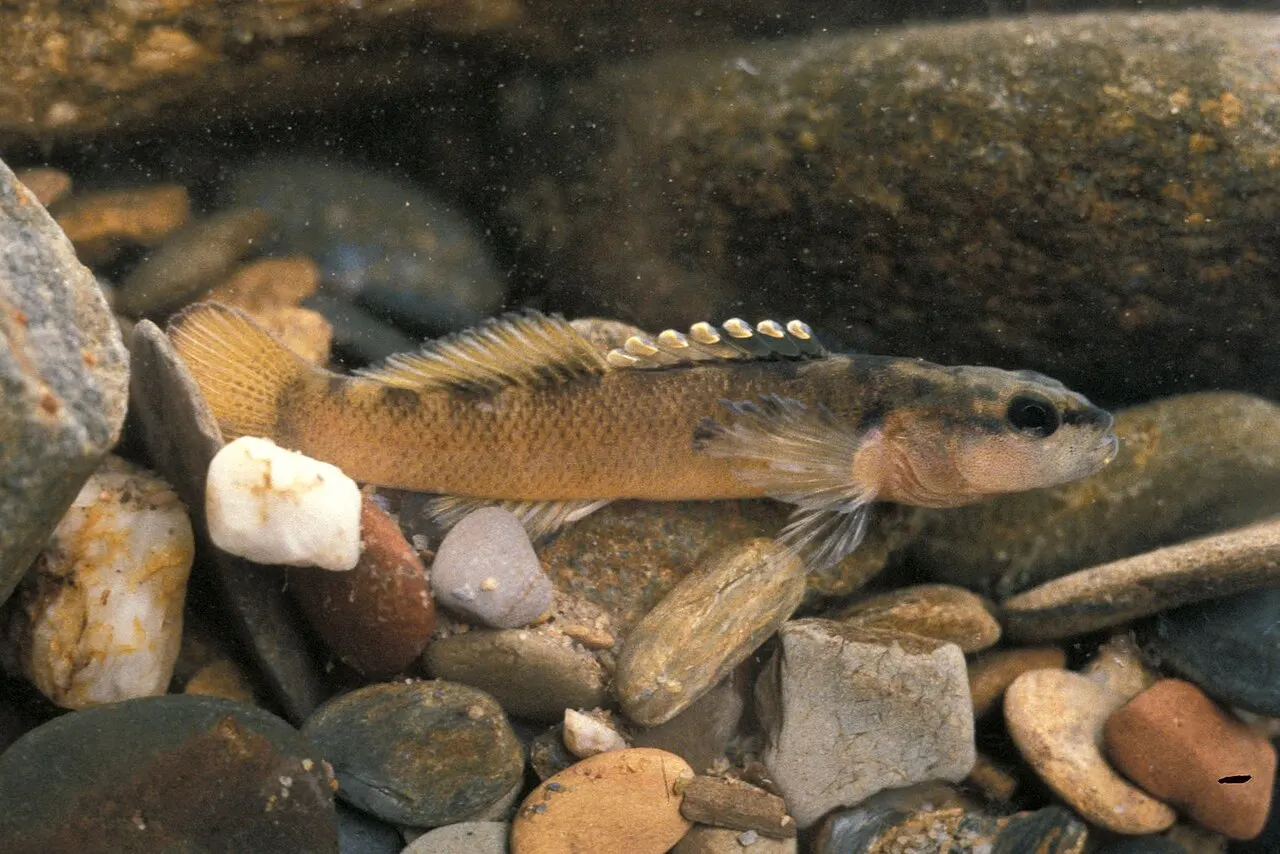
Critically Endangered
Duskytail darter
Etheostoma percnurum
The duskytail darter (Etheostoma percnurum) is a finger-length freshwater fish of clear, gravelly streams in the eastern United States. The IUCN Red List rated it Critically Endangered in 2014, treating it as confined to a single location. Hatchery-raised relatives, now classed as a separate species, have been used to restore a lost stream population.
How to recognise it
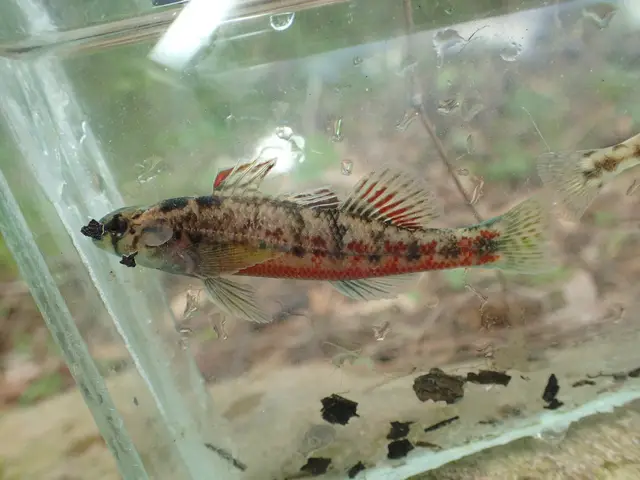
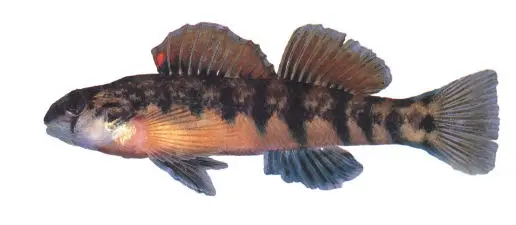
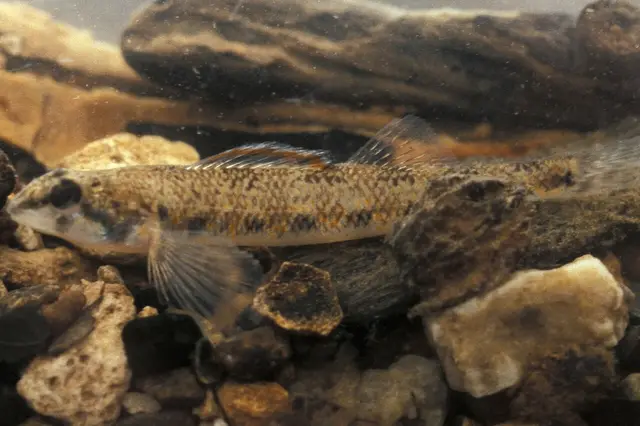
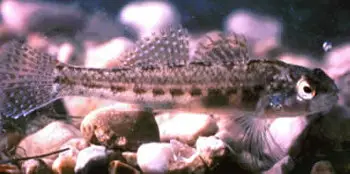
Descriptions written before 2008, when the species was still defined broadly, give a length of about 6 cm (2.5 inches). The body runs from straw to olive, with a grey head, a dingy white or pale grey belly and 10 to 15 dark bars down the sides.
Breeding males look quite different. Their heads darken and swell, a dark border develops along some fin margins, and gold fleshy knobs form on the tips of the dorsal fin spines.
Where it lives
Duskytail darters use gently flowing, shallow pools and eddies in large creeks and moderate rivers, in water about 10 to 76 cm (4 to 30 inches) deep. The bottom is mixed rock, from pea gravel to cobble, slabs and boulders. The IUCN lists the habitat as permanent rivers and streams in the United States.
The old, broad species was presumed to be widespread in the upper Tennessee and parts of the Cumberland drainages. In 2008 researchers split it into four species: the duskytail, Citico, marbled and tuxedo darters. Under the narrower definition the IUCN assessed, the duskytail darter is treated as occurring in a single location, Copper Creek in Virginia. Populations in Tennessee streams such as Citico Creek belong to relatives, notably the Citico darter.
Pins are Wikidata “endemic to” fields. Orange dots, when present, are GBIF occurrence tiles — survey bias included.
How it lives
Studies from before the split report that the fish eat small aquatic insects. Young fish take microcrustaceans and midge larvae, larger ones add mayfly nymphs and caddisfly larvae, and big individuals sometimes eat fish eggs.
Spawning ran from April into June, in water of about 17.5 to 24 degrees Celsius. The eggs stick to the underside of a flat rock, and a single male attends the nest. A nest may hold eggs from several females, with 23 to 150 eggs per clutch.
Life is short. About half of the fish spawn at age one and do not survive to spawn again. Those that spawn at two die soon after, and very few reach three.
Why it is in trouble
Pre-split summaries list silt and pollution from poor land use, coal mining and waste discharge, along with impoundments that alter downstream habitat. At Copper Creek they name siltation, bank erosion and agricultural pollution. Because the species sits in one stream, local damage there threatens the whole species.
Copper Creek flows entirely through private land, which limits the protection options available under existing laws. The IUCN lists the population trend as unknown.
What is being done
A federal recovery plan was issued in 1994, a year after the fish was listed as endangered. The IUCN records conservation sites identified across its range and captive breeding, and lists habitat restoration, site protection and reintroduction among the actions recorded for the species.
The best-documented effort used fish from Citico Creek, now classed as Citico darters. A 1957 stream poisoning in Abrams Creek, Tennessee, wiped out four rare fish there. After the 1993 listing, duskytail-group darters were added to the restoration. By the end of 2003, 3,430 had been stocked in Abrams Creek, and males have been seen guarding nests there since 1995.
Sources
Written for this catalog in our own words from the sources below, checked against them on 12 November 2026. Population figures are estimates and carry the year they were made. Status and assessment year: IUCN. 2026. The IUCN Red List of Threatened Species. Version 2026-1. iucnredlist.org.