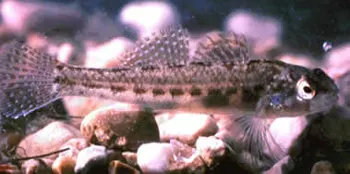
Endangered
Fountain darter
Etheostoma fonticola
The fountain darter (Etheostoma fonticola) is a tiny, bottom-dwelling fish found only in the spring-fed upper San Marcos and Comal rivers in central Texas. Federally listed since 1970 and rated Endangered by the IUCN in 2013, it depends on constant spring flow from the Edwards Aquifer.
How to recognise it
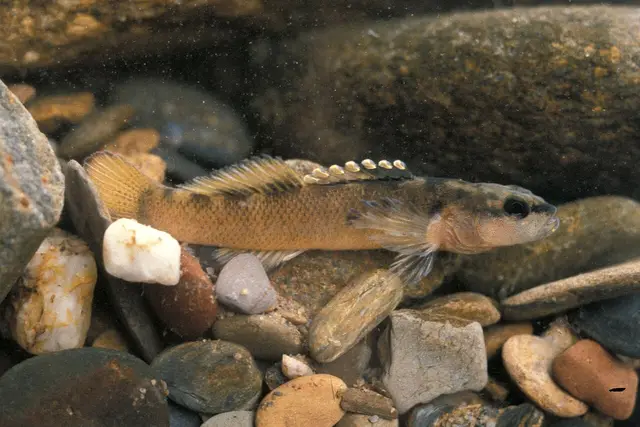
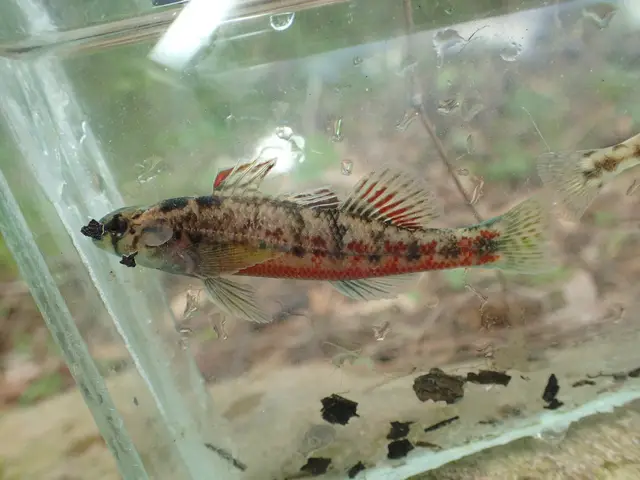
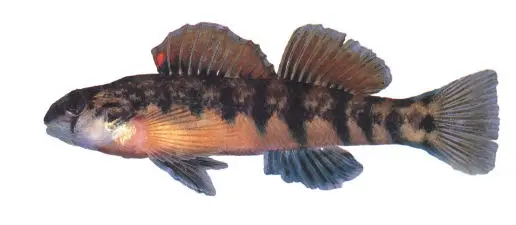
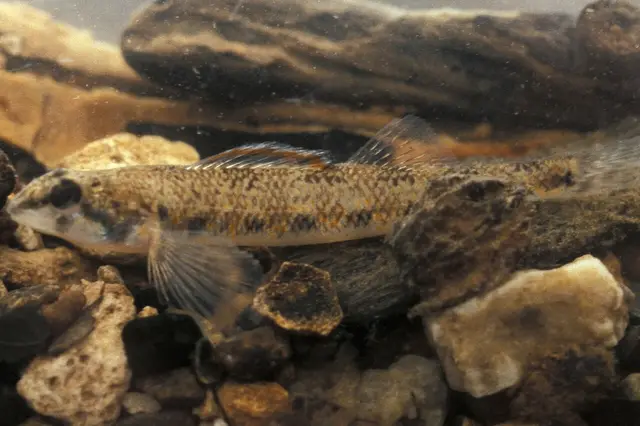
It is the smallest of the darters. Adults measure roughly 2 to 3.8 cm (0.75 to 1.5 inches), and the largest reach about 35 mm in standard length. The body is stout for its size, olive above and white below, with scattered dark spots and large dark blotches along the sides. Breeding males have darker fins and a first dorsal fin with black, clear and red bands.
Where it lives
The species occurs naturally only in the headwaters of two rivers, the San Marcos and the Comal, which both rise from springs fed by the Edwards Aquifer. It occupies nearly all of the Comal and most of the San Marcos above its junction with the Blanco River. Densities are highest in the upper San Marcos and drop sharply below Cape's Dam.
Water temperature in these springs stays steady, roughly 21 to 24 degrees C. Darters live in dense beds of submerged plants such as Vallisneria and Ludwigia, usually over muddy bottoms, and are scarce where vegetation is sparse.
Pins are Wikidata “endemic to” fields. Orange dots, when present, are GBIF occurrence tiles — survey bias included.
How it lives
Fountain darters feed mostly by day on immature insects and tiny crustaceans. The main prey changes with the season and the size of the fish. Fly larvae are common in spring and summer, and copepods, amphipods and mayfly larvae are also eaten.
They breed all year, with peaks in late winter or spring and again in August. Females lay sticky eggs on algae, moss and plants and give them no care. Newly hatched young can't swim freely at first. Lifespan is reportedly only one to two years, which leaves little margin when conditions go wrong.
Why it is in trouble
Everything hinges on spring flow. Drought and heavy pumping of the aquifer cut the flow, and the IUCN lists groundwater abstraction for agriculture and for household use among the threats. The Comal population disappeared in the mid 1950s, most likely during the 1949 to 1956 drought, when Comal Springs stopped flowing. Fish from the San Marcos were put back into the Comal in 1975 and 1976.
Other pressures include a dam that apparently eliminated habitat on the lower San Marcos, disturbance of spawning algae mats by swimmers and divers, nonnative species and an introduced parasitic fluke, Centrocestus formosanus, which by 2011 had seriously affected only the Comal fish. Largemouth bass virus has also been detected in Comal darters.
Surveys estimated the San Marcos population at about 103,000 fish in 1976 and about 45,900 in 1993 (the later figure excluding Spring Lake). The upper Comal held roughly 168,000 in the early 1990s. These estimates are old, and the IUCN records the current trend as unknown.
What is being done
The fountain darter was listed as endangered on 13 October 1970, and critical habitat covers Spring Lake and the San Marcos River below it. A revised 1996 recovery plan judged full delisting unattainable because drought could still wipe out populations, so it calls for backup refugia. Captive stock was held in New Mexico from 1974 to 1981, and a new culture began at the San Marcos National Fish Hatchery in 1988.
Today the Edwards Aquifer Habitat Conservation Plan lists the darter among its covered species. Federal hatchery staff keep refugia stocks of fish from both rivers, with targets of about 1,000 fish per river in each of the standing and refugia stocks. Fish from the Comal are held in quarantine because of the largemouth bass virus, and the 2026 work plan notes higher than usual deaths among incoming Comal fish with no cause identified. Residents are also encouraged to use less water so more flows from the springs.
Sources
Written for this catalog in our own words from the sources below, checked against them on 12 November 2026. Population figures are estimates and carry the year they were made. Status and assessment year: IUCN. 2026. The IUCN Red List of Threatened Species. Version 2026-1. iucnredlist.org.