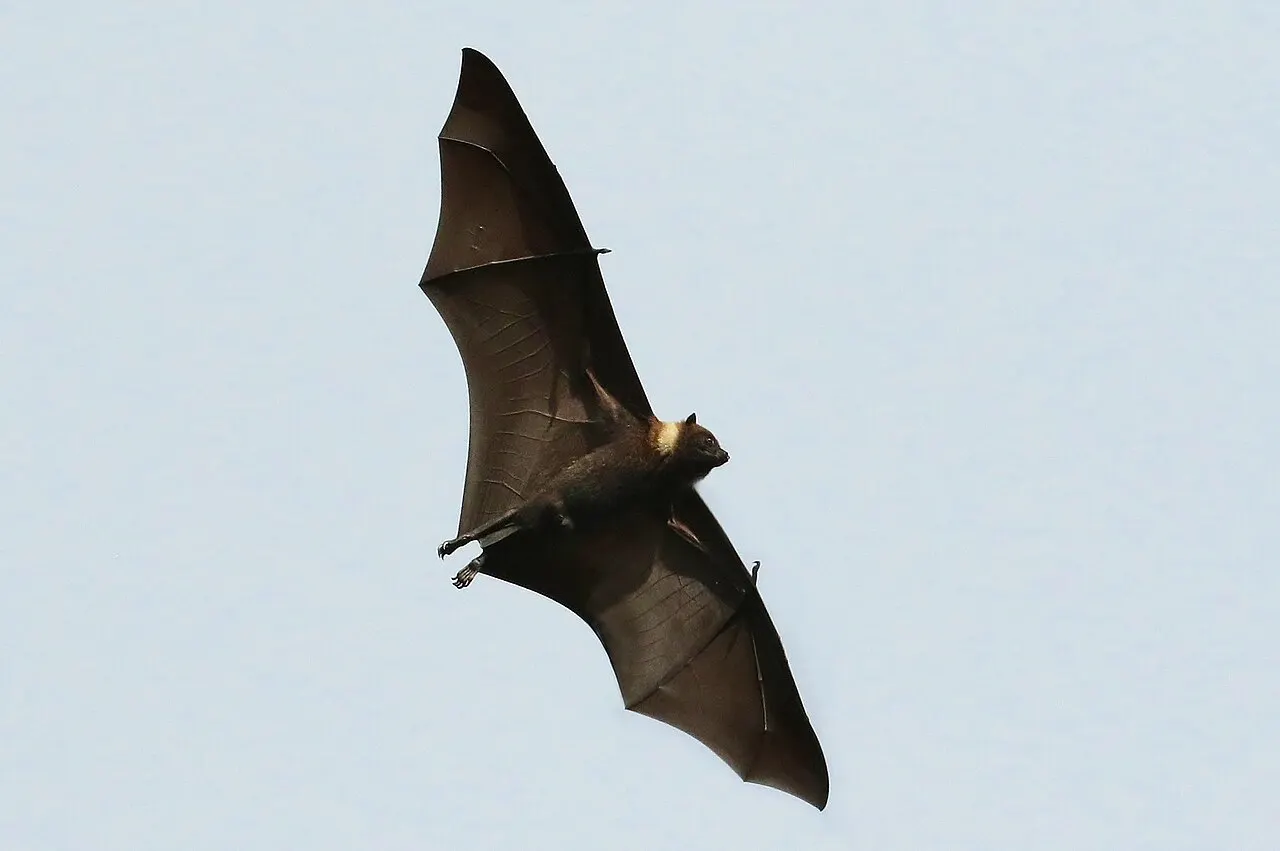
Endangered
Kosrae flying fox
Pteropus ualanus
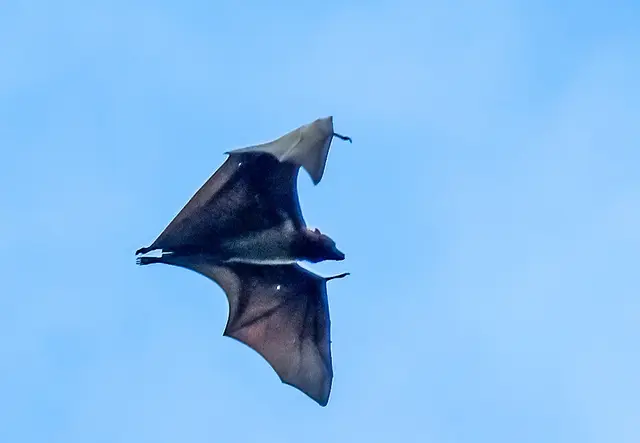
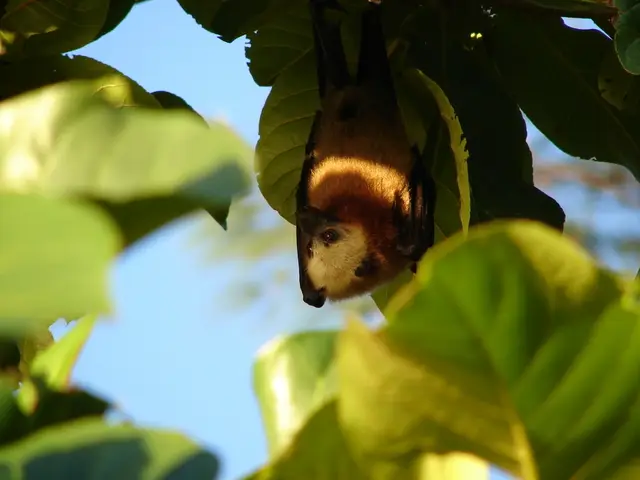
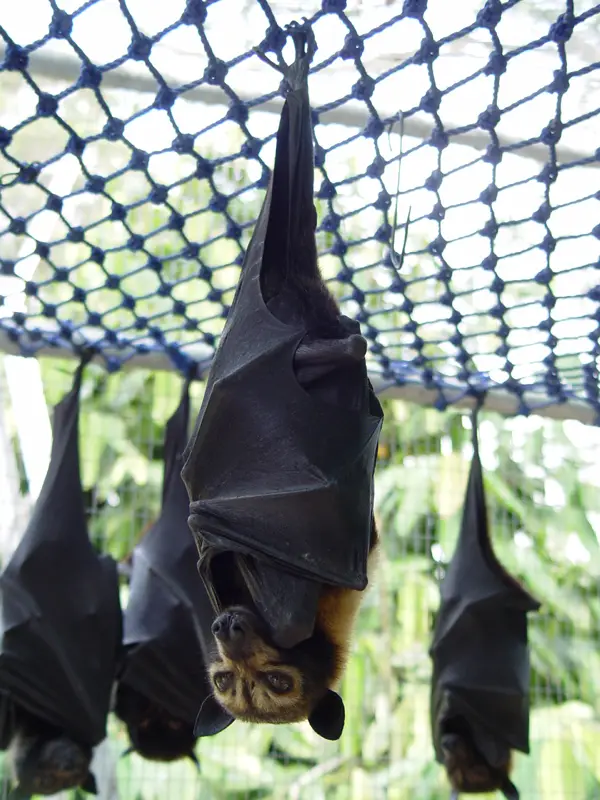
The Kosrae flying fox (Pteropus ualanus) is a fruit bat found only on Kosrae, a small island in the Federated States of Micronesia. Disease reportedly cut it to two animals in the 1920s, and it has since recovered to a few thousand. The Red List lists it as Endangered, assessed in 2020.
Where it lives
The species lives on one island, Kosrae, and the Red List counts it as a single location. It has been recorded from sea level up to about 635 m, in lowland and mountain moist forest, mangroves and swamp forest. It also uses plantations, rural gardens and heavily degraded former forest.
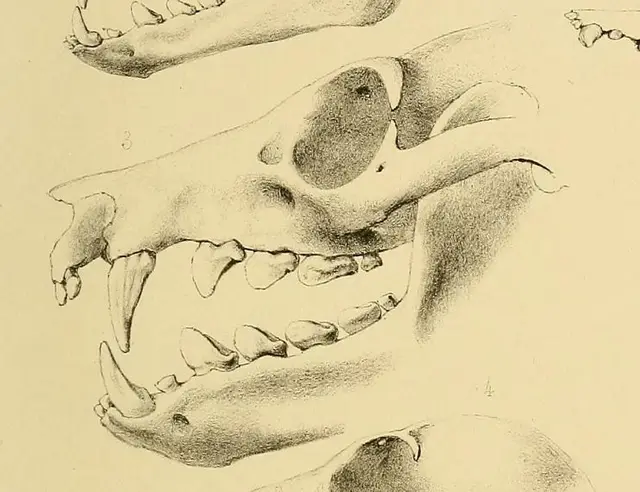
Wilhelm Peters described it in 1883. The French naturalist René Primevère Lesson documented the species in 1824 under a name that later turned out to belong to the Mariana fruit bat, and Heinrich von Kittlitz collected the first specimen in 1827.
Pins are Wikidata “endemic to” fields. Orange dots, when present, are GBIF occurrence tiles — survey bias included.
A population that nearly vanished
Floyd Hayes and John Engbring, reviewing the species in a 2020 paper, wrote that early accounts describe it as abundant until a severe bottleneck, attributed to an infectious disease, allegedly reduced it to two individuals in 1926 to 1927. Surveys in 1982 and 1983 found three colonies in the mountains with at least 600 to 700 bats. Two coastal colonies became established by 1994 and 2002 and are now the largest.
In 2013 and 2014 Hayes visited six colonies, four confirmed and two possible, ranging from 2 to 1,038 bats, and counted at least 1,765. The paper judged the true total probably above 2,000 and possibly above 3,000, and said it may still be rising. The Red List assessment gives 1,500 to 2,250 and rates the trend as stable. The bats gather in colonies all year, and one generation is put at about 8 years.
Why it is in trouble
A species confined to one small island has nowhere to retreat. The 2020 paper lists infectious disease, typhoons, overhunting and habitat loss as potential existential threats. The Red List scores storms as an ongoing high impact, and also names housing, small-holder and large-scale farming, and small-scale harvest. Hunting aimed at the species is recorded as a past impact, and the area of habitat is still shrinking.
What is being done
The species is on CITES Appendix I. The assessment lists site protection, harvest management and habitat restoration among actions needed, and estimates that 51 to 60 percent of the population lives within protected areas. It also records that no recovery plan or systematic monitoring scheme is in place.
Sources
Written for this catalog in our own words from the sources below, checked against them on 12 November 2026. Population figures are estimates and carry the year they were made. Status and assessment year: IUCN. 2026. The IUCN Red List of Threatened Species. Version 2026-1. iucnredlist.org.