Endangered
Vanikoro flying fox
Pteropus tuberculatus
The Vanikoro flying fox (Pteropus tuberculatus), known locally as basapine, is a dark brown fruit bat found only in the Vanikoro island group in the southern Solomon Islands. It went unrecorded for decades and was treated as extinct before surveys found it again in 2014. The IUCN rated it Endangered in 2020, with a decreasing population.
How to recognise it
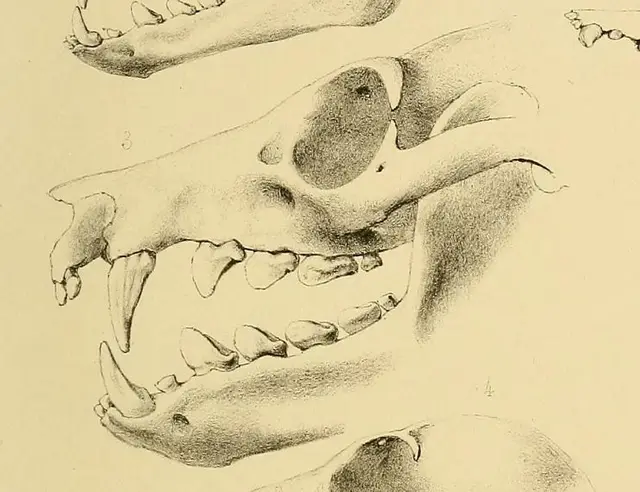
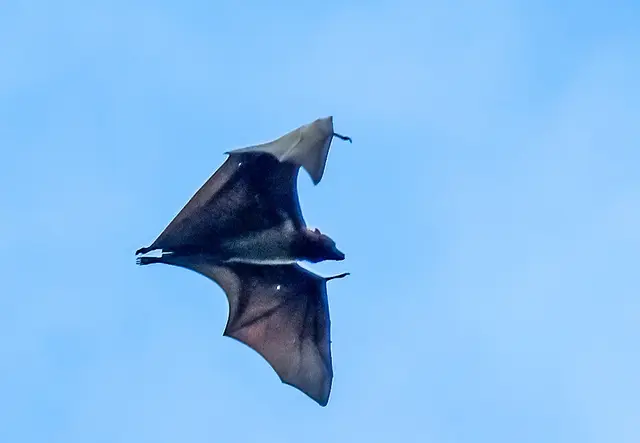
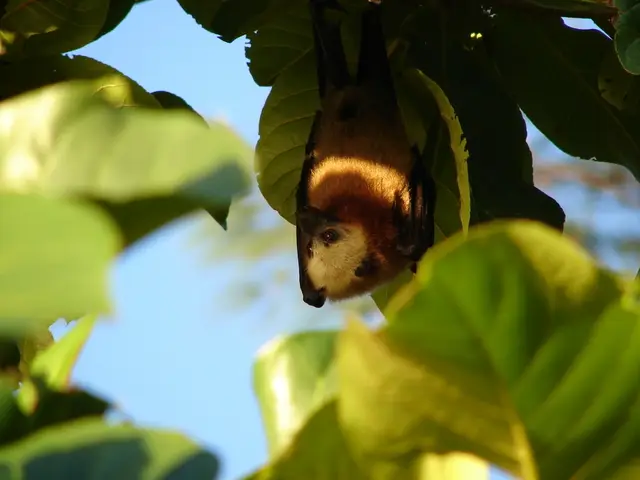
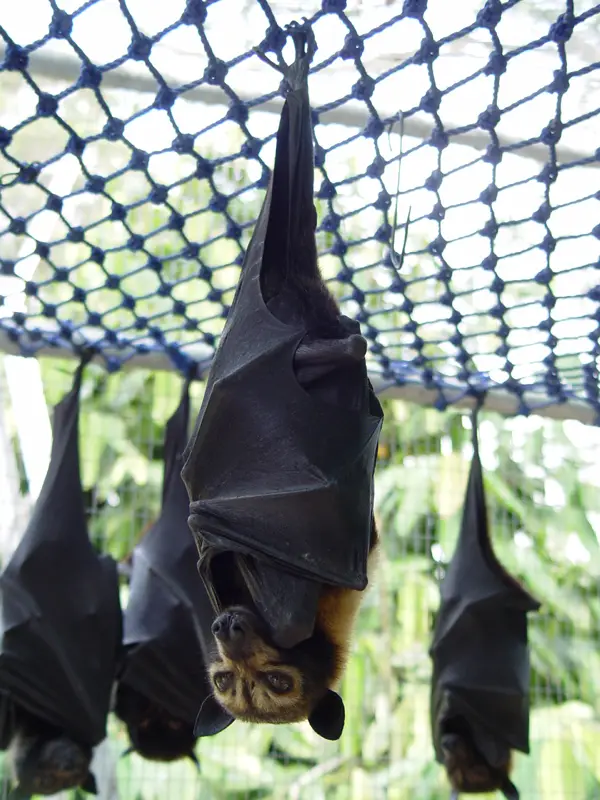
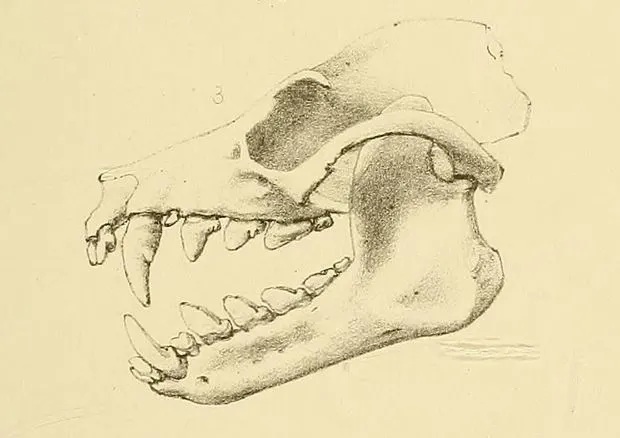
This is a uniformly dark brown flying fox, with a slightly lighter brown crown and mantle (the fur across the shoulders), dark brown-black skin, a large head and small ears. Two females captured on Vanikoro in 2018 weighed about 70 g and had forearms of roughly 103 to 106 mm. Wilhelm Peters described the species in 1869 from a specimen collected in 1828.
Lost and found
For a long time the bat was known only from museum specimens, the last of them collected in the 1920s. Surveys in the early 1990s reportedly failed to find it, and it was treated as extinct. The IUCN rated it Vulnerable in 1996 and Critically Endangered in 2008.
A survey of the Santa Cruz Islands in September and October 2014 found it again on Vanikoro. That survey reportedly suggested a population in the high hundreds to low thousands. It recorded about 2.4 bats per kilometre of transect across coconut plantations and primary forest.
Surveys on Vanikoro in April and May 2018 found the bat in good numbers. A 2021 study by Tyrone Lavery and colleagues, covering fieldwork from 1990 to 2019 in Temotu Province (Solomon Islands) and Torba Province (Vanuatu), listed it among the most common bats on transects and in mist nets, with encounter rates of 0 to 7.2 animals per kilometre.
Where it lives
All records come from the Vanikoro group. The 2020 assessment lists lowland moist forest, mangrove above the high tide line, rural gardens and plantations, and treats the species as living in a single location with one subpopulation, at 0 to 200 m. It estimates the area it occupies at about 204 square kilometres and the extent of its range at 252.
The 2018 surveyors found it common along the coast, where food trees such as coconut and breadfruit are plentiful. They saw it roosting in primary forest and in gardens with betel nut palms and breadfruit, and in secondary forest, so it tolerates some disturbance.
Pins are Wikidata “endemic to” fields. Orange dots, when present, are GBIF occurrence tiles — survey bias included.
How it lives
These bats are mostly solitary, occasionally roosting in pairs, in the lower to middle branches of sub-canopy trees with cover overhead and food nearby. In 2018 about half of the roosting animals seen were in breadfruit trees. They feed in daylight, and surveyors regularly saw them visiting breadfruit from about 4 pm.
Coconut flowers, coconut nectar and fan palm flowers have been recorded as food, and a 2016 study cited in the 2018 report lists fruit and flowers from at least 23 plant species. Because it visits blossoms, the bat may help pollinate coconuts and other plants. Its breeding season is unknown.
Why it is in trouble
Logging of the limited lowland forest looks like the biggest threat. Vanikoro's main island was reportedly logged heavily between the 1920s and the 1960s, and in 2018 surveyors found a logging camp near Peu village. They found no bats in forest logged within the previous three months, because roost structure was gone.
Bats pushed out of forest are reportedly killed in coconut plantations, where they are thought to damage fruit. The 2020 assessment also lists hunting, persecution, shifting agriculture and storms. Hunting seems to matter less than for other island flying foxes, since residents interviewed in 2018 mostly targeted the Pacific flying fox, though some young people were said to kill Vanikoro flying foxes for fun.
What is being done
The species is on CITES Appendix II, which controls international trade. It was reportedly named among 35 priority bat species by Bat Conservation International in 2013. The 2020 assessment says no recovery plan or monitoring scheme exists, and none of the population lives in a protected area.
The 2018 survey team recommended moving the species from Critically Endangered to Endangered, which the IUCN did in 2020. The team also advised that future work involving netting should coincide with the breadfruit season, when the bats are easier to catch.
Sources
Written for this catalog in our own words from the sources below, checked against them on 12 November 2026. Population figures are estimates and carry the year they were made. Status and assessment year: IUCN. 2026. The IUCN Red List of Threatened Species. Version 2026-1. iucnredlist.org.
- IUCN Red List assessment, Pteropus tuberculatus (2020)
- Lavery et al. 2021, Ecology and conservation of bats in Temotu Province, Solomon Islands and Torba Province, Vanuatu, Pacific Conservation Biology 27(1)
- Flying-foxes of Temotu and Torba, expedition report, April to May 2018 (Vanuatu Conservation)
- Vanikoro flying fox (reference article)
- Recently Extinct Species, Pteropus tuberculatus