Endangered
Chuuk flying fox
Chuuk flying fox
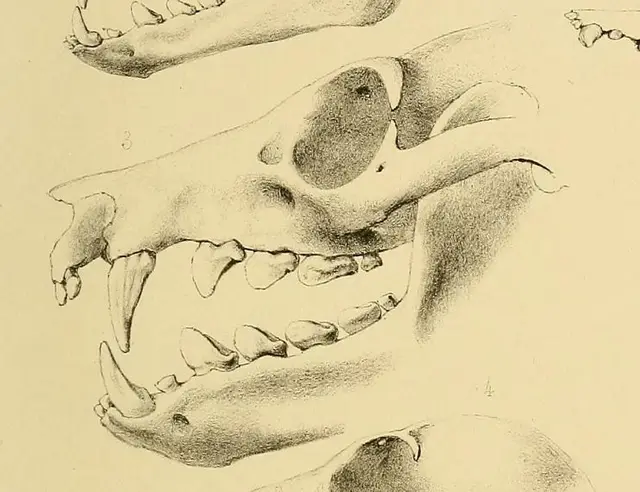
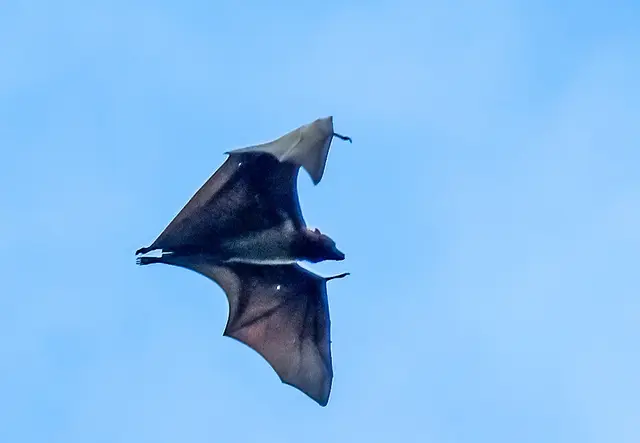
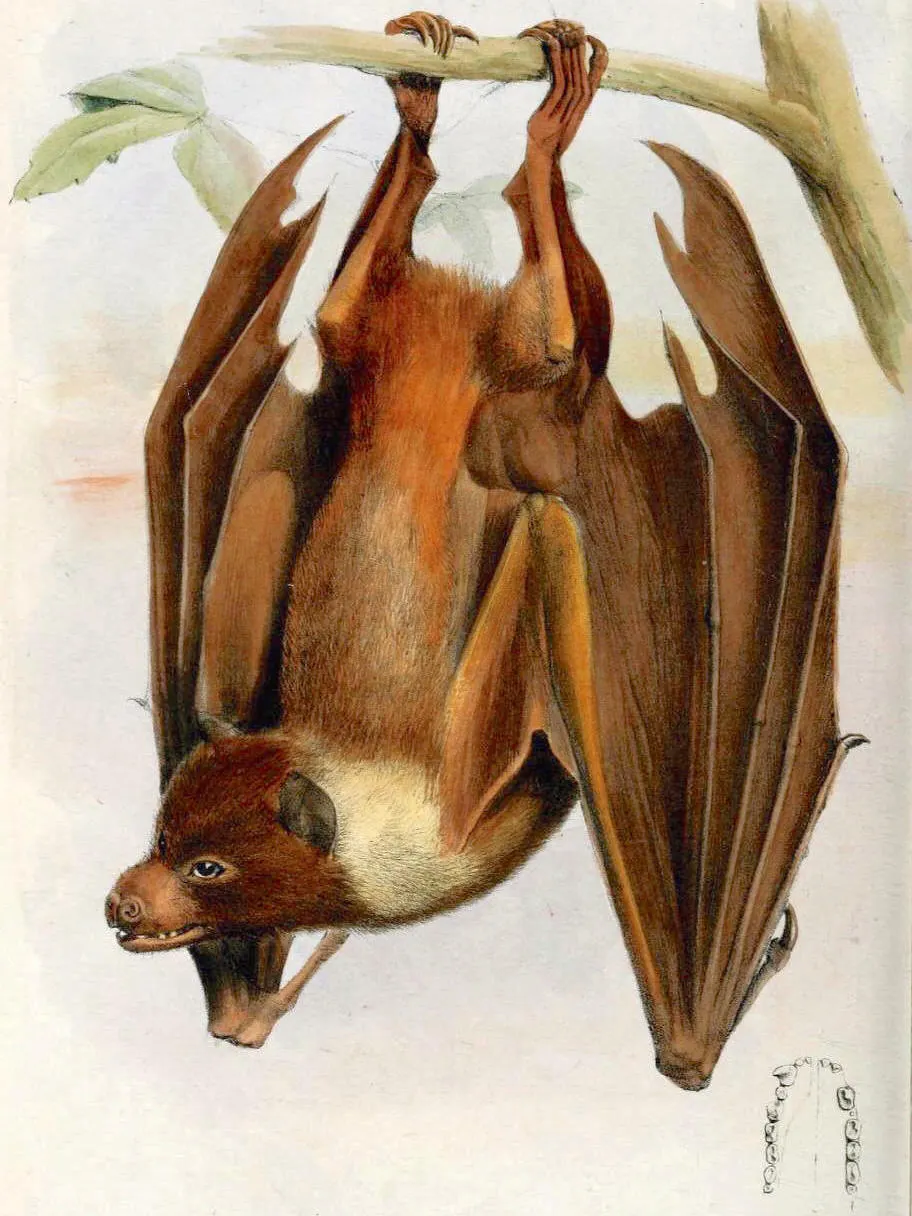
Chuuk flying fox, the Chuuk flying fox, is a fruit bat found only in Chuuk State, Federated States of Micronesia, on the Mortlock Islands and around Chuuk Lagoon. The IUCN Red List rated it Endangered in 2020. Bats once listed as two separate species are now treated as one, and it is still poorly studied.
How to recognise it
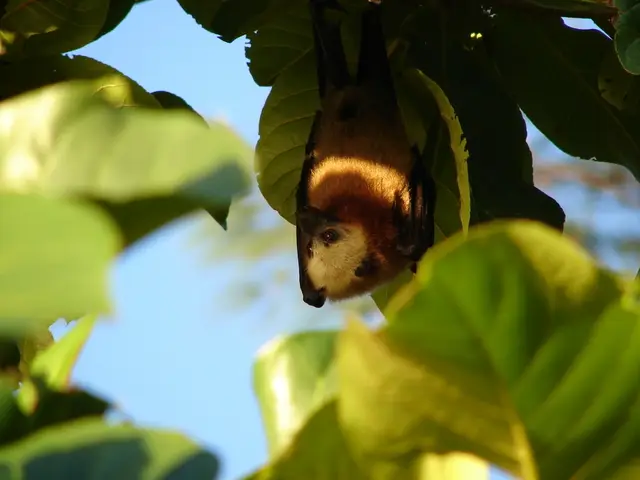
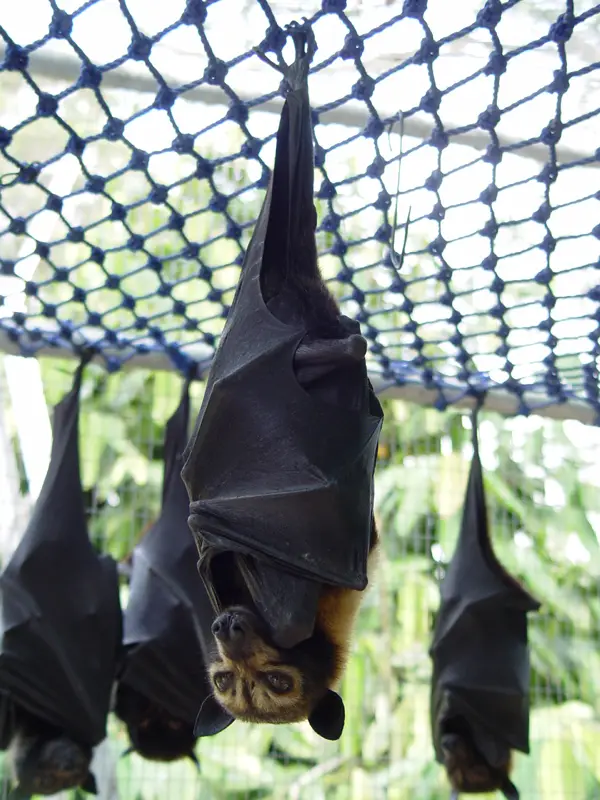
Adults have a creamy white, buff or tawny head, a dark brown back and rump, and a face that ranges from dark brown to nearly black. Many carry a large white or pale yellowish patch on the belly. Juveniles have a grayish-brown head without the reddish or yellow tones of adults.
Forearms of adult females measure about 102 to 108 mm, and body mass across measured samples ranged from roughly 142 to 225 g, which makes it a mid-sized flying fox. The bats of the Mortlock Islands show more contrast in their colouring and larger belly patches than those of Chuuk Lagoon.
Where it lives
The species is restricted to Micronesia. One subspecies lives in the Mortlock (Nomoi) Islands, more than 100 low islands with only about 11.9 square km of land, and in 2004 about 75 percent of its bats were on Satawan and Lukunor atolls. The other subspecies lives on the islands of Chuuk Lagoon and Namonuito Atoll, about 170 km away. The Red List records three locations.
The bats use lowland moist forest, mangrove, plantations, village gardens and degraded former forest, from sea level up to about 446 m. The Mortlock islands rise only 3 to 5 m above the sea. The high volcanic islands of Chuuk Lagoon may give the species some protection from rising seas.
Pins are Wikidata “endemic to” fields. Orange dots, when present, are GBIF occurrence tiles — survey bias included.
How it lives
In the Mortlocks, the bats roost in coconut and breadfruit crowns, alone or in groups of 5 to 10. The largest group a 2004 survey found had 27. Bats of Chuuk Lagoon reportedly form bigger colonies, up to about 100, and are at least partly active by day, which is unusual for flying foxes.
Breadfruit is the preferred food, and bats also eat bananas, coconut, papaya and pandanus fruit. Females with young were recorded in April and July, a pregnant female in July, and mating was reportedly seen in December. Females with dependent young were present for at least 8 months of the year, which is unusual for flying foxes and suggests breeding is spread over much of the year.
Why it is in trouble
The population is small and fragmented. The Red List estimates 1,125 to 2,250 bats (2020), records a past reduction of about 50 percent, and projects a further decline of about 20 percent. A 2004 survey of the Mortlocks, published in 2013, estimated 925 to 1,200 bats there, with no bats on Nama and possibly none left on Losap. Chuuk Lagoon probably held several thousand bats in the early 1980s, and no recent counts exist.
Commercial hunting for the Guam and Northern Mariana food markets did serious damage in the 1980s. Between 1986 and 1989, 5,108 bats were exported to Guam and another 229 to the Northern Marianas, an unknown number of them from the Mortlocks. Hunting for local use remains on the Red List's list of threats, alongside clearing for farming, housing and drought. Residents of the Mortlocks almost universally dislike bats as food.
On the low atolls, rising seas are considered the biggest long-term worry. Severe typhoons strike individual Mortlock islands two to four times a century, and extreme tides in 2007 to 2009 flooded islets and killed 78 percent of the breadfruit on Oneop and 55 percent on Lekinioch. Cats, rats and Pacific monitor lizards are present, although flying foxes have not been reported in the monitors' diet.
What is being done
Listing on CITES Appendix I in 1989 halted or greatly reduced the export trade, and researchers think international protection appears to have helped the Mortlock population stabilise.
The Red List names site protection and management, habitat restoration, awareness work, harvest management and invasive species control among the conservation actions needed. It records that no part of the population lies in a protected area and that no recovery plan or monitoring scheme exists.
Sources
Written for this catalog in our own words from the sources below, checked against them on 12 November 2026. Population figures are estimates and carry the year they were made. Status and assessment year: IUCN. 2026. The IUCN Red List of Threatened Species. Version 2026-1. iucnredlist.org.