Endangered
Caroline flying fox
Pteropus molossinus
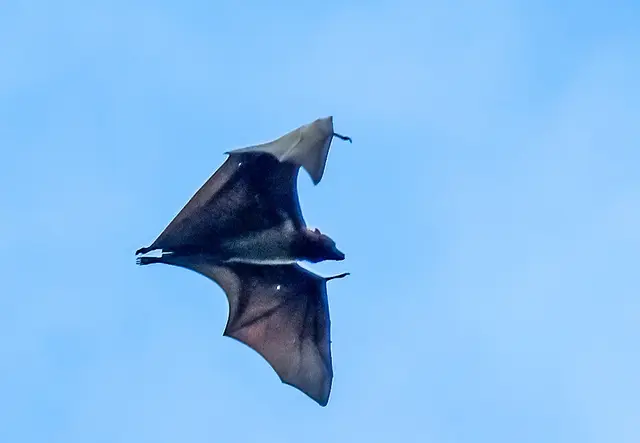
The Caroline flying fox, also called the Pohnpei flying fox, is the smallest flying fox and lives only in the Federated States of Micronesia. The IUCN Red List assessed it as Endangered in 2020. Heavy export hunting in the 1980s cut its numbers, and the population has since recovered somewhat and looks stable.
How to recognise it
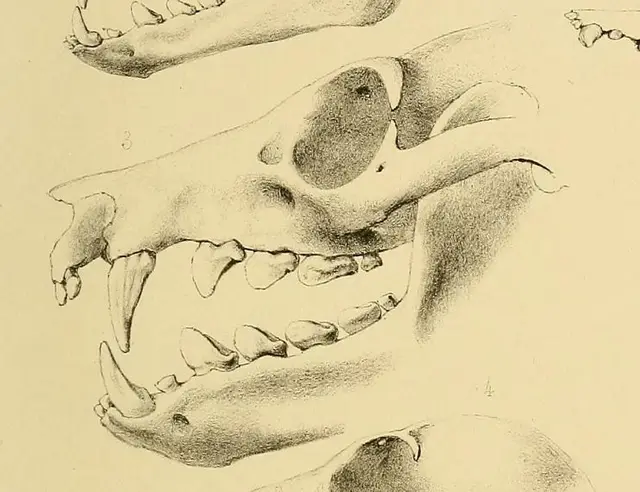
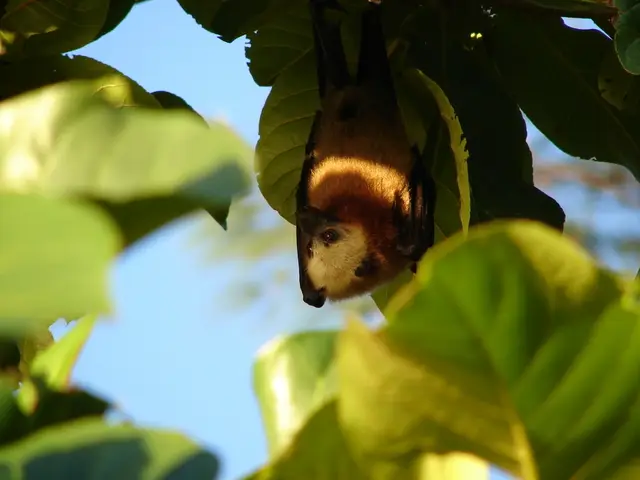
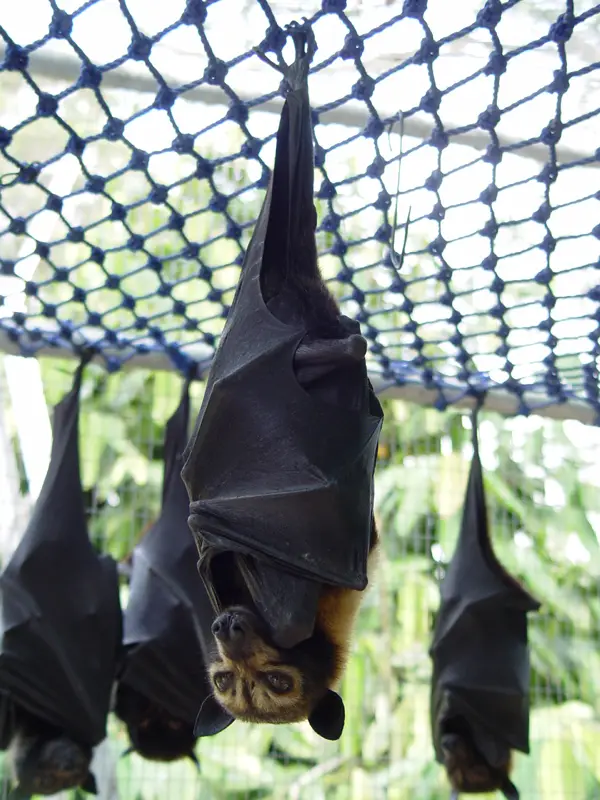
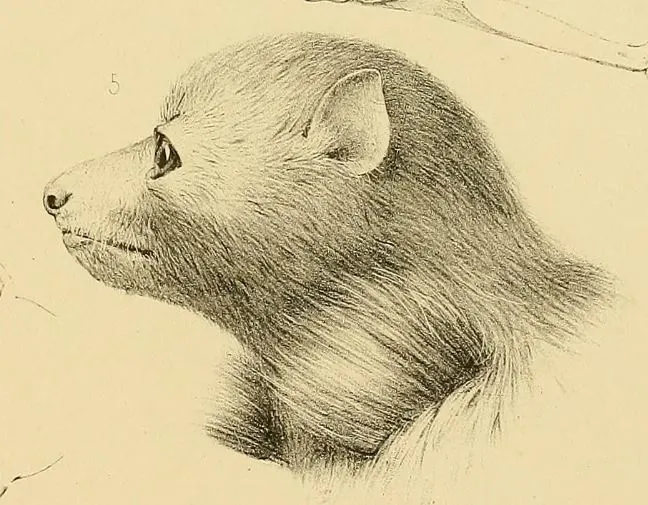
This is a small fruit bat. Adults reportedly weigh a little over 100 g and have forearms of about 90 to 100 mm. The fur is brown, with a reddish tint across the back and rump. Temminck described the species in 1853, and a bat once named Pteropus breviceps, from the Mortlock Islands, is now treated as the same species.
Where it lives
It has been recorded only from Pohnpei, Ant Atoll and Pakin Atoll, all within 55 km of each other in the Federated States of Micronesia. An old record from the Mortlock Islands is now considered erroneous, and later surveys there found no sign of it.
The IUCN treats the species as occurring at a single location, with an area of occupancy of about 336 km2. It has been recorded from sea level up to about 772 m, in native forest and mangroves on Pohnpei and in coconut forest on the atolls.
Pins are Wikidata “endemic to” fields. Orange dots, when present, are GBIF occurrence tiles — survey bias included.
How it lives
It eats fruit and flowers, including the fruit of Clinostigma palms and Pandanus, and flowers of kapok and coconut. Many individuals roost alone or in pairs, though colonies have been seen, including one of 200 to 300 animals at Sokeh's Rock on Pohnpei in 1981.
Females give birth to one young at a time. Unweaned young have been collected in February, September and November, which suggests births are not confined to one season.
Why it is in trouble
Between 1979 and 1989, about 15,691 bats were exported from Pohnpei to Guam and the Northern Mariana Islands for the luxury food market. A significant decline followed. One older account says over 1,000 bats were counted leaving the best-known Pohnpei roost at dusk in the 1960s, against only 15 there in 1989.
Since the late 1980s the bats have become fairly common again on Pohnpei, though there are no data to compare with historical numbers. On Pakin Atoll only about 100 were estimated in 1994, and the present status on both atolls is unknown. Local people do not eat the species.
Lowland roosting and foraging forest on Pohnpei is still being lost to agriculture, including kava farming, and to logging. Cyclones, drought and sea level rise are expected to hit the atolls hardest. The 2020 trend is described as stable, after Vulnerable in 2008 and Critically Endangered in 1996.
What is being done
The species is on CITES Appendix I, which has effectively barred international trade since 1989. It lives in the Pohnpei Watershed Forest Reserve and the Ant Atoll Conservation Area. No recovery plan or monitoring scheme is in place, and the IUCN calls for a population survey, protection of key roosts and community training for monitoring.
With only three known sites, one severe typhoon could change its prospects quickly.
Sources
Written for this catalog in our own words from the sources below, checked against them on 12 November 2026. Population figures are estimates and carry the year they were made. Status and assessment year: IUCN. 2026. The IUCN Red List of Threatened Species. Version 2026-1. iucnredlist.org.