Endangered
Theresia’s Blue
Polyommatus theresiae
Theresia's blue (Polyommatus theresiae) is a large, pale blue butterfly known only from pine forest around Saimbeyli in Adana Province, southern Turkey. The IUCN Red List rated it Endangered in 2020. It went unrecorded from 1998 to 2012, and its population is estimated at fewer than 1,000.
How to recognise it
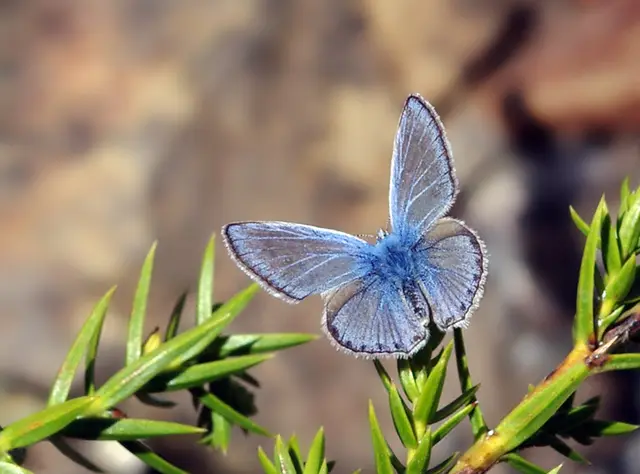
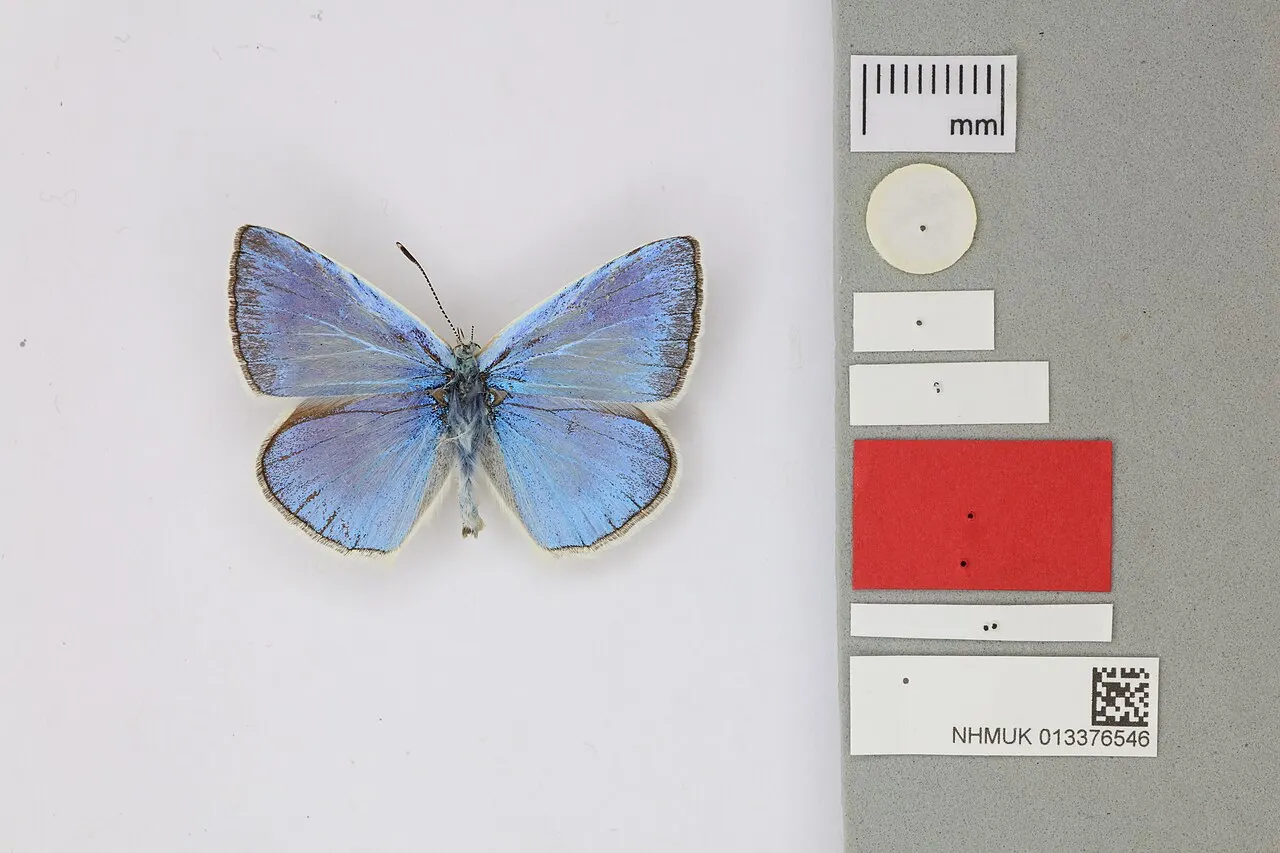
With a wingspan of about 4 cm, it is noticeably bigger than most of the similar blue butterflies in its group. The upperside is sky blue, close to its relative Polyommatus poseidon, but with heavier black scaling along the wing edges and a generally darker look. Pale blue veins run out from the wing base, and the fringes are white and showy.
The underside of the hindwing is cream to beige, with a faint, empty-centred spot beside the white streak. The narrow white streak typical of this group does not widen much. These features, and its size, separate it from its lookalikes.
Where it lives
The species was described in 1992 from Saimbeyli, alongside P. poseidon. For years it was reported from Konya, Kahramanmaras and Gaziantep as well, but those records turned out to be other species. The Konya butterflies were named P. guezelmavi in 1999, the Kahramanmaras and Gaziantep ones belong to P. poseidon, and Lebanese butterflies once treated as a subspecies were shown to be P. larseni.
Part of the mix-up came from a type series taken at Adana while the specimens analysed came from Konya. A chromosome count of 41 to 42 published in 1997 was later found not to fit Adana specimens, which have 63. DNA work confirmed that P. guezelmavi is a separate species. The result is a species restricted to a small area near Saimbeyli.
It is recorded at 1,300 to 1,750 m, in clearings and damp road verges inside mostly black pine forest. The IUCN counts two to five locations and an area of occupancy of about 4 square kilometres.
Pins are Wikidata “endemic to” fields. Orange dots, when present, are GBIF occurrence tiles — survey bias included.
How it lives
Milk-vetches (Astragalus) are the reported host plants. The describers saw females laying eggs on milk-vetch growing under large pines.
In 2012 a team surveyed three sites between 21 June and 8 August. Butterflies were seen only on the last visit, at a waterfall picnic area about 5.5 km north of Saimbeyli, at roughly 1,150 to 1,385 m. Males gathered between 10 am and 2 pm on wet, muddy patches to take up minerals, moving in short hops close to the ground. Some rested on purple loosestrife, chicory and wild mint flowers. They kept their wings closed after landing and flew off when bothered by coppers (Lycaena). No females or egg-laying were seen.
Why it is in trouble
Only five or six butterflies were counted along the roadsides of the waterfall site in 2012, and none at the other sites. The IUCN lists roads, utility lines, housing, tourism and recreation, and small-scale harvest effects as ongoing threats, and records a continuing decline. The 2012 team judged that picnic-area development and recreation were the main danger at the known site. At another site they found heavy logging, hay cutting in wet valleys, cattle grazing and picnicking.
What is being done
The IUCN reports no conservation measures in place, and lists site management and habitat restoration as needed. A 2011 Turkish red book of butterflies rated the species Endangered, and it appears on a national priority list. The 2012 survey team called for closing the site to recreation and creating a protected area, a step also proposed in 2006.
Sources
Written for this catalog in our own words from the sources below, checked against them on 12 November 2026. Population figures are estimates and carry the year they were made. Status and assessment year: IUCN. 2026. The IUCN Red List of Threatened Species. Version 2026-1. iucnredlist.org.