Critically Endangered
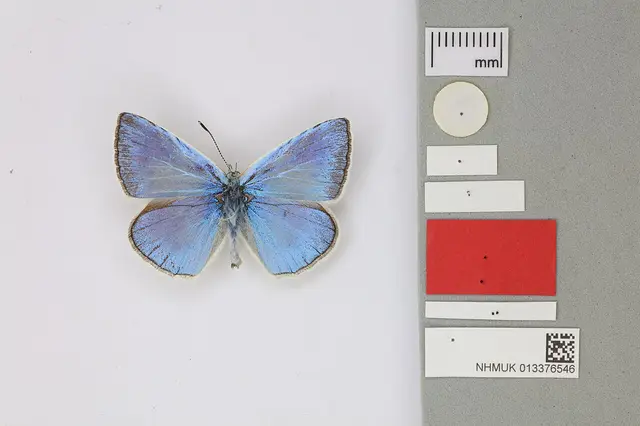
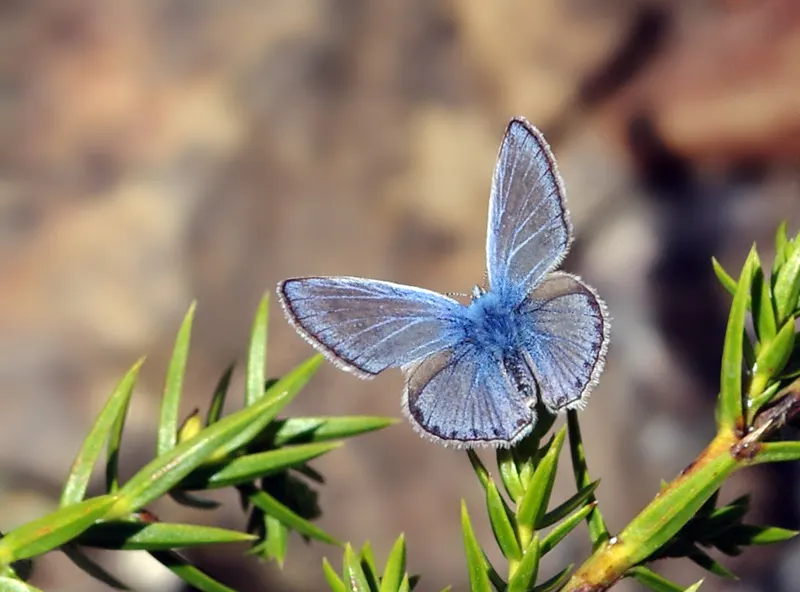
Polyommatus bollandi
Polyommatus bollandi
Bolland's Blue is a small butterfly known only from Hatay Province in southern Turkey. It lives on scrubby, grassy ground in a single tiny area of about 9 square kilometres. The IUCN Red List assessed it as Critically Endangered in 2015, and little else has been written about how it lives.
How to recognise it
Bolland's Blue is a lycaenid, one of the blues, with a wingspan of about 27 to 33 millimetres. The entomologist D. Dumont described it in 1998 as a new species of Polyommatus, from males collected in Hatay.
Where it lives
The species was described from Kizildag in Hatay, where the male holotype was collected at 1,500 metres on 28 or 29 May 1998. A 2012 survey of the province's butterflies by Atay and Yolcu in Pakistan Journal of Zoology recorded 57 species during fieldwork in 2009 and 2010 and counted Bolland's Blue among four butterflies found only in Hatay.
The IUCN assessment agrees. It treats the species as a Turkish endemic known from one location, with an area of occupancy of about 9 square kilometres inside an extent of occurrence of about 99 square kilometres. Its recorded habitats are temperate shrubland and temperate grassland, and a butterfly database also lists forest edges, glades and stream banks.
Pins are Wikidata “endemic to” fields. Orange dots, when present, are GBIF occurrence tiles — survey bias included.
How it lives
The main larval food plant is listed as Genista anatolica, a shrubby member of the pea family. Little else about its flight season, life cycle or adult behaviour appears to have been published.
Why it is in trouble
A population confined to one small site is fragile on its own. The IUCN assessment records a continuing decline in the area the butterfly occupies and lists ongoing pressures: housing and urban areas, roads, mining and quarrying, garbage and solid waste, and an increase in fire frequency or intensity. The population trend is marked unknown.
What is being done
According to the assessment, the whole known population lies inside a protected area. Site protection and national and sub-national land management are listed as conservation actions. No population monitoring has been reported, so the butterfly's trajectory remains unclear.
Sources
Written for this catalog in our own words from the sources below, checked against them on 12 November 2026. Population figures are estimates and carry the year they were made. Status and assessment year: IUCN. 2026. The IUCN Red List of Threatened Species. Version 2026-1. iucnredlist.org.