Critically Endangered
Piedmont anomalous blue
Polyommatus humedasae
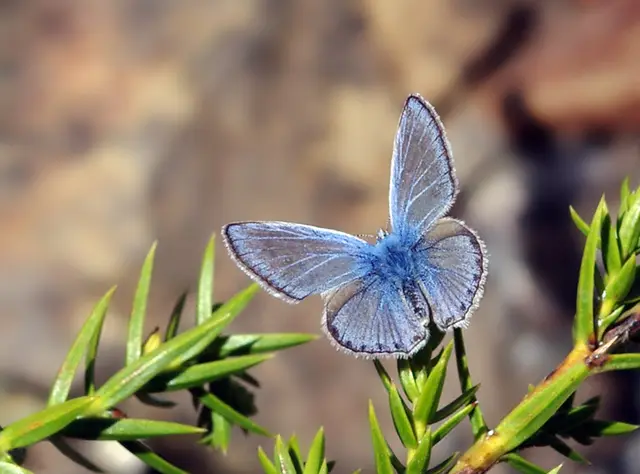
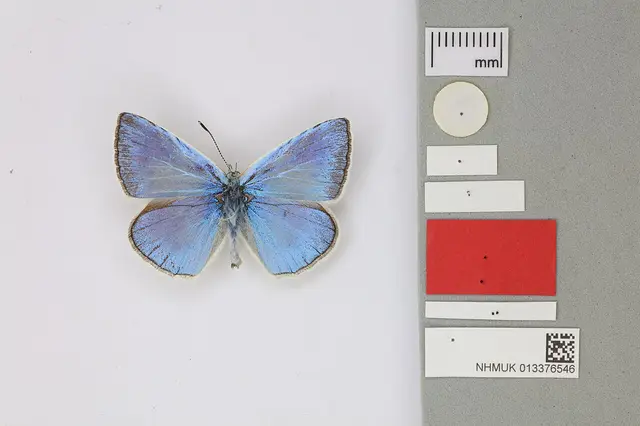
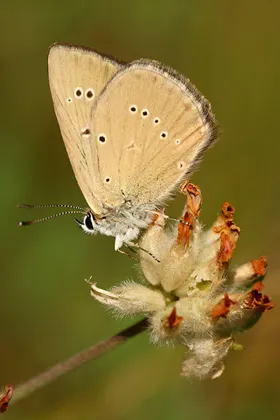
The Piedmont anomalous blue (Polyommatus humedasae) is a small butterfly found only in Italy's Aosta Valley, in the western Alps. The IUCN Red List rated it Critically Endangered in 2025. It lives at about five known sites, depends on a single plant for its caterpillars, and flies only in July and August.
Where it lives
This blue is endemic to Italy and known almost entirely from the Aosta Valley. The IUCN assessment counts five locations and puts the butterfly at roughly 900 to 1,000 m above sea level, although it is reportedly seen at times up to 1,600 m. One of the five is the Pont d'Ael Natura 2000 site, which regional researchers treat as the source area for the species.
The assessment lists shrubland (temperate and Mediterranean-type) and temperate grassland as its habitats. Field work describes a preference for hot, dry, sunny clearings surrounded by shrubs and small trees. The population is severely fragmented, and the area it occupies is still shrinking.
Pins are Wikidata “endemic to” fields. Orange dots, when present, are GBIF occurrence tiles — survey bias included.
How it lives
There is one generation a year. Adults fly from July to August, with a peak in the second half of July. Females lay their eggs on Onobrychis arenaria, a small legume that is the only plant the caterpillars eat. Some older accounts give other Onobrychis species, so the exact host list is not fully settled.
The larvae are sometimes tended by ants, though they do not need them. At Pont d'Ael the host plant grows at an average of about one plant per square metre. In 2022 observers found that females laid more eggs where shrub cover was higher, and on plants that had suffered less from drought, with greener and larger leaves.
How many are left
Counts come from a mark and recapture study at Pont d'Ael in summer 2022. Over 20 survey days from late June to mid-August, researchers caught 341 adults, with a recapture rate of about 37 percent. The core area covered about 12 hectares, and the regional project summary estimated about 437 butterflies. A 2024 paper in Biological Conservation (Piccini and colleagues) reports a higher figure of 881 and a density of 73 per hectare, so published estimates for this single site range from roughly 440 to 880. The IUCN gives no overall population figure.
Why it is in trouble
The main long-term pressure is the loss of open grassland as trees and shrubs spread over it. The 2025 assessment lists other ecosystem modifications, droughts and more frequent or intense fires as threats. A 2022 monitoring summary also named heat and drought, and intensive collecting by butterfly collectors, as dangers.
What is being done
The butterfly occurs in at least one protected area and is covered by international legislation. Researchers have worked out where clearing trees would help most. A 2025 study selected a 0.6 hectare area for habitat restoration, and recommended small-scale, adaptive management to keep a mix of open and shrubby ground. Planned work at Pont d'Ael also includes selective thinning that keeps native trees and shrubs, plus signs and staff training to raise awareness.
Sources
Written for this catalog in our own words from the sources below, checked against them on 12 November 2026. Population figures are estimates and carry the year they were made. Status and assessment year: IUCN. 2026. The IUCN Red List of Threatened Species. Version 2026-1. iucnredlist.org.
- IUCN Red List assessment, Polyommatus humedasae
- Piedmont anomalous blue (encyclopedia entry)
- Pont d'Ael study summary, ALCOTRA project 5194 (French)
- Conserving localized endemic butterflies through demographic and ecological studies: Polyommatus humedasae (Biological Conservation, 2024)
- From research to conservation: site selection for habitat restoration of a narrowly distributed and critically endangered butterfly (2025)