Endangered
Poecilotheria rufilata
Poecilotheria rufilata
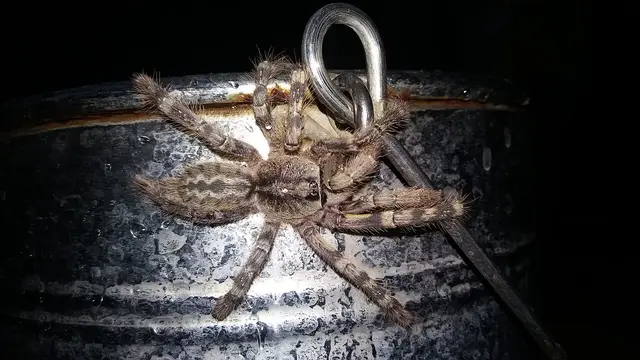
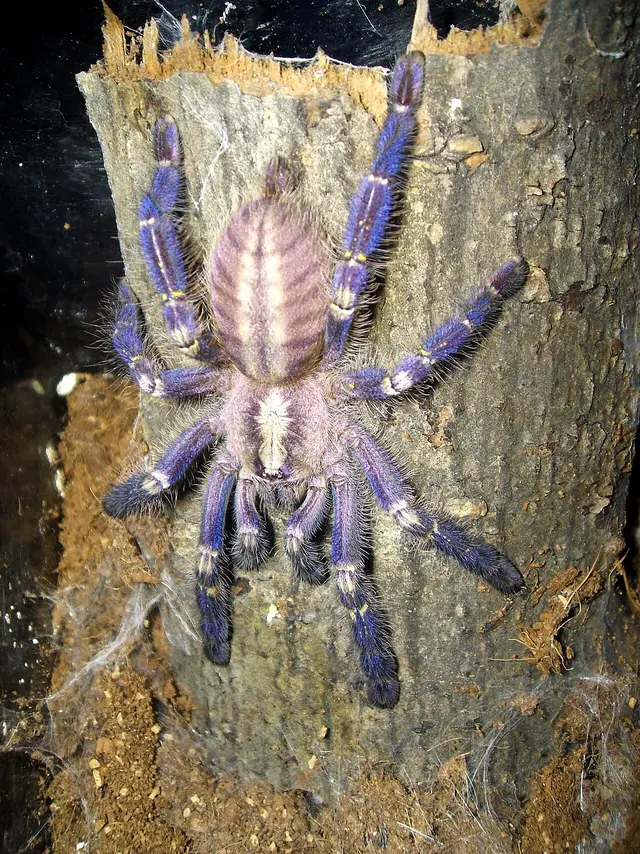
Poecilotheria rufilata, the red slate ornamental tarantula, is a large tree-dwelling spider found only in the southern Western Ghats of India, in Kerala and Tamil Nadu. The IUCN Red List assessed it as Endangered in 2008. Housing development and collection for the pet trade are among the pressures on it.
How to recognise it
This is an Old World tarantula in the family Theraphosidae, described by R. I. Pocock in 1899 from a female collected at Thiruvananthapuram in Kerala. It looks much like Poecilotheria ornata, a relative from Sri Lanka.
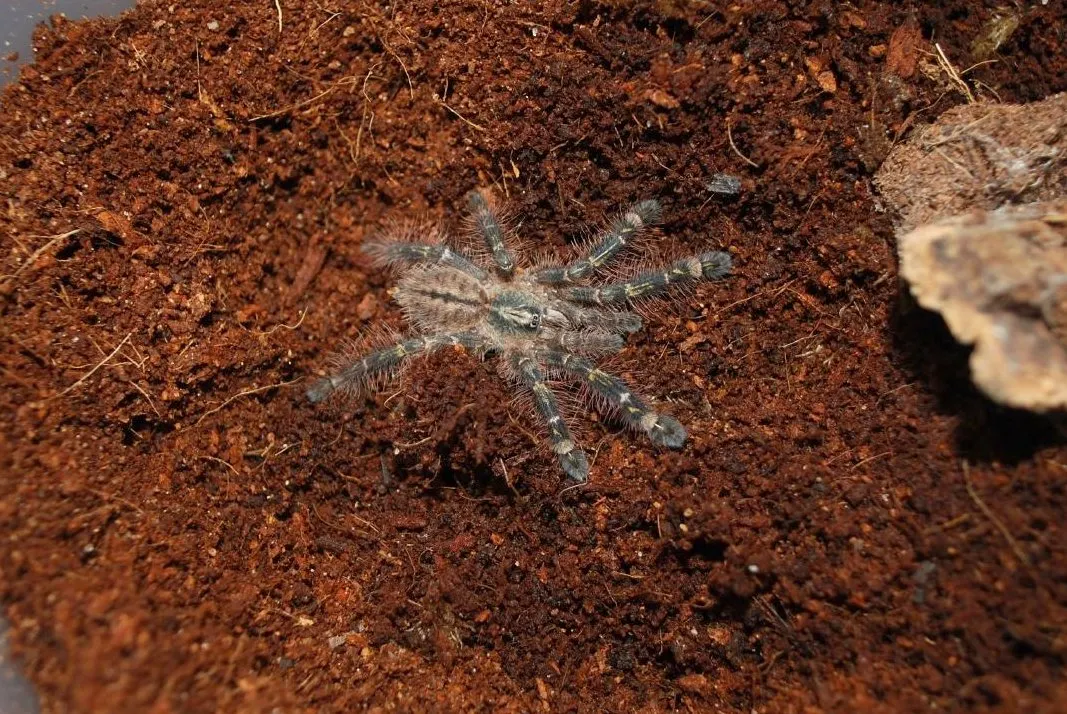
Females are the larger sex, with a body about 8 centimetres long. Males are slimmer and reach at most about 3.5 centimetres. In wild-caught spiders the longest leg measured around 8 centimetres in females and 7 centimetres in males. The first and fourth pairs of legs are yellow or green, and the leg joints carry black sections with thin yellow or green bands.
Where it lives
The species is endemic to the southern Western Ghats. Records come from Kerala, including the Agasthyamala Biosphere Reserve, Peppara Dam, Kallar and Ponmudi, and from Tamil Nadu. It lives in trees, in dry and moist lowland forest and in heavily degraded former forest, and it reportedly sometimes enters human settlements.
Sources disagree on altitude. The IUCN assessment gives an upper limit of 500 metres, while a 2021 note in the journal Taprobanica reported spiders at about 900 to 1,200 metres at its Kerala sites, mostly on dead pine and jackfruit trees. The same note calls the spider extremely rare and little known.
Pins are Wikidata “endemic to” fields. Orange dots, when present, are GBIF occurrence tiles — survey bias included.
How it lives
The genus Poecilotheria hunts as ambush predators, at night and around dusk and dawn, without spinning a capture web. Details of this species' diet in the wild have not been published. It is reportedly skittish and defensive, quick to bite, and its venom is described as potent compared with many other tarantulas. Keepers are advised not to handle it.
Why it is in trouble
The IUCN lists the population as decreasing. The threats it names are housing and urban development, direct collection of the species, and persecution or control. Its colour, large size and fast growth reportedly make it popular with experienced keepers, and it is said to be smuggled out of India for sale in Europe and America.
What is being done
Since 2019 every Poecilotheria species has been on CITES Appendix II, so international trade needs export permits. The IUCN notes that the species occurs in at least one protected area and lists site protection and management, habitat restoration, awareness work, formal education, captive breeding and livelihood alternatives among the relevant actions.
Sources
Written for this catalog in our own words from the sources below, checked against them on 12 November 2026. Population figures are estimates and carry the year they were made. Status and assessment year: IUCN. 2026. The IUCN Red List of Threatened Species. Version 2026-1. iucnredlist.org.