Critically Endangered
Poecilotheria hanumavilasumica
Poecilotheria hanumavilasumica
The Rameshwaram ornamental tarantula is a tree-dwelling spider known from a small patch of plantations around Rameshwaram in southern India and, since 2012, one site in northern Sri Lanka. The Red List has rated it Critically Endangered since its 2008 assessment, with a decreasing population.
How to recognise it
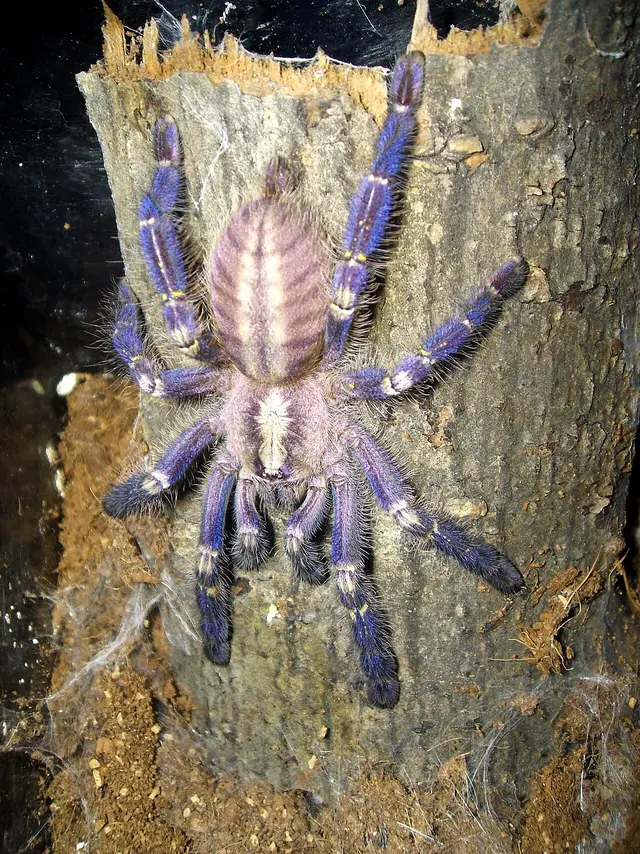
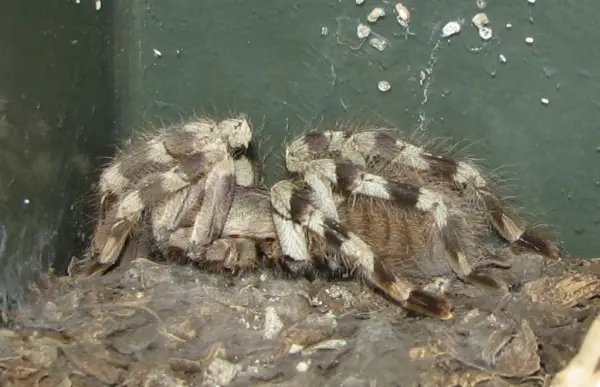
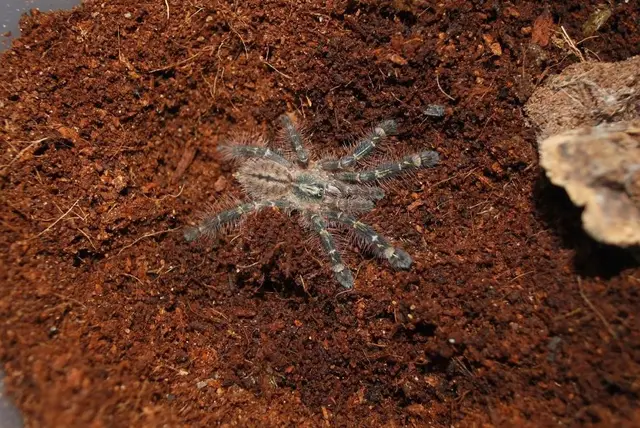
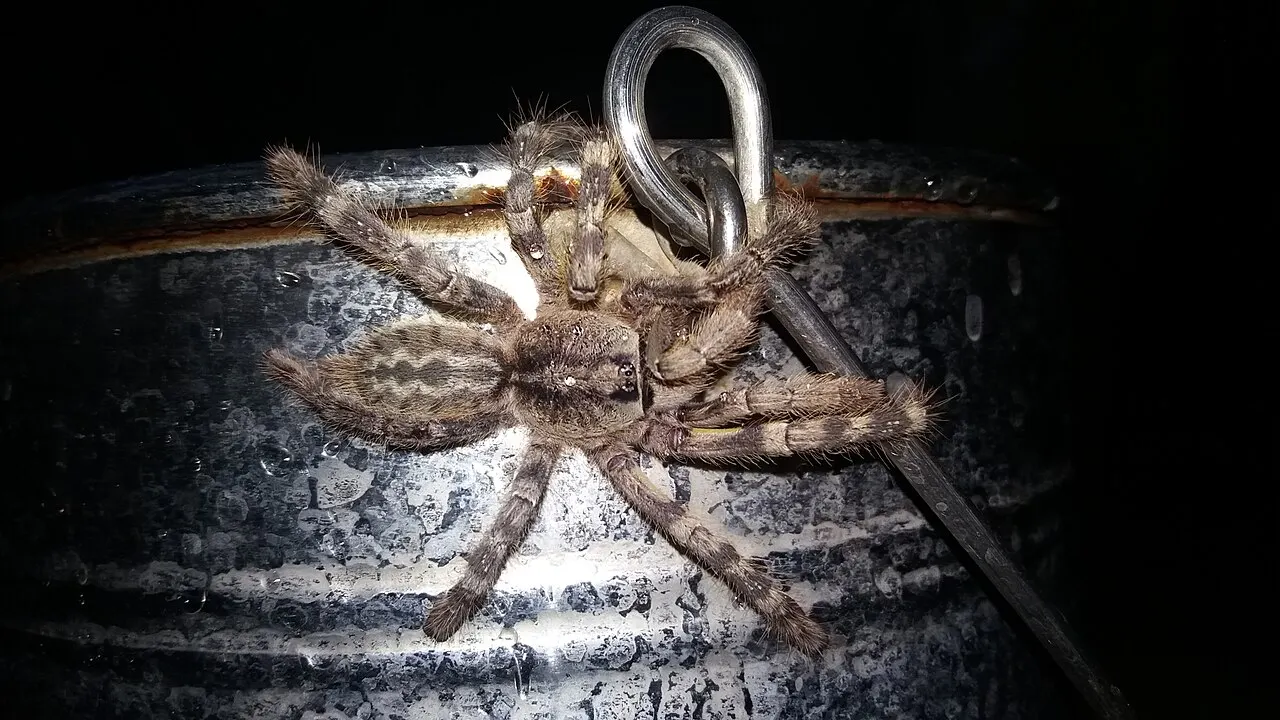
This is one of the ornamental tarantulas, a group of boldly patterned tree spiders. The first two pairs of legs are bright yellow, and the first leg carries a broad black band across most of the thigh and a thick black band on the shin. The fourth leg is bluish grey with a black patch near its base.
One hobby source gives adult females a size of about 2.6 inches (6.6 cm) and males about 1.7 inches (4.3 cm). The species is a close relative of Poecilotheria fasciata, and the two are told apart mainly by the shape of the female's sperm-storage organ, plus the width and continuity of the leg bands.
Where it lives
The species was described in 2004 from a sacred grove at the Hanumavilasum Temple on Rameshwaram island, in Ramanathapuram district, Tamil Nadu, and was long thought to live nowhere else. Its range is tiny: the Red List gives an extent of about 100 square kilometres and an area actually occupied of 10 square kilometres or less, at elevations up to 50 metres.
In 2012, researchers from the University of Kelaniya found it in a hollow tree on Mannar island in Sri Lanka, reported in the Journal of Asia-Pacific Biodiversity in 2015. They counted four adult females and eight spiderlings, with one female carrying an egg sac, so the spiders there were breeding. No males turned up. Parts of Mannar are dry with vegetation like Rameshwaram's, and a land bridge once linked India and Sri Lanka, which may explain how the spider reached both places.
Pins are Wikidata “endemic to” fields. Orange dots, when present, are GBIF occurrence tiles — survey bias included.
How it lives
It is arboreal. On Rameshwaram it lives in tamarind, casuarina and palm plantations. The common name 'parachute spider' comes from its habit of dropping from a tree like a falling leaf. The Red List treats plantations as marginal habitat.
Reports on lifespan differ. One account says females can live up to 10 years, while a hobby source says up to three. Males usually live only one or two breeding seasons. The same hobby source says the largest brood seen with one mother was nearly 50 spiderlings, a low number for a tarantula.
Why it is in trouble
Researchers have described eight isolated groups holding a few hundred spiders in total. The Red List records ongoing, low-level pressure from farming (both small-holder and agro-industry), housing, tourism and recreation, with the population trend listed as decreasing. Habitat conversion and degradation are the stresses involved.
On Mannar, a large commercial project about to start near the forest where the spiders were found was flagged as a risk. The species is listed in CITES Appendix II. A hobby source says it is not widely traded because so few exist, and describes it as fast, defensive and venomous enough that a serious bite could need hospital care.
What is being done
The Red List assessment calls for site and habitat protection, education and awareness work, and captive breeding with a possible reintroduction, but records none of these as in place.
Sources
Written for this catalog in our own words from the sources below, checked against them on 12 November 2026. Population figures are estimates and carry the year they were made. Status and assessment year: IUCN. 2026. The IUCN Red List of Threatened Species. Version 2026-1. iucnredlist.org.